





The nature, rule and application of titanium
Nov 19, 2024
Leave a message
The discovery of titanium and the basic properties of titanium In the vast expanse of the periodic table of chemical elements, each element has its unique properties and uses, they are like various creatures in nature, each plays a different role, together constitute a rich and colorful material world. Among these many elements, titanium (Ti), with its excellent performance and wide range of applications, is like a bright pearl, shining with a unique light.
Titanium, a metal element of the IVB group located in the fourth period of the periodic table, has attracted the attention of scientists with its unique charm since it was first discovered by the British chemist William Gregor in 1791. It takes its name from the Titans of Greek mythology, a symbol of strength and indestructibility.
Second, the physical properties of titanium Titanium, the bright star of the metal industry, stands out among many elements with its unique physical properties. Its density is about 4.5g/cm³, a value that allows titanium to remain lightweight while possessing sufficient strength and hardness to provide a solid foundation for its applications in various fields.
The appearance of titanium presents a silver-white metallic luster, giving a noble and elegant feeling. Its melting point is as high as 1668℃, and its boiling point is as high as 3287℃. This excellent high temperature resistance makes titanium maintain stable performance under high temperature environment, so it is widely used in aerospace, petrochemical and other fields.
In addition to excellent high temperature resistance, titanium also has good corrosion resistance. It can resist the erosion of atmosphere, seawater, acid, alkali and other corrosive media, which makes titanium in Marine engineering, chemical equipment and other fields have a wide range of application prospects.
In addition, titanium also has a high specific strength and stiffness. Specific strength refers to the ratio of the strength of the material to its density, while specific stiffness refers to the ratio of the stiffness of the material to its density. These properties of titanium make it a unique advantage in applications where lightweight is required and high strength and stiffness are required.
The chemical properties of titanium The chemical properties of titanium are equally remarkable. It is an active metallic element, but it shows extremely high stability at room temperature. This is because the surface of titanium will quickly form a dense oxide film, which can effectively prevent the internal titanium from continuing to react with oxygen, thereby protecting titanium from further oxidation.
Titanium can chemically react with a variety of elements to produce various compounds. For example, titanium can react with oxygen to form titanium dioxide (TiO₂), an important white pigment that is widely used in coatings, plastics, rubber and other fields. In addition, titanium can also form compounds with carbon, nitrogen, hydrogen and other elements, which have important applications in the field of materials science.
The preparation process of titanium is relatively complex, and usually requires multiple steps to obtain titanium with higher purity. At present, titanium production methods commonly used in industry mainly include chlorination, sulfuric acid and metal thermal reduction. Each of these methods has advantages and disadvantages, but all of them can effectively extract titanium.
The application field of titanium is extremely wide, covering almost every corner of modern industry. The following are the main applications of titanium in several areas:
(1) The application of titanium in the aerospace field is exemplary. Its excellent strength and stiffness properties make titanium alloy an ideal material for the manufacture of aircraft wings, fuselages and other key structures. At the same time, the lightweight characteristics of titanium also greatly reduce the weight of the aircraft and improve fuel efficiency.
In addition, titanium also has good high temperature resistance and can maintain stable performance in extreme high temperature environments. This makes titanium widely used in rocket engines, missiles and other high-temperature components.
(2) Biomedical field The application of titanium in the biomedical field is also remarkable. Titanium alloy has good biocompatibility and corrosion resistance, making it an ideal material for manufacturing human implants. For example, titanium alloys can be used to make medical devices such as artificial joints, teeth, and bone retainers.
In addition, titanium alloys also have excellent mechanical properties and can withstand the complex stress environment inside the human body. This makes titanium alloy has a wide range of application prospects in the field of biomedicine, and has made great contributions to human health.
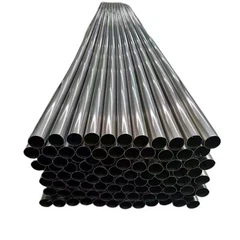
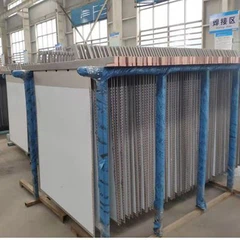
(3) Petrochemical field Titanium is also widely used in the petrochemical field. Due to its excellent corrosion resistance, titanium is widely used in the manufacture of petrochemical equipment, such as reactors, heat exchangers, pipelines and so on. These devices operate stably in the environment of high temperature, high pressure and corrosive media for a long time, providing a strong guarantee for the development of the petrochemical industry.
(4) The application of titanium in the field of Marine engineering is also increasing. The complex and changeable Marine environment requires very high corrosion resistance of materials. Titanium has good resistance to seawater corrosion, so it has a unique advantage in the manufacture of Marine engineering equipment.
For example, titanium alloys can be used to manufacture offshore drilling platforms, ship parts, seawater desalination equipment, etc. The wide application of these devices not only improves the efficiency and safety of ocean engineering, but also provides strong support for human exploration of Marine resources.


Send Inquiry