

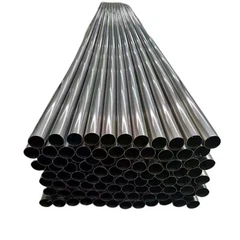





Are there any regulations regarding the use of titanium stubs?
Dec 31, 2025
Leave a message
Are there any regulations regarding the use of titanium stubs?
As a supplier of titanium stubs, I often encounter inquiries from customers about the regulations surrounding the use of these products. Titanium stubs are widely used in various industries due to their excellent properties such as high strength, corrosion resistance, and biocompatibility. However, like any other material, their use is subject to certain regulations to ensure safety, quality, and compliance with industry standards.
Regulatory Bodies and Standards
In the international arena, several regulatory bodies play a crucial role in setting standards for titanium products, including titanium stubs. One of the most prominent organizations is the American Society for Testing and Materials (ASTM). ASTM develops and publishes technical standards for a wide range of materials, products, systems, and services. For titanium stubs, ASTM standards define the chemical composition, mechanical properties, and manufacturing processes. For example, ASTM B348 covers titanium and titanium alloy bars and billets, which can be used as the raw material for titanium stubs.
Another important regulatory body is the International Organization for Standardization (ISO). ISO standards are recognized globally and provide a framework for quality management, environmental management, and safety. ISO standards related to titanium materials ensure that products meet specific requirements for dimensions, surface finish, and chemical composition. Compliance with ISO standards is often a prerequisite for companies to enter international markets.
In the United States, the Food and Drug Administration (FDA) regulates the use of titanium in medical applications. Titanium stubs used in medical devices such as dental implants or orthopedic implants must meet strict FDA regulations to ensure their safety and effectiveness. The FDA evaluates the biocompatibility, sterilization methods, and labeling of medical titanium products to protect the health of patients.
Industry - Specific Regulations
Aerospace Industry
The aerospace industry has some of the most stringent regulations for titanium stubs. Titanium is widely used in aircraft components due to its high strength - to - weight ratio. The Federal Aviation Administration (FAA) in the United States and the European Union Aviation Safety Agency (EASA) in Europe have strict requirements for the quality and performance of titanium materials used in aerospace applications. Titanium stubs used in aircraft structures must undergo rigorous testing, including non - destructive testing (NDT) methods such as ultrasonic testing and X - ray inspection, to detect any internal defects.
Chemical Processing Industry
In the chemical processing industry, titanium stubs are used in equipment such as heat exchangers, reactors, and piping systems due to their excellent corrosion resistance. The American Society of Mechanical Engineers (ASME) provides codes and standards for the design, fabrication, and inspection of pressure vessels and piping systems. ASME standards ensure that titanium stubs used in these applications can withstand the high pressures and corrosive environments. For example, ASME SB338 GR2 SEAMLESS TITANIUM TUBE is a commonly used material in chemical processing, and its use must comply with ASME regulations.
Medical Industry
As mentioned earlier, the medical industry has strict regulations for titanium stubs. In addition to FDA regulations in the United States, other countries also have their own regulatory agencies. For example, in the European Union, the Medical Device Regulation (MDR) sets out the requirements for the safety and performance of medical devices. Titanium stubs used in medical implants must be manufactured in accordance with good manufacturing practices (GMP) and undergo extensive clinical trials to prove their safety and efficacy.
Compliance and Certification
To ensure compliance with regulations, titanium stub suppliers need to obtain various certifications. For example, a supplier may need to obtain ISO 9001 certification, which demonstrates that the company has a quality management system in place. This certification is often required by customers in different industries as a sign of the supplier's commitment to quality.
In the aerospace industry, suppliers may need to obtain the National Aerospace and Defense Contractors Accreditation Program (NADCAP) accreditation. NADCAP accreditation is a globally recognized certification that ensures the supplier meets the aerospace industry's quality and safety standards.
For medical titanium stubs, suppliers must comply with the relevant medical device regulations and may need to obtain CE marking in the European Union or 510(k) clearance from the FDA in the United States. These certifications are essential for suppliers to sell their products in the medical market.


Our Company's Approach to Regulations
As a titanium stub supplier, we are fully aware of the importance of complying with regulations. We have a dedicated quality control team that ensures all our products meet the relevant standards. Our manufacturing processes are designed to follow the strictest quality control procedures, from raw material inspection to final product testing.
We source our raw materials from reliable suppliers who can provide certificates of conformity for the titanium materials. Our titanium stubs are manufactured using advanced machining techniques to ensure accurate dimensions and excellent surface finish. Before shipping, each titanium stub undergoes a series of tests, including hardness testing, chemical analysis, and visual inspection.
We also stay updated with the latest regulatory changes. Our team regularly monitors the updates from regulatory bodies such as ASTM, ISO, and FDA to ensure that our products remain compliant. In addition, we invest in research and development to improve our products and manufacturing processes to meet the evolving regulatory requirements.
Product Range and Applications
We offer a wide range of titanium stubs suitable for different industries. Our GR9 Titanium Seamless Tube can be used as a base material for titanium stubs in applications where high strength and good formability are required, such as in the bicycle frame industry. Our Gr2 Titanium Tube is another popular choice, known for its excellent corrosion resistance, making it suitable for chemical processing and marine applications.
Contact Us for Purchasing
If you are interested in purchasing titanium stubs, we invite you to contact us for further discussion. Our team of experts is ready to provide you with detailed product information, technical support, and a competitive quote. Whether you are in the aerospace, medical, chemical processing, or any other industry, we can offer you high - quality titanium stubs that meet all the relevant regulations.
References
- American Society for Testing and Materials (ASTM). ASTM B348 - Standard Specification for Titanium and Titanium Alloy Bars and Billets.
- International Organization for Standardization (ISO). Various ISO standards related to titanium materials.
- Federal Aviation Administration (FAA). Regulations for aerospace materials.
- European Union Aviation Safety Agency (EASA). Regulations for aerospace materials in the EU.
- Food and Drug Administration (FDA). Regulations for medical devices.
- American Society of Mechanical Engineers (ASME). Codes and standards for pressure vessels and piping systems.
Send Inquiry