What is Titanium Tube


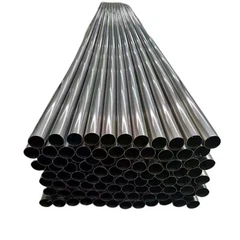
Titanium tubes are the ninth most abundant element in the earth's crust and the seventh most abundant metal. Its low density, slightly over half that of steel, and its high strength combination is the reason for the metals growing preference in both military and commercial aircraft.


Benefits of Titanium Tube


Corrosion Resistance: Titanium tube is highly resistant to corrosion, even in harsh environments with acids, alkalis, and seawater. This makes titanium tube ideal for industries like chemical processing and marine applications.


High Strength-to-Weight Ratio: Titanium tube is known for its exceptional strength-to-weight ratio, being as strong as steel but around 45% lighter. This property allows for lighter and more efficient designs in various applications.


High Temperature Resistance: Titanium tube retains its strength and mechanical properties at high temperatures, up to around 600°C (1,100°F), making it suitable for applications in aerospace, industrial processing, and power generation.


Biocompatibility: Titanium tube is biocompatible and non-toxic, making it suitable for medical implants, pharmaceutical equipment, and food processing applications where material purity is critical.


Low Thermal Expansion: Titanium tube has a low coefficient of thermal expansion, which helps minimize stress and distortion in piping systems due to temperature changes.


First 12 Last

Why Choose us


Quality Assurance

The company strictly adheres to the GB/T19001 and ISO: 9001 quality management system requirements for production, processing, inspection, and warehousing. The product quality is guaranteed and the after-sales service is perfect.


Experience and expertise

We have more than 15 years of experlence, can guarantee the quality of products and services.


High-quality service

We deliver high-quality service, ensuring that our clients receive value for their investment.


9 Types Of Titanium Tubes And Their Uses


Welded Titanium Tube For Low-Pressure Fluid Transportation
Welded titanium tubes for low-pressure fluid transportation are also known as welded tubes. They are welded titanium tubes used to transport water, gas, air, oil, and heating steam, which are usually lower-pressure fluids and other uses.
In addition to being directly used to transport fluids, welded titanium tubes for low-pressure fluid transportation are also used as raw tubes for galvanized welded titanium tubes for low-pressure fluid transportation.


Galvanized Welded Titanium Tube For Low-Pressure Fluid Transportation
Galvanized and welded titanium tubes for low-pressure fluid transportation are also called galvanized and welded titanium tubes short. They are hot-dip galvanized welded titanium tubes used to transport water, gas, air, oil, heating steam, warm water, etc., usually low-pressure fluids or other uses.


Common Carbon Titanium Wire Sleeve
They are titanium tubes commonly used in industrial and civil buildings, installations and equipment, and other electrical equipment projects for the maintenance of electrical wires.


Titanium Tube With A Longitudinal Electric (Resistance) Weld
A titanium tube with a weld line parallel to the longitudinal direction of the titanium tube. Usually divided into metric welding titanium tube, welding thin wall tube, transformer cooling oil tube, and so on.


Submerged Arc Welded Titanium Tubes With Spiral Seams For Conveying Pressurized Fluid
It is made of hot-rolled titanium strip coil as tube blank, often formed by a warm spiral, welded by double submerged arc welding method, and used for pressure fluid transportation.
This kind of titanium tube has strong pressure bearing capacity, good welding performance, and is safe and reliable. The titanium tube has a large diameter, high transport efficiency, and can save investment in laying pipelines, mainly used to transport oil and natural gas pipelines.


Spiral Seam High-Frequency Welded Titanium Tubes For Pressurized Fluid Transportation
This type of titanium tube is made of a hot-rolled titanium strip coil as a tube blank, which is spirally formed at room temperature, and is welded by high-frequency lap welding, and used for pressure fluid transportation.
This type of titanium tube has strong pressure-bearing capacity and good plasticity, which is convenient for welding and processing, and is safe and reliable. And the titanium tube has a large diameter and high transport efficiency and is mainly used for laying pipelines for transporting oil and natural gas.


Submerged Arc Welding Titanium Tubes For General Low-Pressure Fluid Transportation
This type of submerged arc welding titanium tube is made of hot rolled titanium coil as a tube blank, spirally formed at room temperature, and is made by double-sided active submerged arc welding or single-sided welding. It is mainly used for water, gas, air and steam, and other low-pressure fluid transportation.


High-Frequency Welded Titanium Tube With Spiral Seam For General Low-Pressure Fluid Transportation
This spiral seam high-frequency welded titanium tube is made of a hot-rolled titanium coil as a tube blank, spirally formed at room temperature, and welded by high-frequency lap welding, usually used for low-pressure fluid transportation.


Spiral Welded Seam Titanium Tube For Pile
This type of titanium tube is made of hot-rolled titanium strip as a tube blank, spirally shaped at room temperature, and made by double-sided submerged arc welding or high-frequency welding, and is used for root piles in civil engineering structures, docks, bridges, and the like.


Choosing the Best Titanium Tube for Your Project
 

Determine the Appropriate Alloy
Titanium is available in various grades, which suit different applications. It would be best to consider the weight, strength, temperature range, and corrosion-resistance requirements before choosing an alloy. The most commonly used seamless titanium alloy for pipes is Grade 2, characterized by its high strength, low weight, and excellent corrosion resistance. If your application requires high-temperature resistance, consider an alloy such as Grade 5 titanium, with its increased strength at higher temperatures.


Pipe OD/ID and Wall Thickness
Another consideration to make when selecting your titanium tube is the pipe’s outside diameter (OD), inside diameter (ID), and wall thickness. The OD is the overall width of the pipe, and the ID is the diameter of the opening. The wall thickness is the distance between the pipe’s outer and inner diameters. Choosing the right OD/ID and wall thickness is crucial to avoid any pipe failure due to the pressure it will be expected to withstand. You must consider the size and weight of your project and the pressure requirements when choosing the right OD, ID, and wall thickness.


Length and quantity
The quantity and length of titanium tube are important considerations, especially for large-scale projects. It would be best to have a good idea of your project’s required titanium pipes to avoid underestimating or overestimating the number of pipes needed.


Purchase from a Reliable Distributor
Once you have decided on the type of titanium tube recommended for your project, you must ensure that you purchase from a trusted distributor. They should be able to offer you excellent quality products, competitive pricing, and reliable delivery options. They should also provide accurate and useful information on selecting the right titanium tube for your specific application.


Compliance with Standards and Regulations
When choosing your titanium tube, ensuring it meets the applicable government standards and regulations is vital. Some useful references for ensuring compliance with standards include the American Society for Testing and Materials (ASTM) and the American National Standards Institute (ANSI). These organizations guide customers in selecting titanium pipes that meet the requirements of various industries, such as aerospace, medical devices, and oil and gas.


热交换器 GR2 钛管


What Is The Production Process Of Titanium Tube?

Raw Material Extraction:
Titanium is extracted from naturally occurring minerals like rutile and ilmenite. The first step is to obtain titanium dioxide (TiO2) from these ores through a process known as the Kroll process or the Hunter process.


Reduction of Titanium Tetrachloride (TiCl4):
Titanium tetrachloride is derived from titanium dioxide and is reduced to produce metallic titanium. This reduction typically involves reacting TiCl4 with magnesium (Mg) in a controlled atmosphere.


Melting and Alloying:
Once the titanium is obtained, it is melted in an electric arc furnace or a vacuum arc furnace. Alloying elements, such as aluminum (Al), vanadium (V), or nickel (Ni), are added in precise proportions to create the desired titanium alloy composition. The specific alloy composition will depend on the intended application of the pipe.


Ingot Formation:
The molten titanium alloy is cast into ingots or billets of various sizes and shapes. These ingots serve as the raw material for further processing.


Forging or Extrusion
In the case of large-diameter pipes, the ingots are typically forged or extruded into the desired pipe shape. Forging involves compressing the heated ingot between two dies to shape it, while extrusion involves pushing the heated material through a die to form a pipe shape.


Applications and Uses of Titanium Pipes


Chemical Processing Plant
In chemical plants, various aggressive solutions are used and the environment becomes very aggressive. In addition, these installations require heat exchangers, well-defined piping, and other equipment to cope with these extreme conditions. Titanium grade can withstand very aggressive environments and services for a long time.


Petroleum Industry
The oil and gas industry involves high-pressure and high-temperature applications. So, wells in the oil and gas industry require a piping system that can continuously work smoothly in extreme temperature and pressure atmospheres. Here, titanium pipes A show high corrosion resistance and temperature carrying capacity, hence useful in subsea, downhole, and topside applications.


Aerospace
Titanium pipes are useful in many applications in the aerospace industry. These pipes are suitable for both the airframe and engine components. Titanium grade provides resistance to fatigue and cracking; In addition, these pipes can operate at high temperatures. These tubes are tensile resistant and lighter and have high strength and density.


Power Generation Plants
For transporting water and steam at high temperatures, titanium tube A is a suitable choice. Here, the power plant requires grade 2 titanium tubes. The titanium grade allows the device to operate smoothly in all conditions.


What is the strength of Titanium Tube?

Titanium tube are known for their high strength-to-weight ratio, typically ranging from approximately 550 MPa (80,000 psi) to 1100 MPa (160,000 psi) or higher, depending on the specific grade and alloy composition. This strength makes titanium tube suitable for demanding applications where durability and resistance to corrosion are essential.


Despite being lightweight, titanium tube exhibit robust mechanical properties, allowing them to withstand high pressures, temperatures, and mechanical stresses common in industries such as aerospace, chemical processing, marine environments, and medical applications. This combination of strength and lightness contributes to the overall efficiency and longevity of titanium tube in various challenging operating conditions.

Wholesale Titanium Pipe 3 Inch Titanium Tube


Titanium Tube Grades Guide


CP grade 1 is the softest titanium with the highest ductility, good cold formability, which gives Titanium grade 1 an excellent resistance from mild to high oxidation. Commercially Pure Titanium grade 1 is one of the softest and most ductile grades, exhibiting the most outstanding formability. It also has excellent welding properties and high impact toughness. Titanium grade 1 is designated as UNS R50250.


CP grade 2 is used most widely in commercially pure titanium. Titanium grade 2 has moderate strength and excellent cold-forming properties. Titanium grade 2 is designated as UNS R50400. Thanks to its varied usability and wide availability, grade 2 Titanium is called the “workhorse” of the commercially pure titanium industry. It is “unalloyed” titanium offering an excellent balance of strength and ductility.


CP grade 3 is almost only used in the pressure vessel. Grade 3 titanium has excellent corrosion resistance.


Alloy grade 5, Ti-6Al-4V, is most widely used in titanium alloys because of its comprehensive mechanical, physical, and chemical properties. Titanium 6Al-4V, Titanium grade 5 alloy (UNS R56400) is the most widely used titanium grade. Titanium grade 5 is a two-phase α+β titanium alloy, with aluminum as the alpha stabilizer and vanadium as the beta stabilizer. Grade 5 titanium has good welding and production characteristics.


Alloy grade 23, Ti-6Al-4V ELI (Extra Low Interstitial) is designated as UNS R56401, and Titanium grade 23 has a superior damage tolerance to other alloys. These benefits make Titanium grade 23 the ultimate dental and medical titanium grade.


Titanium 8Al-1Mo-1V is a near Alpha Alloy that is primarily designed for use at elevated temperatures – up to 455 degrees centigrade. It offers the highest modulus and lowest density of all Titanium alloys. It has good creep strength, and it’s weldable by the inert gas fusion and resistance welding processes.


Our Factory


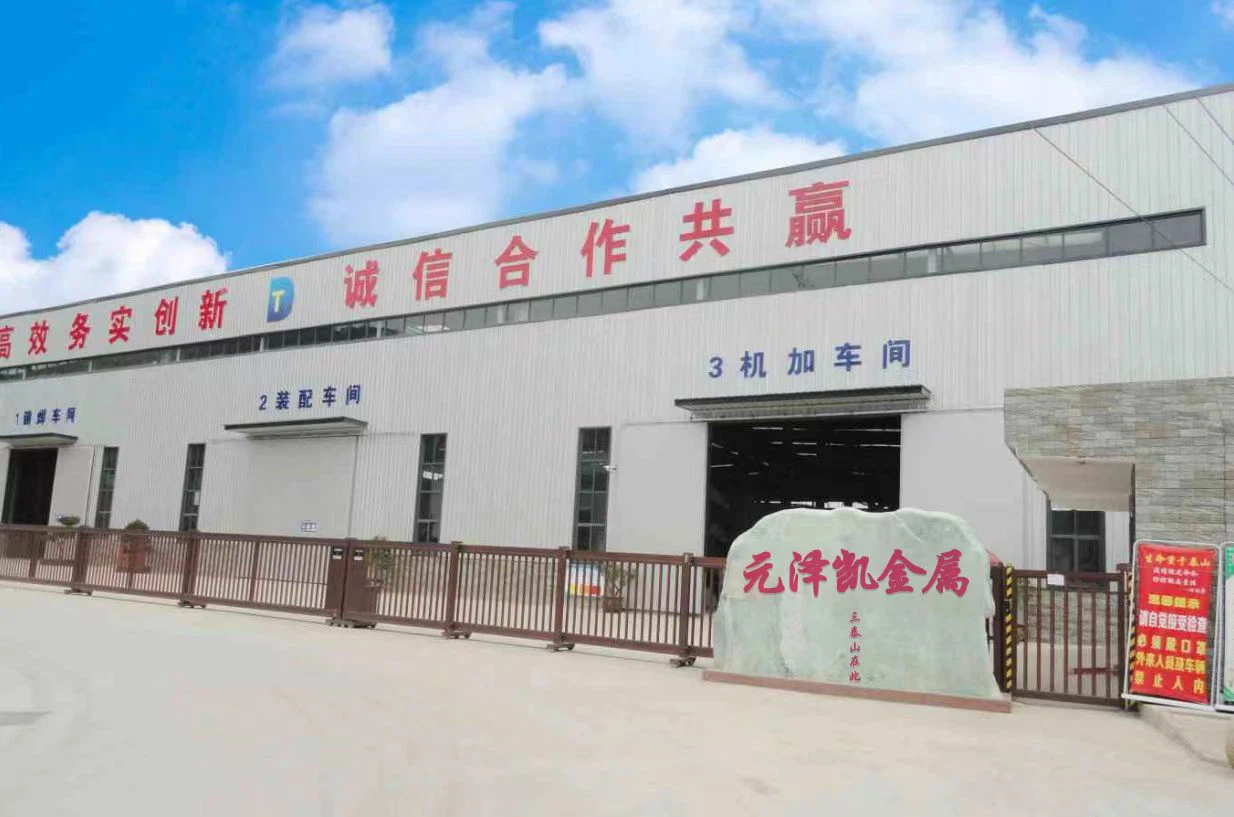
Shaanxi Yuanzekai Metal Technology has been focusing on the production and sales of high-quality titanium materials, processed products, and equipment in Baoji, China for more than 10 years. We were a small company before, but now we have become one of the leading suppliers in China's titanium industry.


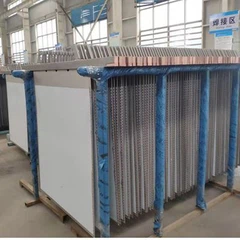
Nowadays, Shaanxi Yuanzekai Metal Technology has become one of the top manufacturers of high-quality titanium materials, products, and equipment. Such as: titanium plates, titanium rods, titanium tubes, titanium wires, titanium flanges, titanium fittings, titanium machined parts, reaction vessels, heat exchangers, etc.


Shaanxi Yuanzekai Metal Technology Co., Ltd. is located in Wenquan Village Industrial Park, High tech Zone, Baoji City, known as the "Titanium Valley". We are a comprehensive enterprise specializing in the processing, production, research and development, and services of rare metals such as titanium, nickel, tungsten, molybdenum, and zirconium. Our clients are spread all over the world.


productcate-1-1


Our Certificate


The company strictly adheres to the GB/T19001 and ISO: 9001 quality management system requirements for production, processing, inspection, and warehousing. The product quality is guaranteed and the after-sales service is perfect.


productcate-1-1


Asked Questions


Q: Can titanium tubing be flared?

A: The flaring process of thin-walled tubes from light metal alloys such as titanium is very important in automotive and aerospace industries, which is usually carried out at high temperatures.

Q: What is the ASTM standard for titanium tubing?

A: The standard ASTM B338 is the industry standard for the production of titanium tubes for use in applications including: heat exchangers, condensers and evaporators. It is the most commonly used standard worldwide when specifying titanium tubing.

Q: How strong is a titanium tube?

A: It is a lightweight yet incredibly strong material. The exact strength of titanium tubing depends on the specific alloy and manufacturing process used. However, in general, titanium tubing has a tensile strength ranging from 550 to 1100 megapascals (MPa).

Q: How hard is it to bend titanium tubing?

A: Without a specialized titanium tube bending machine, it's almost impossible. Even with manual tube benders, the process can take a lot of effort to bend/form even a thin titanium tube. Even hot bending requires a certain degree of effort and lots of time.

Q: What is the best way to cut titanium tube?

A: There are many different methods for cutting titanium and these include:
Mechanical cutting.
Band sawing.
Water jet cutting.
Plasma cutting.

Q: Does titanium wear out faster than steel?

A: Some types of steel are actually stronger than some types of titanium, especially when it comes to hardness or resistance to wear and tear. For example, 17-PH stainless steel can have a higher tensile strength than some titanium grades while still being relatively strong and corrosion-resistant.

Q: Can you flare titanium tubing?

A: The titanium gr. 2 tube was flared with a coned tool having an angle ≤ 60° until the tube at the mouth of the flare met the requirement of minimum 20% expansion-ratio of inside diameter. No cracking or rupture is visible by unaided eye. The tube ends after flattening test.

Q: How thick is a titanium tube?

A: Sandvik titanium tubes are available in size range outside diameter 9.53-38.1 mm (3/8 - 1 1/2 in.) with wall thicknesses from 0.7 to 5 mm (0.0275 to 0.1968 in.).

Q: Do you have to heat titanium to bend it?

A: The ductility (bendability and stretch formability) of titanium increases with temperature. Thus, forming operations can be done at elevated temperatures which would be impossible at room temperature. The influence of elevated temperature on bend radius of annealed Grade 5 sheet is shown in Table 2.

Q: How do you straighten a titanium tube?

A: In order to straighten the titanium tube completely, a oval-flattening straightening mechanism shall be conducted also on the six-rolls straightener. When the tube is fed through a pair of rolls, the gap between them can be adjusted to a distance that is slightly smaller than the outside diameter of the tube.

Q: How do you polish titanium tube?

A: Step 1: Start With 220 Grit Sand Paper. Take a sheet of 220 sand paper and lay it, rough side up, on a flat surface. ...
Step 2: Move on to 800 Grit. Next is 800 grit with medium-cut metal polish. ...
Step 3: Move on to 2000 Grit. ...
Step 4: Move on to a Buffing Wheel. ...
Step 5: The Final Finish.

Q: What are the 4 grades of titanium tube?

A: Titanium tube typically contain traces of aluminum, molybdenum, vanadium, niobium, tantalum, zirconium, manganese, iron, chromium, cobalt, nickel, and copper. The four grades, or varieties of titanium alloys are Ti 6AL-4V, Ti 6AL ELI, Ti 3Al 2.5 and Ti 5Al-2.5Sn.

Q: What is the difference between Type 1 and Type 2 titanium?

A: Grade 1 is the material of choice for any application where ease of formability is required. It is most commonly used in chemical processing, architecture, automotive parts, and aeronautic structures. Grade 2 is “commercially pure" titanium and provides lightweight and corrosion resistance.

Q: What is titanium tubing used for?

A: Titanium tube has lightweight, high strength, and superior mechanical properties. It is widely used in heat exchange equipment, such as tube heat exchangers, coil tube heat exchangers, serpentine tube heat exchangers, condensers, evaporators, and conveying pipes.

Q: Is titanium tube stronger than steel?

A: Is titanium stronger than steel? If you're looking for a short answer, yes. Titanium has a higher strength-to-weight ratio, making it well-suited for applications that place a premium on stronger, lighter alloys — like aerospace.

Q: Which is stronger, tungsten or titanium tube?

A: As mentioned above, tungsten is the strongest of any natural metal (142,000 psi). But in terms of impact strength, tungsten is weak — it's a brittle metal known to shatter on impact. On the other hand, Titanium has a tensile strength of 63,000 psi.

We're professional titanium tube manufacturers and suppliers in China, specialized in providing high quality customized service. We warmly welcome you to buy titanium tube for sale here from our factory. For price consultation, contact us.

titanium tube, titanium stub, gr9 titanium tube

Send Inquiry