Why Choose us


Quality Assurance
The company strictly adheres to the GB/T19001 and ISO: 9001 quality management system requirements for production, processing, inspection, and warehousing. The product quality is guaranteed and the after-sales service is perfect.


Experience and expertise
We have more than 15 years of experlence, can guarantee the quality of products and services.


High-quality service
We deliver high-quality service, ensuring that our clients receive value for their investment.

First 12 Last
Titanium Clad Copper Bars


What is Titanium Clad Copper Bars


Titanium clad copper bars is a composite material which has a copper core and titanium layer. This structure allows it can carry high current in corrosive processes. Sometimes it is also referred to as Ti clad Cu, Ti/Cu, Ti clad copper, Ti-clad Cu, Ti-Clad copper, Titanium coated copper, Titanium plated copper.


Benefits of Titanium Clad Copper Bars


High conductivity
Copper is one of the most conductive metals, and combining it with titanium, which is also a good conductor, creates a product that has an excellent conductivity rating. Titanium clad copper bars has a higher conductivity rating than other materials like stainless steel and brass.


Corrosion resistance
The most significant advantage of using titanium clad copper rod is its excellent corrosion resistance. Copper is known for its susceptibility to corrosion, but when it is clad in titanium, it becomes highly resistant to corrosion. This makes titanium clad copper bars an ideal choice for use in harsh environments and where corrosion is a concern.


Long lifespan
Because it is resistant to corrosion, it has a longer lifespan than other materials that are prone to corrosion. This means that you will not need to replace titanium clad copper rods as frequently as other materials, saving you time and money in the long run.


Reduced maintenance costs
Since titanium clad copper bars has a long lifespan and is resistant to corrosion, it requires less maintenance than other materials. With less maintenance, your costs will be reduced, and you can focus on other aspects of your operations.


Enhanced safety
In some applications, safety is critical. Titanium clad copper bars is a safe and reliable product that can be used in various safety-critical applications. This is because it is resistant to corrosion, which can lead to failures and other safety concerns.


Environmental friendliness
It is a sustainable and environmentally-friendly choice. It is made from materials that are readily available, and it has a long lifespan, which reduces the need for replacements. Additionally, as it is corrosion-resistant, it does not release harmful chemicals into the environment.


Versatility
It is a versatile product that can be used in a variety of applications. It can be used in the construction of heat exchangers, electrical components, and industrial equipment. Whether you are working in the automotive, aerospace, or industrial sectors, titanium clad copper bars can offer a solution to your needs.


钛包铜棒


Titanium Clad Copper Bars & Its Production Methods

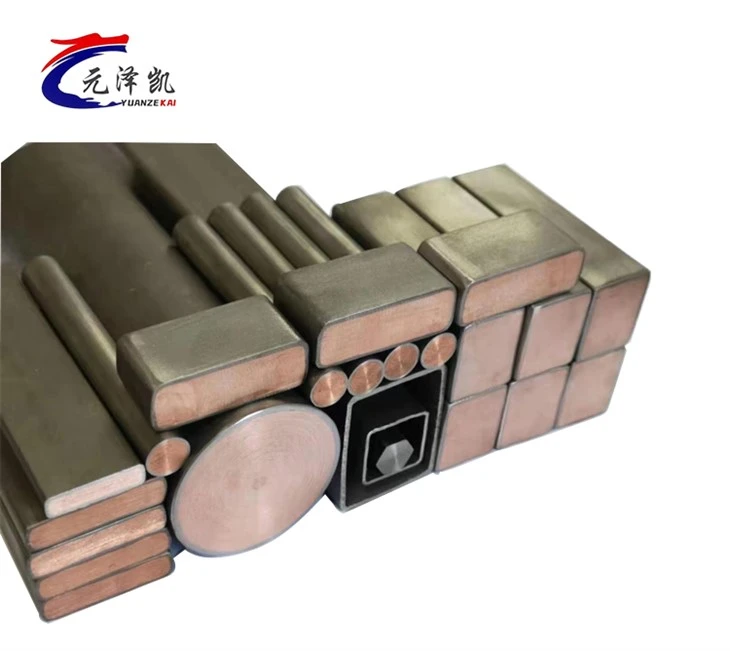
Titanium clad copper bars is a metallic material coated with a titanium layer of a certain thickness (generally 1.0~1.2mm) on a copper rod. It is the main component of the metal anode. According to its cross-sectional geometry, it can be divided into round, flat, square, and rectangular titanium clad copper bars, and so on.

This composite titanium material combines the excellent electrical conductivity of copper and the excellent corrosion resistance of titanium. It can be used as a conductor carrying large currents under relatively corrosive working conditions while ensuring the uniformity of current density and eliminating the pollution of electrolytes caused by the corrosion of copper conductors.

Therefore, it has become the main component of the production of metal anode electrolyzers. Since its invention in the 1960s, it has developed rapidly in various countries around the world.

The common production methods of titanium clad copper bars mainly include the following: hot extrusion method, hot extrusion and stretching method, explosion method, and explosion and rolling method.

The titanium clad copper bars manufactured by hot extrusion has high strength and good composite fastness, and it is not easy to separate titanium and copper. However, the titanium clad copper bars produced by this method has a rougher surface and lower bending resistance. After the extruded rod is subjected to a certain cold stretching, the surface roughness is improved, the bending resistance is improved, and the product dimensional accuracy can also be improved. Therefore, the titanium clad copper bars currently on the market is mainly produced by hot extrusion and stretching.

The explosive method is to first put a copper rod into a titanium tube, place explosives evenly around the titanium tube, use a detonator to detonate the explosive, and then make the copper rod and the titanium tube form a composite under the action of explosive force. However, this method has low production efficiency and high cost. At present, no one adopts this method in industrial production.

The explosion rolling method is to use a large size titanium tube and copper rod to make billet by explosion method and then the titanium clad copper bars is made by the groove rolling method. Compared with the explosive method, this method has higher efficiency and lower cost, but is not suitable for mass production, and can only produce rectangular and flat rods. Whether this method is suitable for the production of titanium clad copper bars with other shapes still needs to be further explored.


Titanium Cathode Plate


What is Titanium Cathode Plate


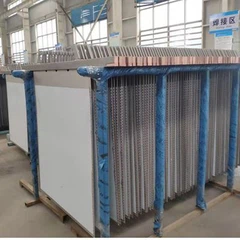
The titanium cathode plate is an excellent material in acid resistance and has been employed for the cathode electrode at the time of manufacturing electrodeposition as a material that changed and denatured as scarcely as possible in the shape of the cathode electrode surface even in a strongly acidic copper electrolyte.


Benefits of Titanium Cathode Plate
 
01/

Resistance to corrosion
When exposed to air, a thin layer of oxide forms on the surface of titanium cathode plate. This layer is very difficult for most materials to penetrate. As such, titanium cathode plate demonstrates fantastic resistance to corrosion – and will not suffer adverse changes (i.E. Pitting, cracking) due to corrosive substances.
Whether it's used indoors or outdoors, it will last for many years – making it an excellent choice for buildings and marine applications, where it will be continuously exposed to seawater and rain.

02/

Strength
One of the biggest advantages of titanium cathode plate is its strength. Not only is it one of the strongest metals on the planet (rivalling even steel!), it also has the highest strength-to-density ratio of any metallic element on the periodic table. This makes it a popular option in many professions.
What's more, as it has a low density, titanium cathode plate is also incredibly lightweight.

03/

Non-toxic
Metals such as iron, steel and aluminium can all be toxic to humans.
By contrast, titanium cathode plate is bio-compatible. It is completely non-toxic to both humans and animals (partially due to the fact that it's resistant to corrosion) – and, as a result, can be safely implanted into the body without causing an adverse reaction. This is why titanium cathode plate is commonly used within the medical industry (e.G. To permanently strengthen broken bones) and for dental implants.

04/

Low thermal expansion
Titanium cathode plate has a low coefficient of thermal expansion.
Essentially this means, compared to most other manufacturing materials, it will not expand and contract anywhere near as much under extreme temperatures. In fact, it expands approximately 50% less than steel, and therefore provides much greater structural stability.
This feature is especially useful if creating a superstructure that requires a rigid yet lightweight framework. It also makes titanium cathode plate suitable for building applications where fire safety is paramount (e.G. Skyscrapers).

05/

High melting point
This is one of the key benefits of titanium cathode plate. It demonstrates an exceptionally high melting point (around 1668°c) and, as such, is perfect for use in high-temperature applications. For example, it's the metal of choice for foundries, turbine jet engines and even some satellites.
It's worth noting, this advantage is enhanced due to the low thermal expansion mentioned above.

06/

Excellent fabrication possibilities
Despite its strength, titanium cathode plate is a relatively soft and ductile refractory metal. As such, it can be easily machined and fabricated to create a diverse range of metal parts and components. Due to its resistance to oxidisation, it can also be open-air and seam welded, without the need for any type of flux agent – and the weld zone will not require any form of additional protection.


How To Choose The Right Thickness For Titanium Cathode Plate?


Understanding the importance of titanium plate thickness
When it comes to choosing titanium cathode plate for various applications, one crucial factor to consider is the thickness of the plate. The thickness of a titanium plate can significantly impact its strength, durability, and suitability for specific tasks. In this article, we will explore the various aspects you should consider when selecting the right thickness for titanium cathode plate.


The significance of material thickness in titanium cathode plate
Before delving into the different factors that influence the choice of titanium plate thickness, it is essential to understand why this aspect is so significant. The thickness of a titanium plate directly affects its mechanical properties, such as strength, stiffness, and resistance to deformation. Additionally, the thickness plays a crucial role in determining the plate's weight, cost, and overall performance in different applications.


Considering the application and intended use
The first step in choosing the right thickness for titanium cathode plate is to consider the specific application and intended use. Different industries and tasks require varying levels of strength, durability, and weight. For instance, aerospace applications may require thinner plates to reduce weight, while industrial machinery may need thicker plates to withstand heavy loads. Identifying the application and its requirements will guide your decision-making process.


Understanding mechanical properties
When selecting the thickness of titanium cathode plate, it is crucial to have a basic understanding of the material's mechanical properties. Titanium offers excellent strength-to-weight ratio, corrosion resistance, and high temperature capabilities. However, these properties can vary based on the plate's thickness. Thicker plates tend to have higher strength and stiffness but may be heavier, while thinner plates offer reduced weight but may sacrifice some strength.


Considering strength and load-bearing capacities
If your application involves heavy loads or requires high strength, it is essential to choose a titanium plate with adequate thickness. Thicker plates generally have higher load-bearing capacities and can withstand greater forces without deforming or failing. On the other hand, if your application involves lighter loads or weight restrictions, thinner plates may be more suitable.


Weighing durability and resistance to deformation
In some applications, resistance to deformation and durability are crucial factors. Thicker titanium cathode plate exhibit higher resistance to deformation and are less prone to bending or warping under stress. Thinner plates, while lighter, may be more susceptible to bending or buckling. Therefore, if your application requires high resistance to deformation, opting for thicker plates is advisable.


Balancing weight and performance
Weight is often a critical consideration in many industries. Titanium's lightweight nature makes it an ideal choice for various applications where weight reduction is essential. Thinner titanium cathode plate offer significant weight advantages over their thicker counterparts. However, it is crucial to strike a balance between weight reduction and the desired performance characteristics. Choosing a thickness that meets both weight and performance requirements is vital.


Considering cost and budget constraints
Cost is another factor to consider when selecting the right thickness for titanium cathode plate. Thicker plates generally cost more due to the increased amount of raw material required and the additional machining and processing involved. Therefore, it is essential to evaluate your budget and cost constraints before making a decision. In some cases, it may be more cost-effective to opt for thinner plates that still meet the required specifications.


Seeking expert advice
Choosing the right thickness for titanium cathode plate can be a complex task, especially if you are not familiar with the material's properties and various applications. In such cases, it is highly recommended to seek expert advice. Consulting with engineers, metallurgists, or titanium suppliers can provide valuable insights and help ensure you make an informed decision based on your specific requirements.


Conducting thorough testing and evaluation
Prior to implementing titanium cathode plate in your application, it is crucial to conduct thorough testing and evaluation. This includes testing the chosen thickness to ensure it meets the required specifications and performance expectations. Additionally, evaluating the plate's performance under various conditions and stresses can help identify any potential issues or limitations.


Titanium Anode


What is Titanium Anode


A titanium anode is a positively charged electrode made from the element titanium. Titanium has the chemical symbol Ti and the atomic number 22. The electrodes leaving a titanium anode supply a metallic surface with an electrical current when in motion.


Benefits of Titanium Anode

The advantage of stable plating uniformity
The advantage of plating uniformity of titanium anodes refers to the use of insoluble anodes to maintain stable plating uniformity for a long time, which is determined by the characteristics of insoluble anodes. In the electroplating process, in order to ensure the stability of the electroplating uniformity, it is necessary to ensure that the electroplating conditions are controllable and stable, and it is very important to keep the uniformity of the discharge from the anode end to the cathode end unchanged.


Higher production efficiency
Titanium anodes can work at higher current densities. Due to the passivation of the phosphate film on the surface of the phosphor copper ball, the maximum operating current density of the phosphor copper ball cannot exceed 2.5~3 ASD; while the maximum current density that the titanium anode can withstand is dozens of times that of the phosphor copper ball. Therefore, through the support of equipment and the matching of corresponding electroplating conditions, titanium anodes are fully capable of achieving higher equipment capacity and production efficiency.


More stable process control
On the one hand, because the thickness of the phosphate film on the surface of the phosphor copper ball is difficult to control perfectly, under the premise of avoiding the passivation of the phosphor copper ball due to the excessive thickness of the phosphide film, the phosphor copper ball tends to be excessively dissolved, which leads to the formation of the potion. The continued increase in copper ion concentration.


Higher process capability
In terms of equipment design, the use of phosphor bronze balls limits the design method of the equipment, because the phosphor bronze ball system cannot get rid of the combination mode of "phosphor bronze balls-titanium basket-anode bag". This phosphor bronze ball system also determines a certain electroplating method.

钛阳极


Titanium Anode Production Process


Select TA1 type titanium base material with smooth and flawless surface, free of deep scratches and defects.

Machine the titanium base material into the desired shape and size.

Anneal and level the titanium base material at a temperature >500°C to eliminate stress and ensure flatness.

Polish the titanium base material mechanically or manually to remove the dense titanium oxide layer formed during annealing and leveling, and restore the metallic luster of titanium.

Pickle and corrode the titanium base material with 10% concentration of oxalic acid in a slightly boiling state for several hours, so that the surface oxide layer is converted into titanium hydride layer.

Prepare the precious metal solutions with appropriate quality and quantity. Our company uses a combination of four precious metals: ruthenium, iridium, platinum, and tantalum.

Check the quality of the pickled titanium base material, which should have a gray uniform pitted structure on the surface, and then apply the first coating manually, sinter at a set suitable temperature, cool naturally after sintering, and apply the second coating when it reaches room temperature. Repeat this process for more than 25 times to enhance the coating life.

Perform life experiment test with the furnace test piece after the sintering of the processed parts is done.


Our Factory


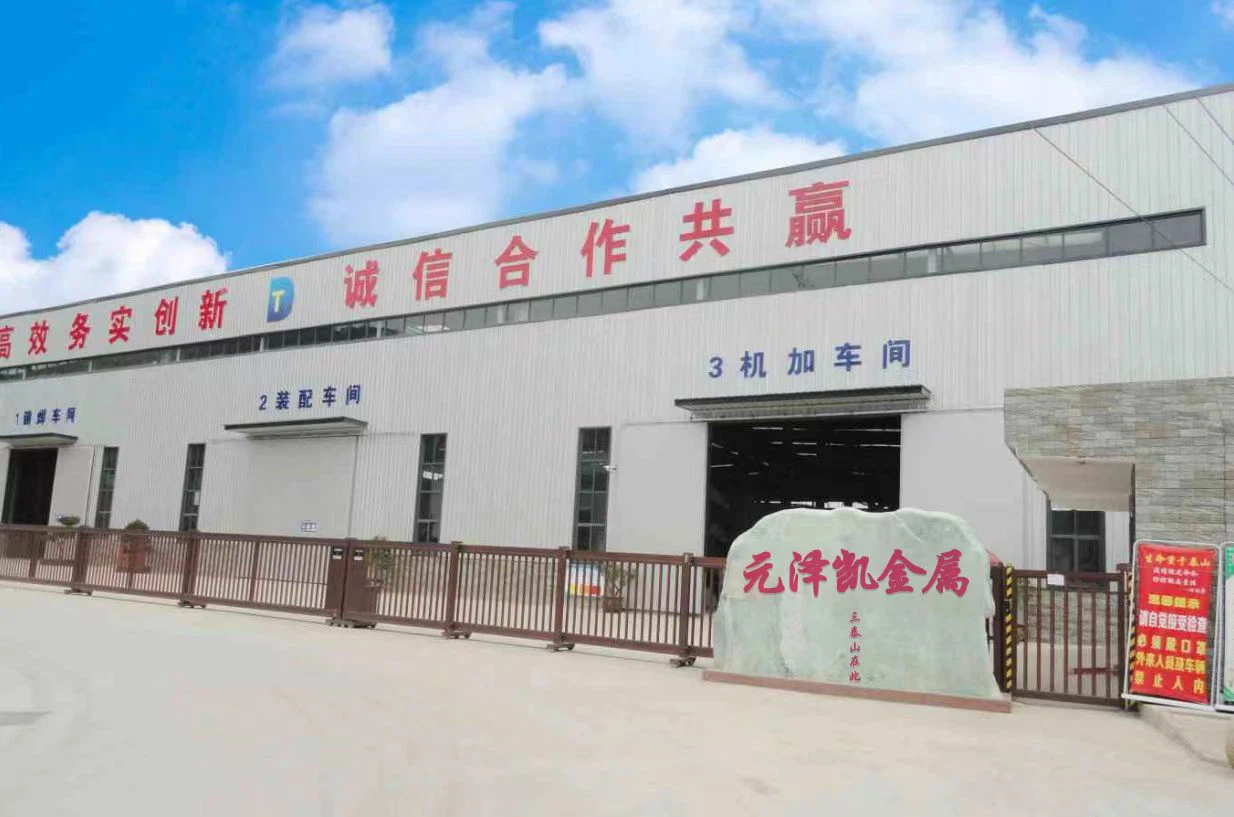
Shaanxi Yuanzekai Metal Technology has been focusing on the production and sales of high-quality titanium materials, processed products, and equipment in Baoji, China for more than 10 years. We were a small company before, but now we have become one of the leading suppliers in China's titanium industry.


Nowadays, Shaanxi Yuanzekai Metal Technology has become one of the top manufacturers of high-quality titanium materials, products, and equipment. Such as: titanium plates, titanium rods, titanium tubes, titanium wires, titanium flanges, titanium fittings, titanium machined parts, reaction vessels, heat exchangers, etc.


Shaanxi Yuanzekai Metal Technology Co., Ltd. is located in Wenquan Village Industrial Park, High tech Zone, Baoji City, known as the "Titanium Valley". We are a comprehensive enterprise specializing in the processing, production, research and development, and services of rare metals such as titanium, nickel, tungsten, molybdenum, and zirconium. Our clients are spread all over the world.


productcate-1-1


Our Certificate


The company strictly adheres to the GB/T19001 and ISO: 9001 quality management system requirements for production, processing, inspection, and warehousing. The product quality is guaranteed and the after-sales service is perfect.


productcate-1-1


Asked Questions


Q: Can copper and titanium be used together?

A: The combination of high strength and low density gives copper titanium one of the highest strength-to-weight ratios which allows substantial weight reduction. This improves performance in aerospace, automotive, and other weight-critical uses.

Q: Can a titanium clad copper bars conduct heat?

A: Due to its relatively high melting point (1,668 °C or 3,034 °F) it has sometimes been described as a refractory metal, but this is not the case. It is paramagnetic and has fairly low electrical and thermal conductivity compared to other metals.

Q: At what temperature does titanium clad copper bars catch fire?

A: In order to ignite a titanium alloy, an intense oxygen supply must be present and the metal temperature must reach about 1600°C (in standard atmosphere; Figs. "Titanium fires risk of flight mission" and "Titanium fire ignition in labyrinths").

Q: What happens to titanium clad copper bars when it gets cold?

A: Tested to temperatures of 1,112°F, the material retained its structure and properties. And at super-cold temperatures, the metal withstood more strain than normal titanium, which is the opposite of what generally happens for most metals—i.e., at low temperatures, most materials become more brittle.

Q: What happens if you overheat titanium clad copper bars?

A: Some references suggest titanium alloys for aerospace applications have good mechanical performance at operating temperatures up to 600° C. Above that temperature most titanium alloys will rapidly soften, creep, and/or oxidize .

Q: What color does titanium clad copper bars turn when heated?

A: The surface of titanium metal turned yellow at 300 °C, purple at 400 and 450 °C, blue at 500 °C, light blue at 550 °C, dark gray at 600 °C and black at 700 °C.

Q: How much heat can titanium clad copper bars withstand?

A: Titanium is a lustrous transition metal which is silver in colour. Titanium alloys have high tensile strength to weight ratio, good toughness, extraordinary resistance to corrosion and an ability to withstand extreme temperatures of 600°C plus.

Q: Is titanium clad copper bars magnetic?

A: While it has many desirable properties, one question that often arises is whether or not titanium clad copper bars is magnetic. The short answer is no, titanium is not magnetic. This is because titanium has a crystalline structure with no unpaired electrons, which are required for a material to exhibit magnetic properties.

Q: Does titanium warp when heated?

A: Customer experience has shown that these are the only components which may warp or bend if made from titanium. Will my stove warp when heated? Warping is a physical effect which happens when metal is heated unevenly. In other words: Warping cannot be avoided.

Q: What causes titanium clad copper bars to turn blue?

A: Titanium is one of the so-called reactive metals. This means that it reacts to certain conditions—current or heat, in this case—by developing an oxide layer that appears brightly colored, even though there is no pigment whatsoever. The color is, in a sense, an illusion.

Q: What is the temperature limit for titanium clad copper bars?

A: Today's Titanium alloys are specified for a maximum service temperature of 600°C. However they are used typically for temperatures around 540°C because the parts have a service time of several thousand hours.

Q: What is the lifespan of titanium clad copper bars?

A: Other metals and materials typically last 20 years, while titanium pipes have an average lifespan closer to 40 years. Many of the properties that make titanium ideal for power plant condenser pipes also make it an ideal metal nuclear waste storage containers.

Q: Is titanium cathode plate positive or negative?

A: The titanium cathode plate is the electrode where electricity is given out or flows out. The anode is usually the positive side. A cathode is a negative side.

Q: What is the ratio of anode to cathode in electroplating?

A: A ratio of 1:10 is often used. Type II: Make the cathode about ½ the max anode surface area: 1:2, cathode to anode. Type III: Make the cathode between ¾ - 1 times the max anode area, about 1:1.3, up to 1:1.

Q: What charge is the titanium cathode plate?

A: The charge of cathode is negative in an electrolytic cell. Electricity gives out from cathode. The anode is usually the positive side of a cell. The cathode is usually the negative side of a cell.

Q: Do titanium anode rods work?

A: Unlike sacrificial magnesium anode rod, a powered titanium anode rod will not sacrifice itself to protect against corrosion. The electrical current supplied by the power supply will stop the loss of electron inside the tank happenning because of the corrosion process.

Q: What is the voltage of titanium anode?

A: In titanium anodizing, the voltage dictates the color. The volt range for color titanium anodizing is between 15 and 110 volts. A bronze color, with the thinnest oxide layer, can be achieved with about 16 volts. A green color, with the thickest oxide layer, can be achieved with 106 volts.

Q: What are the problems with titanium anodizing?

A: Titanium anodizing produces colors through light interference, and achieving a consistent shade can be tricky. The color depends on the oxide layer's thickness, which in turn relies on precise control of the anodizing process parameters like voltage and temperature.

We're professional titanium composite and anode manufacturers and suppliers in China, specialized in providing high quality customized service. We warmly welcome you to buy titanium composite and anode for sale here from our factory. For price consultation, contact us.

titanium cathode plate, titanium conductive strip, titanium composite and anode

Send Inquiry