

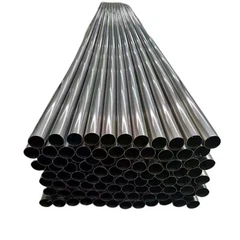


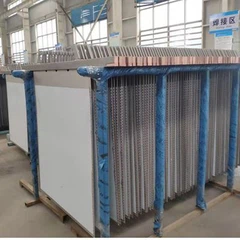


Platinum-plated Titanium Anode
Shape: mesh, plate, tube or customized according to customer needs
Current density: < 8000 A/m2
Production process: electroplating
Coating material: platinum (purity 99.99%)
Noble metal content: ≥ 21.48 g/㎡
Platinum layer thickness: 0.3-15 μm
Temperature: < 80 ℃
PH value: 1-12
Products Description
In electrochemistry, platinum is used as an anode material due to its excellent performance, particularly in acidic media's electrochemical anode oxygen evolution process. Platinum possesses unique antioxidant and electrocatalytic properties not found in other materials. In many important electrochemical production processes, such as the production of hydrogen peroxide and ammonium persulfate, platinum is used as the anode material. However, platinum resources are scarce and expensive. To reduce costs while maintaining the excellent performance of platinum anodes, platinum-plated anode materials have been introduced as replacements for pure platinum electrode products, achieving good results.
Technical parameters of platinum coated anode
Substrate
titanium (Gr1, Gr2, TA1, TA2)
Shape
mesh, plate, tube or customized according to customer needs
Current density
< 8000 A/m2
Production process
electroplating
Coating material
platinum (purity 99.99%)
Noble metal content
≥ 21.48 g/㎡
Platinum layer thickness
0.3-15 μm
Temperature
< 80 ℃
PH value
1-12
The production process of platinum-plated titanium anode
Pretreatment of titanium sheet → electro cleaning → water washing → activation → distilled water washing → brush platinum plating → distilled water washing → blow drying
Technical features of platinum-coated titanium electrode
1. Strong corrosion resistance, durability, and high-temperature resistance, with exceptionally high stability. It can be used in various media.
2. Lower cost than pure gold and pure platinum anodes, while maintaining similar electrochemical properties.
3. High overpotential for oxygen evolution and low overpotential for hydrogen evolution.
4. High output current density, uniform conductivity, and low loss, making it suitable for DSA insoluble anodes.
Correct use of platinum-coated titanium electrode
Before using a platinum-coated titanium electrode, you must first check (and detect) the presence of "fluoride" and "phosphate" ions in the plating solution. Ensure there are no chemical components that could corrode the platinum-coated titanium electrode. Only then can the electrode be safely used. Otherwise, the substrate of the platinum-coated titanium electrode will be severely corroded, causing the platinum coating to fall off and significantly reducing its service life. Do not use hard chromium additives or fluoride-containing industrial chromic anhydride for recycling.
Reasonable Selection of the Best Process:
The current density for the platinum-coated titanium electrode should preferably be below 50 A/dm², and the slot voltage should be below 10 V. Exceeding these values will affect the service life, and in severe cases, it can lead to electrical corrosion, dissolution of the anode, and the coating falling off. It is advisable to choose a process that does not produce solid oxides during the anodic oxidation reaction to avoid oxide thickening and passivation, which can affect the conductivity of the platinum-coated titanium electrode.
The breakdown of the anode is determined by the inherent characteristics of the titanium material. When the slot voltage exceeds 10 V, the titanium surface in contact with the platinum coating begins to dissolve slightly. At 12 V, the titanium is completely broken down. After the breakdown, the slot voltage will no longer display 12 V, but will instead show around 11 V. At this point, the current can no longer be increased, and the anode is damaged. Therefore, to ensure safe use, the slot voltage for the platinum-coated titanium electrode should be kept below 10 V.
Anode and Cathode Surface Area:
In principle, the cathode surface area should be smaller than the effective anode area (i.e., the anode area below the liquid surface). The system should not be used when the anode area is smaller than the cathode area, as this will easily lead to anode breakdown, making it unusable.
Impedance and Tank Voltage:
When the impedance of the plating tank increases, the tank voltage will also rise. If the tank voltage exceeds 10 V, the current should not be increased. Instead, it should be adjusted accordingly-for example, reduce the current by 10% and extend the electroplating time by 10%.
After stopping the anode, it is best to clean it with deionized water, remove it from the plating tank, and store it separately in a deionized water (or pure water) tank to prevent drying. This will help extend the service life of the platinum-coated titanium electrode.
Do not store the electrode in tap water for long periods, as water rust can adhere to the surface and affect its performance.
Application fields of platinum-coated titanium anodes
Platinum-coated anodes can be used in the electrolysis of metals, galvanizing of steel plates, electrolysis for producing ionized water, electrochemical preparation of perchlorates and hypochlorites, the electroplating industry, cathodic protection, desalination, organic electrolysis synthesis, descaling, sterilization, and more.

who we are?
The platinum-plated titanium anode produced by Shaanxi Yuanzekai Metal Technology Co., Ltd. has strong corrosion resistance, high-temperature resistance, and exceptional stability. It can be used in various media and is more cost-effective than pure gold and pure platinum anodes, while offering similar electrochemical properties. It also features high output current density, uniform conductivity, and low loss.
high quality
Advanced Equipment
Professional Team
One-Stop Solution
high quality
advanced equipment
professional team
global shipping
Our address
Wenquan Industrial Park, Maying town, Baoji High-tech Development Zone, Shaanxi province
+86-18700758977

Hot Tags: platinum-plated titanium anode, China platinum-plated titanium anode manufacturers, suppliers, factory, gr2 titanium rod, titanium tee, titanium reducer, gr2 titanium tube, titanium composite and anode, titanium foil
You Might Also Like


Send Inquiry