





Products Introduction
The high-quality titanium anode features a mixed metal oxide (MMO) coating that includes RuO₂ (ruthenium) with a coating thickness of ≥10 μm, IrO₂ (iridium) with a coating thickness of ≥10 μm, TiO₂, Ta₂O₅ (tantalum), Pt (platinum) with a coating thickness of 0.5–5 μm, and PbO₂ (lead dioxide) with a coating thickness of 0.6–1 mm. This coating design significantly reduces cell voltage during chlorine and oxygen evolution in electrolysis by enhancing the electrode's conductivity and efficiency, thereby lowering the energy required for the electrochemical reaction. This results in substantial energy savings and a longer service life for the electrode.
The substrate is made from GR1 or GR2 titanium, which can be reused and re-coated, providing additional cost-effectiveness. Thanks to its high corrosion resistance, the titanium anode is also known as a DSA (Dimensionally Stable Anode) or insoluble titanium anode. This property ensures that it does not contaminate the electrolysis system, helping to improve the purity of the final products.
Products Details
| Product name | High Quality Titanium Anode |
|
Material |
Gr1 GR2 titanium based |
|
Coating |
Iridium-Tantalum, Ruthenium-Iridium, Ruthenium-Iridium-Titanium,Platinum,Ruthenium oxide, Iridium oxide as coating |
|
Technology |
Sand blasting, Acid washing and Brush coating |
|
Dimension |
According to customers' drawing |
|
Shape of base material |
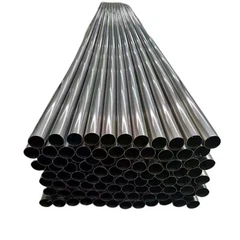
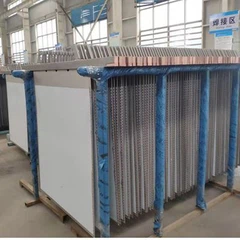
Sheet, pipe, rod, wire and mesh |
|
Parameter |
1.Current density≤2000A/m2 2.PH 0.1-14 3.Max content of fluoride ion is 200PPM |
|
Electrolyte |
Salt water/ Saline solution/Brine/Sea water |
|
Advantages |
1.Improved resistance for oxygen/chlorine mixed evolution |
Products Display


High Quality Titanium Anode Products features
Mixed Metal Oxide (MMO) Coating
A high-quality titanium anode is coated with MMO, including materials such as RuO₂ (ruthenium oxide) with a coating thickness of ≥10 μm and IrO₂ (iridium oxide) with a thickness of ≥10 μm. These coatings improve the anode's conductivity, reducing the cell voltage required during electrolysis. For example, in chlorine production, the use of MMO-coated anodes can reduce cell voltage by up to 300 mV, resulting in energy savings of 3–5% in industrial processes.
Long Service Life
Titanium anodes are known for their durability. The MMO coatings - such as Pt (platinum) with a thickness of 0.5–5 μm and PbO₂ (lead dioxide) coatings of 0.6–1 mm - provide high resistance to corrosion, allowing the anode to last significantly longer than traditional graphite or lead-based anodes. In chlorine and oxygen evolution reactions, these anodes can operate for over 8–10 years without replacement, making them a cost-effective choice for long-term use.
Reusability
The substrate of high-quality titanium anodes, typically made from GR1 or GR2 titanium, can be reused and re-coated, contributing to sustainability and cost-effectiveness. After several years of operation, the anode can be recoated with fresh MMO layers, extending its lifecycle and reducing the need for frequent replacement.
High Purity of Final Products
Titanium anodes do not dissolve or corrode during use thanks to their inert nature and the protective coating of mixed metal oxides (MMO), which provides excellent resistance to chemical reactions and oxidation in electrolytic environments. This ensures that no impurities are introduced into the electrolysis process. For example, in the chlor-alkali industry, titanium anodes help maintain chlorine gas purity at 99.5% or higher, which is essential for producing chemical-grade chlorine used in pharmaceuticals and other sensitive applications. In contrast, traditional graphite anodes can release particles into the electrolyte, contaminating the final product and reducing its quality. By using titanium anodes, companies avoid this issue, meet stringent industry standards for product purity, and ensure a cleaner, more reliable process.

