





Titanium Clad Copper Bars
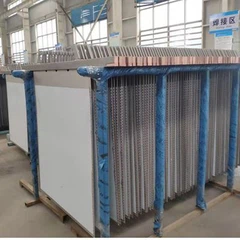
Transportation: Electrolytic copper recovery in the electrolysis industry, electrolytic water
Brand: Yuanzekai
Product specifications: 40mmW * 20mmT * 1490mmL/1236mm L * 852mm W * 3.0mmT
Features: 1. The stainless steel cathode has good chemical stability, and the generated electrolytic copper plate is easy to peel off
2. It can be used in high current density to improve the utilization rate of electrolytic cells and expand production capacity. Can be used in high current density,
3. Can be reused repeatedly
Products Description
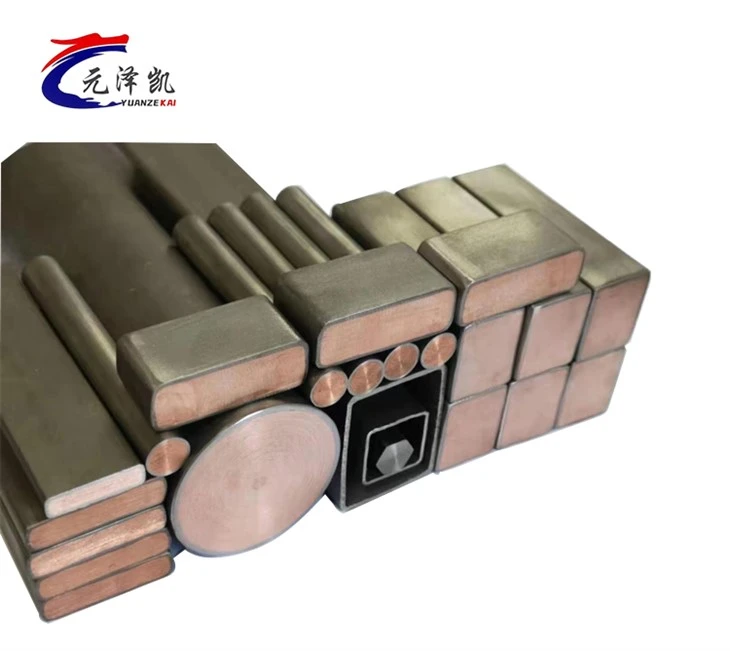
A titanium-copper composite rod is a type of copper rod wrapped with a titanium plate, typically 1.0–1.2 mm thick. Based on the geometric shape of its cross-section, it is mainly classified into circular, flat, square, rectangular, drum-shaped, etc. This composite material combcopper's excellent conductivity with titanium's superior corrosion resistanceanium. It serves as a conductor carrying high currents in highly corrosive environments while ensuring uniform and consistent current density, thereby eliminating electrolyte contamination caused by the corrosion of copper conductors. As a result, titanium-copper composite rods have become the primary conductor components for manufacturing metal anode electrolytic cells, cathode plates, and anodes.
Titanium Clad Copper Bars method
Reference standard
GB/T 12769-2003
Basic materials
copper T1, T2, TU1, aluminum, etc.
Cladding materials
titanium, zirconium, stainless steel (304, 316 l), nickel, titanium, etc.
Traditional coating thickness
1.0-2.5 millimeters
Main cross-sectional shape and size range (millimeters):
Width of rectangle (20-150) x thickness (6-30)
Circular diameter (8-50), square diameter (10-30), wire diameter (2.0-8.0)
We can also produce other composite materials and product
specifications according to customer needs
Hot extrusion method
The composite rod manufactured using the hot extrusion method has the advantages of high strength, strong bonding, and resistance to titanium-copper separation. However, its disadvantages are poor surface roughness and low bending resistance. After undergoing a certain degree of cold stretching, the surface roughness of the extruded rod improves, its bending resistance is enhanced, and the product's dimensional accuracy is also increased. Therefore, our company primarily produces composite rods using hot extrusion and stretching.
Explosion method
First, a copper rod is inserted into a titanium tube, and explosives are evenly placed around the titanium tube. When the explosives are detonated with a detonator, the copper rod and titanium tube form a composite rod under the force of the explosion. However, due to this method's low production efficiency and high cost, it is not widely used in industrial production.
Explosion+Rolling Method
This method is suitable for the composite of large-sized titanium tubes and copper rods. The rod blanks are produced by the explosion method and then rolled into composite bars by the pass-rolling method. This method has higher efficiency and lower cost compared to the direct explosion method, but it is not suitable for mass production and can only produce rectangular and flat rods. Further exploration is needed to determine whether this method is suitable for the production of titanium copper composite rods of other shapes.


Our customization capabilities
We can customize titanium-copper composite rods in various shapes, specifications, and quantities. The minimum order quantity is 5 pieces. If you need titanium-copper conductive strips, please do not hesitate to contact us.

Hot Tags: titanium clad copper bars, China titanium clad copper bars manufacturers, suppliers, factory, tungsten target, titanium fasteners, , 8 mm tungsten rod, gr1 titanium wire, thin titanium wire
You Might Also Like


Send Inquiry