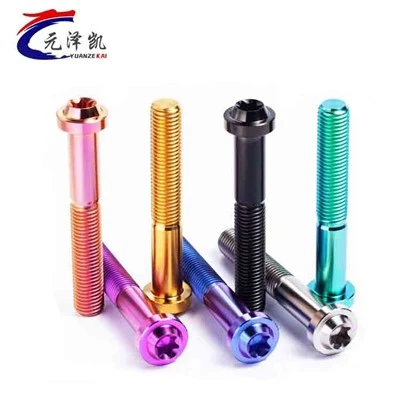
What is Titanium Fasteners


Titanium fasteners are best known for being strong, lightweight, and corrosion resistant. They are critical to many industries including chlor alkali, marine, off-shore oil & gas, desalination, medical, and pulp and paper.


Benefits of Titanium Fasteners


Corrosion Resistant
One of the significant benefits of titanium fasteners is that they are highly resistant to corrosion. Titanium doesn't react with oxygen, water, and other environmental chemicals, unlike other materials such as steel and aluminium. This feature makes it an ideal material for fasteners constantly exposed to the elements.


Durability
Titanium is an incredibly strong and durable material known for its high strength-to-weight ratio. This means that titanium fasteners can withstand extreme loads without undergoing deformation or failure. Additionally, the high strength of titanium makes it resistant to fatigue and wear and tear.


Lightweight
Titanium is one of the lightest materials, weighing approximately half as much steel. This makes titanium fasteners an attractive option for applications where weight is critical. Lightweight fasteners help reduce the overall weight of the assemblies, thus increasing fuel efficiency.


Non-Magnetic
Titanium is a non-magnetic material highly resistant to magnetic fields, unlike steel, a ferromagnetic material. This feature makes titanium fasteners ideal for applications that require non-magnetic materials, such as MRI machines.


Cost-Effective
Titanium fasteners are also cost-effective in the long run due to their durability and longevity. Titanium fasteners can last for decades with minimal maintenance, unlike other metals, such as steel or aluminium, which may require frequent replacement due to rust or corrosion. This makes them a great choice for applications where reliability is essential, but budgets are tight.


Biocompatibility
Another benefit of titanium fasteners is their biocompatibility. Titanium is a biocompatible material, meaning that it's not toxic to living tissue and doesn't cause an allergic reaction in humans. This feature makes titanium fasteners an ideal choice for medical device manufacturers.


Low Thermal Expansion
Titanium has a low thermal expansion coefficient, meaning it does not change significantly when exposed to extreme temperatures. This makes it an ideal choice for applications where temperature changes occur frequently, as the fastener will remain secure despite fluctuations in temperature or humidity levels.

First 123 Last


Why Choose us


Quality Assurance

The company strictly adheres to the GB/T19001 and ISO: 9001 quality management system requirements for production, processing, inspection, and warehousing. The product quality is guaranteed and the after-sales service is perfect.


Experience and expertise

We have more than 15 years of experlence, can guarantee the quality of products and services.


High-quality service

We deliver high-quality service, ensuring that our clients receive value for their investment.


Titanium Fasteners Grades Explained


Grade 2 titanium
This is one of the most common types of titanium, and is considered to be a workhorse in the fastener industry. Grade 2 titanium is also known as commercial pure titanium, owing to the fact that it contains 99% titanium. Some of the instances where grade 2 titanium fasteners would be ideal include in instances where you need very good corrosion resistance such as in environments with a lot of salt water and brine. In addition to that, they are also extremely resistant to other chemicals including chlorides, acid solutions and reducing acids. The fact that it’s also very light and low density also makes it ideal for use in instances where weight has to be minimized.


Grade 5 titanium
Grade 5 titanium has been modified to give it extra strength. It comprises around 4% vanadium, 6% aluminum and 90% titanium. The result is that it has twice the strength and half the weight of comparable steel fasteners. However, it maintains the corrosion properties of Grade 2 titanium, which means that it can be used in all the environments mentioned above.


Grade 7 titanium
Grade 7 titanium is not as commonly used as the two above. However, it is still quite common in the fastening industry, since it has increased resistance against corrosion. This is on account of the fact that it has 0.15% palladium alloyed with it. The palladium dramatically increases the initially excellent corrosion resistance that pure titanium has, which makes it ideal for use in areas where the risk of chemical corrosion are extremely high.


Grade 23 titanium
This is a type of titanium that has been created with improved mechanical properties even at cryogenic temperatures. It is less likely to suffer from fatigue and to crack, which makes grade 23 fasteners ideal for fastening equipment that is likely to be used in such environments.


钛紧固件螺栓螺母


Types of Titanium Fasteners

Titanium Screws
In precision engineering, titanium screws are used daily. Their corrosion resistance, coupled with impressive tensile strength, makes them ideal for critical applications in electronics, medical devices, and marine environments.


Titanium Washers
Often overlooked, titanium washers are unsung heroes in fastening assemblies. Providing a barrier against corrosion and ensuring even distribution of loads, these small components contribute significantly to the reliability of the overall structure.
Our range includes washers in both titanium grade 2 and titanium grade 5. There are also options for stainless steel or steel with a zinc coating. Our captive washers have a very shallow thread on them, which enables them to be screwed on, and once past the threads they do not separate from the captive screw or bolt.


Ball Lock Pins
Ball lock pins, also known as quick-release pins, are mechanical fasteners designed for rapid and secure assembly and disassembly in various applications. They consist of a cylindrical body with a spring-loaded ball at one end and a push-button or handle at the other. Our range of ball lock pins are built as a single piece design, which means there is no danger of parts coming away from the pin. Suitable for frequently repeated connections, they have a temperature resistance of up to 400°C.


Application of Titanium Fasteners


Aerospace Industry
The aerospace industry is one of the most significant users of titanium fasteners. Titanium fasteners’ lightness in weight and high strength-to-weight ratio make them perfect for the aerospace industry. To reduce aircraft weight and improve fuel efficiency, manufacturers use titanium fasteners to construct critical components like wings, tail sections, engines, and landing gears. Titanium fasteners also have high corrosion resistance, making them ideal for aeroplanes operating in saline and humid environments.


Medical Industry
Manufacturers prefer titanium over other medical devices and implants for its excellent biocompatibility, non-toxicity and non-reactivity when in contact with body tissues and fluids. The lightweight and high strength of titanium makes it an ideal material for dental and orthopaedic implants that require strength to support body weight while not restricting movement. Moreover, unlike steel, titanium fasteners used in orthopaedics don’t interfere with Magnetic Resonance Imaging (MRI) testing.


Motorsports Industry
Motorsports demand lightweight, high-strength materials that withstand high stress and harsh environments. Titanium fasteners are robust and lightweight, which means they can withstand the high acceleration, vibrations, and heat that come with motorsports – making them the preferred choice for high-performance racing cars and motorcycles.


Marine Industry
The marine industry depends on titanium fasteners for its lightweight, high-strength, and non-corrosive properties. Titanium is less prone to galvanic and seawater corrosion, making it suitable for marine-based machinery, critical applications, and marine structures. Titanium fasteners are extensively used in hulls, propellers, and similar underwater applications.


Chemical Processing Industry
The Chemical processing industry requires fasteners that can withstand harsh environments like acidic, alkaline, and high-temperature chemical reactions. Titanium fasteners’ non-reactivity and corrosion resistance make them the obvious choice for equipment used in chemical processing environments. Due to their heat resistance, titanium fasteners can also be used in metal finishing operations.


How to choose the Right Titanium Fasteners
 

Know the Different Types of Nut Bolts
Before you start looking for the right titanium fasteners, you must know the different types available in the market. The most common nut bolts include hexagonal, stud, U, and flange bolts. Depending on your project requirements, you can choose the right type of nut bolt that fits your project needs.


Consider the Strength and Grade of Titanium
When selecting titanium fasteners for your project, it is vital to consider the strength and grade of the titanium. Titanium comes in different grades, each with its strength and durability. The most common titanium grades are 2, 5 and 9. Grade 2 is the most common, while grade 5 has higher strength and durability. Grade 9, on the other hand, is a high-strength and lightweight titanium grade, perfect for high-stress applications.


Determine the Corrosion Resistance
Corrosion resistance is another crucial factor to consider when selecting titanium fasteners for your project. Titanium is already corrosion-resistant, but it is essential to choose the right grade depending on the environment in which the bolt will be used. If you use nut bolts in saltwater environments, it is best to use high-grade corrosion-resistant titanium bolts to avoid corrosion and rust.


Choose the Right Size and Thread Pitch
Choosing the right size and thread pitch of the titanium fasteners is also critical to ensure that the bolts fit perfectly in your project. The bolts’ size and thread pitch should match the nuts’ size and thread pitch to ensure a proper fit. If the thread pitch is incorrect, it can lead to a loose connection or damage to the bolt or nut.


Consider the Price and Availability
Finally, when choosing the right titanium fasteners for your project, it is essential to consider the price and availability. Titanium fasteners can be more expensive than other nut bolts, but they are also more durable and lightweight, making them worth the investment. Additionally, it is essential to check the availability of the bolts in your area or online to ensure that you can purchase them quickly and efficiently.


What are the Do's and Don'ts of Using Titanium Fasteners?

Do Use it for Chloride Resistance
Just like saltwater, titanium fasteners are also repellant to all chlorine or chloride solutions. Titanium's ability to regenerate its protective-passive layer in the presence of oxygen makes it resistant to them.
They are further resistant to almost every chlorine or chloride solution, including chlorite, hypochlorite, chlorate, perchlorate, and chlorine dioxide. Another aspect is that if chlorine is used in the absence of water or as a gas, this can cause rapid corrosion.


Do Not Use it in Acid
As mentioned above, titanium fastener offer excellent corrosion resistance to salt water and chlorides. However, it is not true for strong acids.
The titanium fasteners corrode at certain acid concentrations and temperatures. This happens because they lose their protective-passive layer when exposed to sulphuric acid and hydrochloric acid.


Don't Use it in Dry Chlorine
Even though titanium fastener are ideal for almost all chloride and chlorine applications, they certainly cannot be used in the absence of water.
Dry chlorine and chloride gases will make them rapidly corrode and even ignite. The simple reason behind this is, without water or gas, oxygen is absent, and titanium loses its ability to regenerate its protective layer in the absence of oxygen, which then results in corrosion.

Gr5 Titanium Alloy Bolt


Our Factory


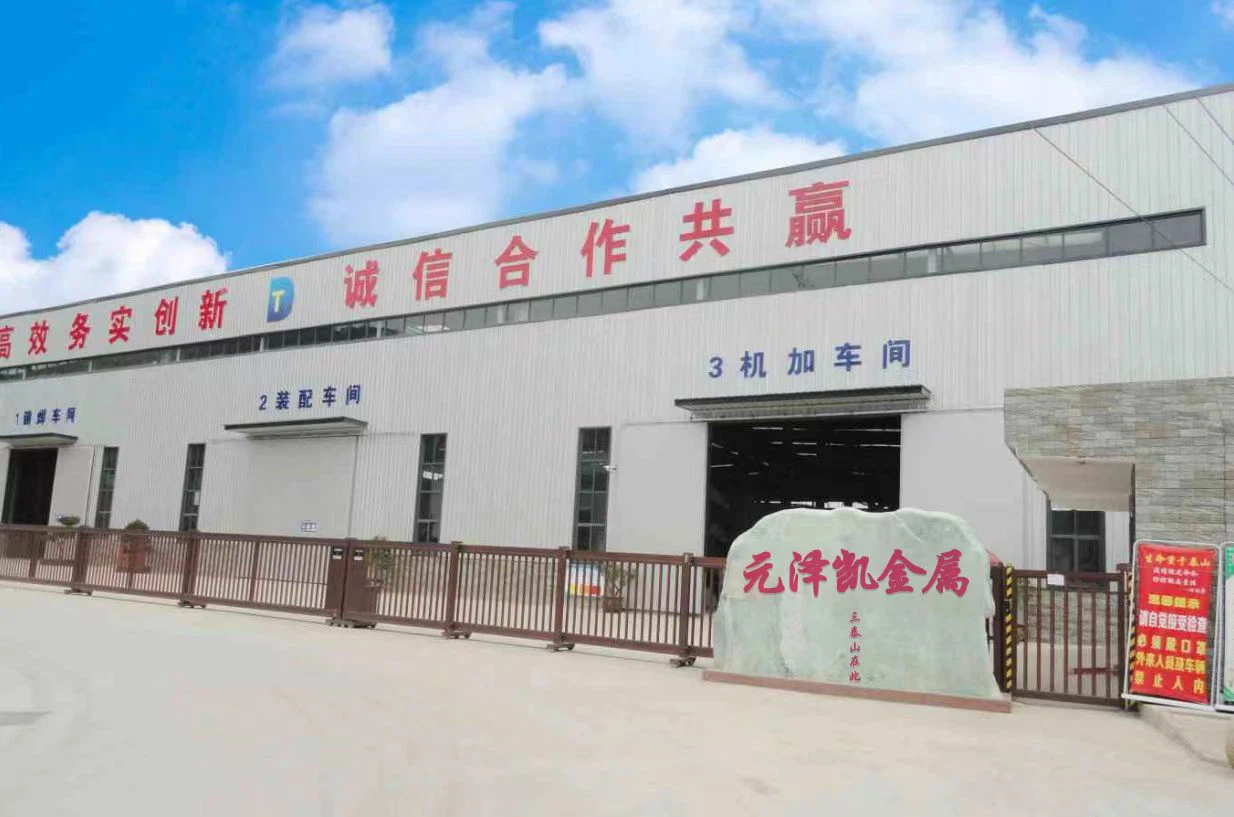
Shaanxi Yuanzekai Metal Technology has been focusing on the production and sales of high-quality titanium materials, processed products, and equipment in Baoji, China for more than 10 years. We were a small company before, but now we have become one of the leading suppliers in China's titanium industry.


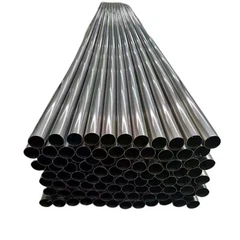
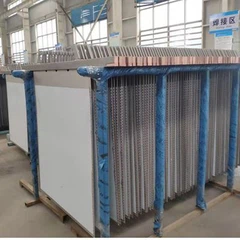
Nowadays, Shaanxi Yuanzekai Metal Technology has become one of the top manufacturers of high-quality titanium materials, products, and equipment. Such as: titanium plates, titanium rods, titanium tubes, titanium wires, titanium flanges, titanium fittings, titanium machined parts, reaction vessels, heat exchangers, etc.


Shaanxi Yuanzekai Metal Technology Co., Ltd. is located in Wenquan Village Industrial Park, High tech Zone, Baoji City, known as the "Titanium Valley". We are a comprehensive enterprise specializing in the processing, production, research and development, and services of rare metals such as titanium, nickel, tungsten, molybdenum, and zirconium. Our clients are spread all over the world.


productcate-1-1


Our Certificate


The company strictly adheres to the GB/T19001 and ISO: 9001 quality management system requirements for production, processing, inspection, and warehousing. The product quality is guaranteed and the after-sales service is perfect.


productcate-1-1


Asked Questions


Q: Do titanium fasteners need anti seize?

A: When it comes to using titanium fasteners, it is important to choose the right lubricant to ensure that the bolts perform at their best and have a long lifespan. One of the best options for lubricating titanium fasteners is a high-quality anti-seize lubricant.

Q: Are titanium fasteners as strong as steel bolts?

A: Of all known metals, titanium has the highest strength-to-weight ratio, meaning that for applications with strict requirements on weight, such as in the manufacturing of aerospace assemblies, titanium would be a more suitable choice over steel components.

Q: Can titanium fasteners be reused?

A: 1 reuse of titanium alloy bolts shall be limited to fifteen (15) cycles, subject to the following requirements for inspection. 4.8. 1.2 after visual inspection, the fastener system components shall be inspected in accordance with the methods of measuring the characteristics of thread forms presented in ansi/asme b1.

Q: Are titanium fasteners brittle?

A: Titanium metal is fragile at low temperatures and quickly breaks apart at normal temperature. It becomes malleable and ductile at higher temperatures.

Q: What is the proof strength of a titanium bolt?

A: Commercial (99.2% pure) grades of titanium have ultimate tensile strength of about 434 mpa (63,000 psi), equal to that of common, low-grade steel alloys, but are less dense. Titanium is 60% denser than aluminium, but more than twice as strong as the most commonly used 6061-t6 aluminium alloy.

Q: Can titanium fasteners snap?

A: General rule of thumb is no more than 1.45 the diameter. So - they should be within spec at 7nm. Typically you'd need to torque to at least 2x or even 3x that to get a graded bolt to 'snap'.

Q: Are titanium fasteners worth it?

A: Titanium fasteners are close to steel in terms of strength, with the benefit of being 47 percent lighter. With a ti bolt, it is much easier to gall and bugger up threads.

Q: Are titanium fasteners rust proof?

A: Pure titanium is resistant to rusting and corrosion from liquids including chemicals, acids, and saltwater as well as various gases because of its oxide barrier. As the name oxide implies, oxygen is needed to produce this barrier.

Q: Are titanium fasteners stronger than grade 8 bolts?

A: Titanium. Made from aircraft grade titanium 6al-4v (grade 5), the outstanding benefits are that we roll the threads to produce greater fatigue strength and reduce galling. These bolts are in excess of 120,000psi ultimate tensile strength, suitable to replace both grade 5 and grade 8 steel bolts.

Q: Why use titanium fasteners?

A: Titanium fasteners have become extensively used across many industries over the last few years. The material is very active, flexible/high plasticity, and offers a fantastic combination of strength plus corrosion, oxidation, heat, and cold resistance; it is non-magnetic, non-toxic, and lightweight.

Q: Can you strip titanium fasteners?

A: The stripping of the hexagonal recess of the titanium fasteners is more common in 3.5 mm screws. [6] Instruments used for removal of the jammed screws, including conical extraction screws, hollow reamers, extraction bolts, modular devices, and carbide drill bits, do not always work.

Q: Why are titanium fasteners so expensive?

A: The manufacturing process and the rarity of titanium contribute to its premium price tag. However, once fitted, titanium fasteners are unlikely ever to need replacing, making them a cost-effective solution in the long term.

Q: What is the hardest grade of bolts?

A: Steel fasteners are commonly available in four grades that are broken into the following categories: 2, 5, 8 and 18-8 stainless (commonly referred to simply as alloy steel). Grade 8 is the hardest, grade 5 is medium, and grade 2 is the softest.

Q: Are titanium fasteners lighter than steel?

A: Ti will be heavier and stronger than aluminium, but lighter and less strong than steel. I certainly wouldn't use aluminium for stem bolts. I'm ok with using ti bolts, but I check them regularly.

Q: Are titanium fasteners magnetic?

A: Ti will be completely non-magnetic. The most obvious difference is, of course, the density. Stainless is ferrous.

Q: What does 10.9 mean on a bolt?

A: The property class 10.9 head marking is shown here: Property class 10.9 bolts and screws have a minimum tensile strength of 1040 mpa for all sizes. As you can see, they're slightly stronger than the nominal value in the property class designation. Property class 10.9 bolts are considered high-strength parts.

Q: Do titanium fasteners need anti seize?

A: When it comes to using titanium fasteners, it is important to choose the right lubricant to ensure that the bolts perform at their best and have a long lifespan. One of the best options for lubricating titanium fasteners is a high-quality anti-seize lubricant.

Q: Can titanium screws come loose?

A: If under the ideal value, the screw may loosen, causing micromotion or mobility of the abutment, and allow potential particulate titanium material to get into the tissue, which can cause a foreign body reaction9 or, worse, fracture of the screw or even the implant.

Q: Do titanium fasteners seize?

A: Titanium fasteners, any titanium thread, is easily galled. That is why they supply a lubrication like anti-seize. Application of lubrication to torqued fasteners not originally lubricated will drastically alter the torque value.

Q: What is the strongest metal for a titanium fasteners?

A: The high-strength, sought-after grade 8 titanium fasteners can be distinguished by six raised dashes. Its medium-carbon alloy steel has been quenched and tempered, ultimately making it possible to achieve an impressive tensile strength of 150,000 psi, compared to a grade 2 bolt's 64,000 psi.

We're professional titanium fasteners manufacturers and suppliers in China, specialized in providing high quality customized service. We warmly welcome you to buy titanium fasteners for sale here from our factory. For price consultation, contact us.

titanium stub, titanium bolt m15

Send Inquiry