What is Titanium Wire


Titanium is a silver-white metal with many excellent properties. For example, the density of titanium is 4.54g/cm3, which is 43% lighter than steel, but its mechanical strength is similar to that of steel. And titanium wire is resistant to high temperatures and has a melting point of 1942K, which is nearly 500K higher than steel.


Benefits of Titanium Wire


Durability and Strength
Titanium wire is known for its exceptional strength, making it ideal for use in the aerospace industry. Compared to other materials like stainless steel, titanium wire is stronger and more durable; it also has a high resistance to corrosion, fatigue, and heat, and it can maintain this strength even under extreme temperatures. With such durability, titanium wire is suitable for aircraft components requiring excellent mechanical properties.


Lightweight
Another advantage of using titanium wire in the aerospace industry is its lightweight nature. Compared to other metals typically used in the industry, titanium wire offers a much lower density, which makes it a perfect choice for components that need to be lightweight. This is particularly useful in the aerospace industry, where reducing the overall weight of an aircraft can improve fuel economy and increase efficiency.


High Machinability
The high machinability of titanium wire is another benefit that makes it popular in the aerospace industry. Being a soft metal, titanium wire is easier to shape, forming complex geometries that would otherwise be difficult to achieve with other materials. This capability makes creating customized parts for a specific aircraft possible, reducing the time and cost of manufacturing aircraft parts.


Temperature Stability
When it comes to aircraft components, stability under various temperatures is essential. Titanium wire has a low coefficient of thermal expansion to maintain its shape and size even as temperature changes. This makes titanium wire particularly useful in high-temperature applications or aircraft components subject to sudden and extreme temperature fluctuations.


Resistant to Corrosion
Corrosion is one of the most significant challenges in the aerospace industry, as it can cause structural failure of important aircraft components. Titanium wire is an excellent choice for components exposed to corrosive chemicals or saltwater environments since it boasts a high corrosion resistance.


First 12 Last

Why Choose us


Quality Assurance

The company strictly adheres to the GB/T19001 and ISO: 9001 quality management system requirements for production, processing, inspection, and warehousing. The product quality is guaranteed and the after-sales service is perfect.


Experience and expertise

We have more than 15 years of experlence, can guarantee the quality of products and services.


High-quality service

We deliver high-quality service, ensuring that our clients receive value for their investment.


Applications of Titanium Wire


Aerospace Industry
In the aerospace industry, the demand for materials that offer high strength, low weight, and excellent durability is paramount. Titanium wire meets these requirements perfectly, making it a preferred choice for various aerospace components. It is used in the manufacture of aircraft engines, airframes, and fasteners, where its ability to withstand extreme conditions and resist corrosion is crucial. The use of titanium metal contributes to the overall performance, safety, and fuel efficiency of aircraft.


Automotive Industry

The automotive industry has also embraced titanium wire for similar reasons. High-performance vehicles, including sports cars and motorcycles, benefit from titanium wire's strength and lightweight properties. Titanium exhaust systems, valve springs, and connecting rods are some of the components where titanium wire is utilized to enhance performance and reduce weight. The durability of titanium wire ensures that these components can withstand the high stresses and temperatures associated with automotive applications.


Medical Field
As mentioned earlier, titanium wire's biocompatibility makes it invaluable in the medical field. Orthopedic implants, such as hip and knee replacements, often incorporate titanium wire to provide structural support and ensure long-term functionality. Additionally, titanium steel is used in dental implants, where its strength and resistance to corrosion ensure the longevity and reliability of the implants. The medical industry's reliance on titanium wire underscores its importance in improving patient outcomes and quality of life.


Marine Applications
The marine environment is notoriously harsh, with saltwater and other corrosive elements posing significant challenges to materials. Titanium wire's exceptional corrosion resistance makes it an ideal choice for marine applications. It is used in the construction of ship components, offshore drilling equipment, and underwater cables, where its durability ensures long-term performance and reliability. The ability of titanium steel to resist corrosion in such environments reduces maintenance costs and extends the lifespan of critical marine infrastructure.


Industrial Uses
Beyond the specialized applications in aerospace, automotive, medical, and marine industries, titanium wire also finds use in various industrial applications. Chemical processing plants, for instance, utilize titanium wire in heat exchangers, reactors, and piping systems. The chemical resistance and durability of titanium wire make it suitable for handling corrosive substances and high-temperature processes. Additionally, titanium metal is used in the manufacture of springs, fasteners, and filters, where its strength and reliability are essential.


Gr3 钛丝


Understanding Different Grades of Titanium Wire

Grade 1 Titanium Wire
Grade 1 titanium wire is the purest form, with a minimum purity of 99.5%. It has excellent corrosion resistance and is highly biocompatible. It is also the softest and most pliable grade of titanium, which makes it easy to work with. Grade 1 titanium wire is commonly used in medical applications like dental implants, orthopedic implants, and cardiovascular devices.


Grade 2 Titanium Wire
Grade 2 titanium wire is also highly pure, with a minimum purity of 99%. It is stronger and more ductile than grade 1 titanium, which makes it a better choice for applications that n more strength and durability. Grade 2 titanium wire is commonly used in medical applications like bone screws, spinal implants, and pacemaker components.


Grade 5 Titanium Wire
Grade 5 titanium wire is the strongest and most durable, with a minimum purity of 90%. It is also known as Ti-6Al-4V, containing 6% aluminium and 4% vanadium. This alloy makes grade 5 titanium wire stronger and more resistant to fatigue and fracture than pure titanium. Grade 5 titanium wire is commonly used in medical applications like joint replacements, dental implants, and orthopedic screws.


Grade 23 Titanium Wire
Grade 23 titanium wire is a medical-grade titanium alloy that contains 6% aluminium and 4% vanadium, like grade 5 titanium wire, but it also contains small amounts of palladium and iron. This alloy makes grade 23 titanium wire highly biocompatible and resistant to corrosion and fatigue. It is commonly used in medical applications like dental implants, bone screws, and spinal implants.


Precision Fabrication Techniques for Customizing Titanium Wire in Industrial Applications


Choose Your Titanium Alloy
The first step in titanium wire fabrication is selecting the right alloy for your application. There are many different types of titanium alloys, and the one you choose will depend on the specific requirements of your project. Some factors to consider include the alloy’s strength, ductility, and corrosion resistance, as well as its cost. Popular titanium alloys include Ti6Al4V, Ti3Al2.5V, and TiAlV.


Prepare the Titanium Rod
Once you have selected your titanium alloy, you must prepare the titanium rod for wire drawing. The rod should be clean and free from defects or contamination affecting the wire’s quality. You should also check the rod’s surface finish and ensure it’s smooth and free from scratches or other imperfections.


Draw the Titanium Wire
The next step is to draw the titanium wire to your desired diameter. You will need a wire drawing machine for this process, which will pull the rod through a series of dies. Each die will progressively reduce the diameter of the wire until it reaches your desired dimension. As the wire passes through the die, it will also become stronger and more uniform in structure.


Anneal the Titanium Wire
After drawing the wire to your desired diameter, it will be extremely hard and brittle. It would be best to anneal the wire to soften it and make it more ductile. Annealing involves heating the wire to a specific temperature range (usually between 700°C and 950°C) and holding it there for a set time. The exact annealing temperature and time will depend on the titanium alloy you are working with.


Finish the Titanium Wire
The final step in titanium wire fabrication is to finish the wire to your desired surface quality. You can achieve this by using a wire brush or polishing wheel to remove any surface defects or scratches. The wire should then be cleaned thoroughly to remove any dust or debris that could affect its quality.


Does Titanium Wire Rust?

Titanium wire is a resilient metal that is also highly reactive. When titanium wire is exposed to certain environments such as those with hot nitric acid, chlorine, salt water and extreme temperatures, titanium wire oxide is created on the surface of the titanium wire. This titanium oxide can occur quickly. It provides a strong, durable, almost impenetrable barrier that protects the pure titanium metal underneath it from further corrosion.


Pure titanium wire is resistant to rusting and corrosion from liquids including chemicals, acids, and saltwater as well as various gases because of its oxide barrier.


As the name oxide implies, oxygen is needed to produce this barrier. In vacuum-like environments, where oxygen is limited, titanium wire will corrode and rust quickly. Pure titanium wire that is completely rust and corrosive resistant, however, is rare and hard to find and produce. Many titanium parts and objects are made of a titanium alloy which includes the combination of various levels of titanium and other metals. Because they are not made of pure titanium, they are susceptible to rust and corrosion. Being more resistant to rust and corrosion than other metals and metal alloys, common titanium used today has the appearance of not rusting or corroding and is more durable and longer-lasting than other metals.


Titanium wire, like shavings from other metals, are highly reactive and flammable even in relatedly low temperatures. This makes titanium wire a poor choice for some mechanical operations. With its slow corrosion process, titanium wire is a good choice for piping.

GR2 Titanium Wire


Our Factory


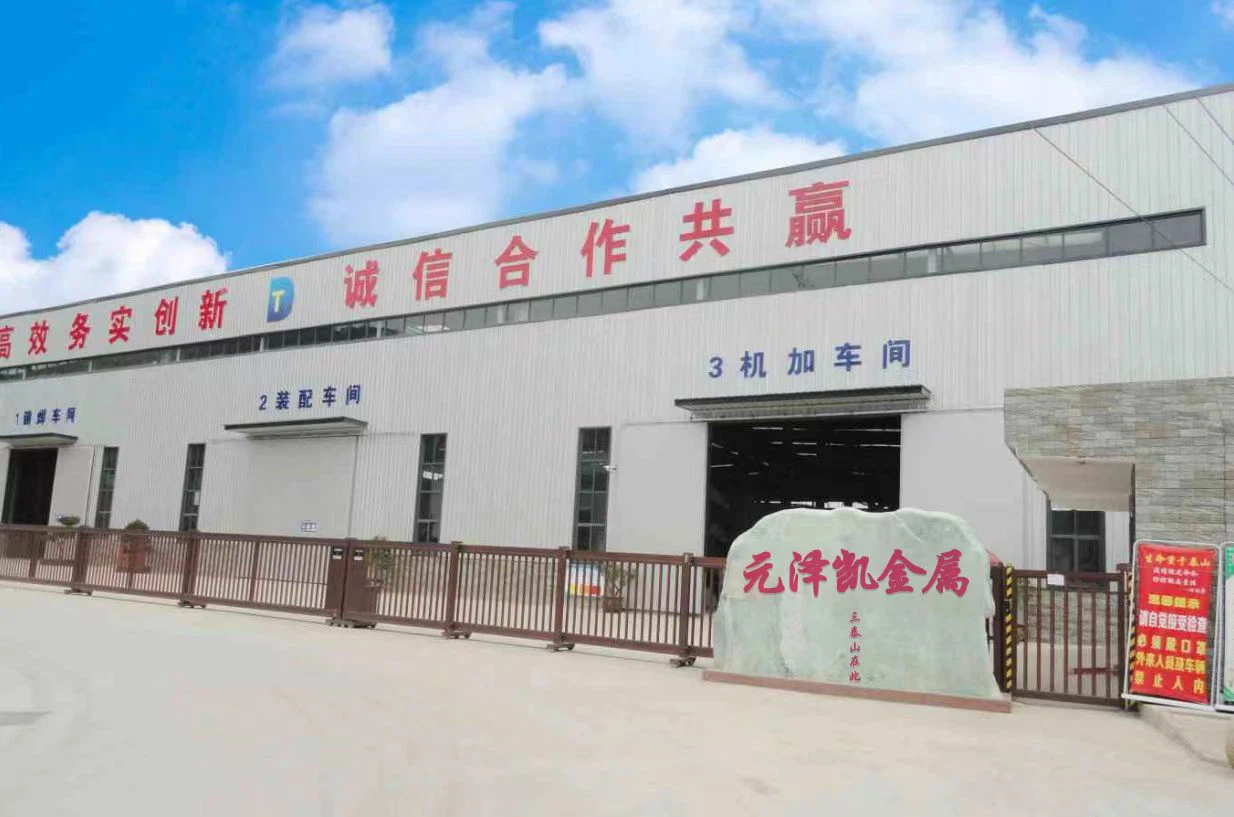
Shaanxi Yuanzekai Metal Technology has been focusing on the production and sales of high-quality titanium materials, processed products, and equipment in Baoji, China for more than 10 years. We were a small company before, but now we have become one of the leading suppliers in China's titanium industry.


Nowadays, Shaanxi Yuanzekai Metal Technology has become one of the top manufacturers of high-quality titanium materials, products, and equipment. Such as: titanium plates, titanium rods, titanium tubes, titanium wires, titanium flanges, titanium fittings, titanium machined parts, reaction vessels, heat exchangers, etc.


Shaanxi Yuanzekai Metal Technology Co., Ltd. is located in Wenquan Village Industrial Park, High tech Zone, Baoji City, known as the "Titanium Valley". We are a comprehensive enterprise specializing in the processing, production, research and development, and services of rare metals such as titanium, nickel, tungsten, molybdenum, and zirconium. Our clients are spread all over the world.


productcate-1-1


Our Certificate


The company strictly adheres to the GB/T19001 and ISO: 9001 quality management system requirements for production, processing, inspection, and warehousing. The product quality is guaranteed and the after-sales service is perfect.


productcate-1-1


Asked Questions


Q: What is titanium wire used for?

A: Because of their excellent overall qualities, titanium wires are also utilized to make fasteners, load-bearing components, springs, and so on. In the medical and health industries, titanium wires are utilized to make medical devices, implanted dental crowns, and skull fixation due to their great biocompatibility.

Q: Does titanium wire bend?

A: I believe Titanium is pretty brittle, so you'd have to heat it up and get it soft to bend without breaking. There will be some stretch as it bends, but not enough to be noticeable in this application. Start with pieces of the same length and make a bending jig so they get bent at exactly the same point.

Q: How strong is titanium wire?

A: One of the most significant properties of titanium wire is its high strength-to-weight ratio. Titanium is as strong as steel but about 45% lighter, making it an ideal material for applications where weight savings are crucial.

Q: Is titanium wire good for jewelry making?

A: It turns out that while titanium IS very strong, it wraps, weaves, and responds to hammering in much the same way as the other popular metals available out there. It is easier to work than stainless steel, (much easier) not as easy as copper and silver. I might put it on a par with working brass.

Q: Can you cut titanium wire?

A: Cutting titanium is not an easy task. Because it is a reactive metal, it changes its chemical properties when exposed to heat. Therefore, titanium is cut cold.

Q: Does titanium bend or break?

A: Another way that titanium stands out among its competitors is in its durability. Titanium is incredibly resistant to specific pressures like bending or cracking. Unlike certain other materials, it is extremely tough to snap a titanium band. However, you can still scratch titanium.

Q: Can titanium wire be soldered?

A: For soldering titanium in air you need a special flux that contains fluoride salts that may dissolve the titanium oxides that cover titanium.

Q: Can ring cutters cut through titanium?

A: In an emergency situation where there might be a medical necessity to remove the band (such as hand or finger injury) titanium rings can be cut off with manual or power ring cutters. A high quality, diamond coated disc or tempered tool steel blade is required to cut titanium rings.

Q: Do you have to heat titanium to bend it?

A: The ductility (bendability and stretch formability) of titanium increases with temperature. Thus, forming operations can be done at elevated temperatures which would be impossible at room temperature. The influence of elevated temperature on bend radius of annealed Grade 5 sheet is shown in Table 2.

Q: Is titanium wire hard to bend?

A: The inherent challenge is that titanium is notoriously difficult to bend. It has low uniform elongation, so it typically requires much greater bend radii than other metals.

Q: What are titanium wires used for?

A: Therefore, titanium and titanium alloy wires are widely used in many fields such as the military industry, glasses, earrings, headwear, electroplating hangers, welding wires, aerospace, petrochemical, medical and health, automotive, construction, and sports and leisure products.

Q: Why use titanium wire instead of steel?

A: In applications requiring light weight, corrosion resistance, biocompatibility, and high-temperature resistance, titanium can be a better choice than steel. This makes titanium ideal for use in aerospace, medical devices, chemical processing, marine, and high-temperature industrial applications.

Q: Which is stronger, tungsten or titanium?

A: As mentioned above, tungsten is the strongest of any natural metal (142,000 psi). But in terms of impact strength, tungsten is weak — it's a brittle metal known to shatter on impact. On the other hand, Titanium has a tensile strength of 63,000 psi.

Q: Which is better, grade 2 or grade 5 titanium wire?

A: The choice of titanium wire grade will depend on the specific needs and requirements of the watch manufacturer. For example, a manufacturer may choose Grade 2 titanium for its ease of machining and lower cost, while another may choose Grade 5 titanium for its higher strength and scratch-resistance.

Q: What is the toughest grade of titanium wire?

A: The strongest titanium wire is generally considered to be Ti-6Al-4V (also known as Grade 5 titanium), which is an alpha-beta alloy consisting of 6% aluminium, 4% vanadium, with the remainder being titanium.

Q: How do you stick titanium together?

A: Titanium can be welded, brazed and bonded. permabond glue will most definitely stick it, but you haven't got the surface area. Scotch weld (a form of epoxy/araldite) will also bond, but you would need to put a blodge over the broken area and let it cure.

Q: How to cut titanium wire?

A: There are many different methods for cutting titanium and these include:
Mechanical cutting.
Band sawing.
Water jet cutting.
Plasma cutting.

Q: What are the different grades of titanium wire?

A: Titanium CP4 – Grade 1. Commercially Pure Titanium Grade 1 is the softest titanium and has the highest ductility. ...
Titanium CP3 – Grade 2. ...
Titanium CP2 – Grade 3. ...
Titanium CP1 – Grade 4. ...
Titanium Grade 7. ...
Titanium Grade 11 – CP Ti-0.15Pd. ...
Titanium Grade 5 – Titanium 6Al-4V. ...
Titanium Grade 6 – Titanium 5Al-2.5Sn.

Q: At what temperature does titanium wire catch fire?

A: In order to ignite a titanium alloy, an intense oxygen supply must be present and the metal temperature must reach about 1600°C (in standard atmosphere; Figs. "Titanium fires risk of flight mission" and "Titanium fire ignition in labyrinths").

Q: Is titanium wire magnetic?

A: While it has many desirable properties, one question that often arises is whether or not titanium is magnetic. The short answer is no, titanium is not magnetic. This is because titanium has a crystalline structure with no unpaired electrons, which are required for a material to exhibit magnetic properties.

We're professional titanium wire manufacturers and suppliers in China, specialized in providing high quality customized service. We warmly welcome you to buy titanium wire for sale here from our factory. For price consultation, contact us.

0 5mm titanium wire, gr2 titanium wire, high quality titanium straight welding wire

Send Inquiry