





Can a titanium bolt M15 be used in marine applications?
Nov 13, 2025
Leave a message
Can a Titanium Bolt M15 be Used in Marine Applications?
As a supplier of titanium bolts, especially the M15 size, I often get asked whether these bolts are suitable for marine applications. The marine environment is a harsh one, presenting unique challenges that require careful consideration when selecting fasteners. In this blog post, I'll explore the properties of titanium bolts M15 and evaluate their viability for use in marine settings.
Understanding the Marine Environment
The marine environment is characterized by high humidity, saltwater exposure, and constant mechanical stress. Saltwater is highly corrosive, and the presence of chloride ions can accelerate the corrosion process of many metals. Additionally, the movement of waves and tides subjects structures to dynamic loads, which means fasteners need to be able to withstand both static and dynamic forces.
Properties of Titanium
Titanium is a remarkable metal with several properties that make it an attractive option for marine applications.
Corrosion Resistance
One of the most significant advantages of titanium is its excellent corrosion resistance. When exposed to oxygen, titanium forms a thin, stable oxide layer on its surface. This oxide layer acts as a protective barrier, preventing further corrosion even in highly corrosive environments such as saltwater. Unlike steel, which can rust and degrade rapidly in the marine environment, titanium remains relatively unaffected by the corrosive action of saltwater. This makes titanium bolts M15 a reliable choice for long - term use in marine structures.
High Strength - to - Weight Ratio
Titanium has a high strength - to - weight ratio, which means it can provide the necessary strength while being relatively lightweight. In marine applications, weight is often a critical factor, especially in vessels where reducing weight can improve fuel efficiency and performance. The M15 titanium bolts can offer sufficient strength to hold components together without adding excessive weight to the structure.
Fatigue Resistance
Marine structures are subject to cyclic loading due to the movement of waves and tides. Titanium has good fatigue resistance, which allows it to withstand repeated loading without failing. This property is crucial for fasteners in marine applications, as they need to maintain their integrity over long periods of use.
Considerations for Using Titanium Bolt M15 in Marine Applications
While titanium has many advantages, there are also some considerations to keep in mind when using titanium bolt M15 in marine applications.
Galvanic Corrosion
Galvanic corrosion can occur when two different metals are in contact in the presence of an electrolyte (such as saltwater). Titanium is a noble metal, and when it is in contact with a less noble metal, the less noble metal may corrode preferentially. To prevent galvanic corrosion, it is important to ensure proper insulation between the titanium bolt and other metals. For example, using non - conductive washers or coatings can help isolate the titanium bolt from other metals and reduce the risk of galvanic corrosion.
Cost
Titanium is generally more expensive than other metals such as steel. The higher cost of titanium bolts M15 may be a limiting factor for some marine projects, especially those with tight budgets. However, when considering the long - term benefits of corrosion resistance and durability, the initial investment in titanium bolts may be justified.
Installation Torque
Titanium has different mechanical properties compared to other metals, and it is important to use the correct installation torque when installing titanium bolt M15. Over - tightening or under - tightening the bolts can lead to problems such as joint failure or reduced clamping force. It is recommended to follow the manufacturer's guidelines for installation torque to ensure proper performance.
Our Product Range
As a supplier, we offer a wide range of titanium bolts, including Gr5 Titanium Pan Head Bolts. These bolts are made from Grade 5 titanium, which is a high - strength alloy commonly used in various applications, including marine. The pan head design provides a large bearing surface, which can distribute the load evenly and reduce the risk of damage to the connected components.
We also have M14x1.5 Titanium Lug Bolts. These lug bolts are designed for specific applications where a secure connection is required. They are precision - engineered to ensure a proper fit and reliable performance.
Another product in our range is Gr5 Titanium Bolt Self - tapping. Self - tapping bolts are convenient for applications where pre - drilling is not possible or practical. They can create their own threads in the material, making installation faster and easier.
Conclusion
In conclusion, a titanium bolt M15 can be used in marine applications. Its excellent corrosion resistance, high strength - to - weight ratio, and fatigue resistance make it a suitable choice for many marine structures. However, it is important to consider factors such as galvanic corrosion, cost, and installation torque.
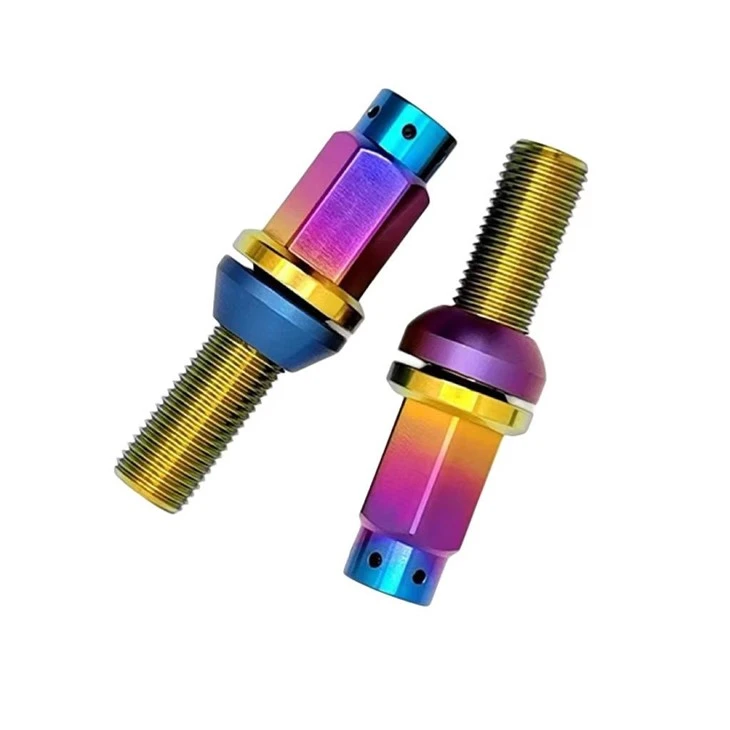

If you are involved in a marine project and are considering using titanium bolt M15, we would be happy to discuss your requirements and provide you with the best solutions. Our team of experts can offer technical advice and help you select the right products for your specific needs. Whether you need a small quantity for a repair or a large order for a new construction project, we are here to assist you. Contact us to start the procurement process and let's work together to ensure the success of your marine project.
References
- ASM Handbook Volume 2: Properties and Selection: Nonferrous Alloys and Special - Purpose Materials. ASM International.
- "Corrosion of Metals in Seawater" by D. S. Roberge. NACE International.
- "Mechanical Properties of Titanium Alloys" by J. C. Williams. Cambridge University Press.
Send Inquiry