





Can titanium plates be welded easily?
Oct 28, 2025
Leave a message
As a long - standing titanium plate supplier, I've encountered numerous inquiries regarding the weldability of titanium plates. Welding is a crucial process in many industries, from aerospace to medical device manufacturing, and understanding whether titanium plates can be welded easily is of utmost importance.

The Basics of Titanium Plate Welding
Titanium is a remarkable metal known for its high strength - to - weight ratio, excellent corrosion resistance, and biocompatibility. However, these very properties that make it so desirable also pose challenges when it comes to welding.
Titanium has a high reactivity with oxygen, nitrogen, and hydrogen at elevated temperatures. When welding titanium plates, if the metal is exposed to these elements during the welding process, it can form brittle compounds on the surface and within the weld. These compounds can significantly reduce the mechanical properties of the weld, such as ductility and toughness, and may lead to cracking and premature failure of the welded joint.
Factors Affecting the Ease of Welding Titanium Plates
- Purity of Titanium
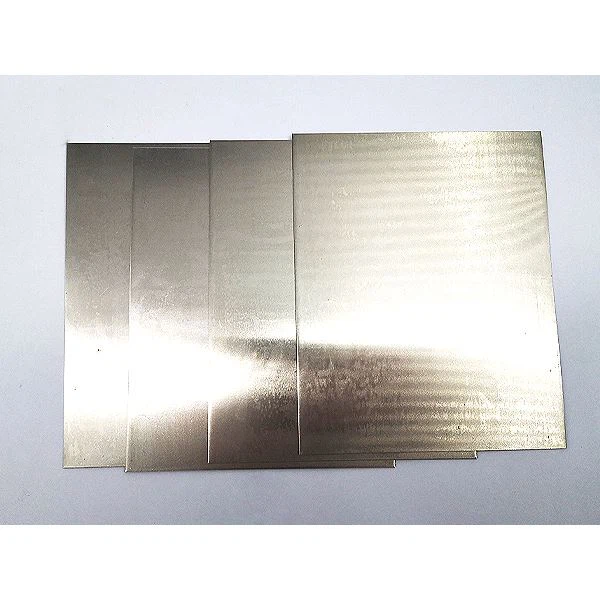
- Different grades of titanium have different levels of purity. For example, commercially pure titanium (such as Titanium Plate Gr2) has a relatively high purity and is generally more weldable compared to some titanium alloys. The impurities in titanium alloys can affect the melting point, fluidity of the molten metal during welding, and the formation of intermetallic compounds. Titanium Plate Gr2, with its good formability and weldability, is often a popular choice for applications where welding is required. You can find more information about Titanium Plate Gr2 here.
- Thickness of the Plates
- Thicker titanium plates present more challenges in welding. Heat transfer is more complex in thicker materials. It is difficult to achieve a uniform temperature distribution across the thickness during welding, which can lead to uneven cooling and the formation of residual stresses. These residual stresses can cause distortion of the welded structure and potentially lead to cracking. On the other hand, thinner plates like the 0.02mm Gr1 Titanium Foil require more precise control of the welding parameters to avoid over - heating and burning through the material. You can explore the 0.02mm Gr1 Titanium Foil here.
- Welding Environment
- A clean and inert welding environment is essential for successful titanium plate welding. As mentioned earlier, titanium reacts with oxygen, nitrogen, and hydrogen at high temperatures. Therefore, welding is usually carried out in an inert gas shield, such as argon or helium. The quality of the shielding gas, its flow rate, and the way it is applied can all affect the weld quality. Even a small amount of contamination in the shielding gas can lead to poor welds.
Welding Methods for Titanium Plates
- Tungsten Inert Gas (TIG) Welding
- TIG welding is one of the most commonly used methods for welding titanium plates. In TIG welding, a non - consumable tungsten electrode is used to create an arc that melts the base metal. The weld area is protected by an inert gas, usually argon. TIG welding allows for precise control of the heat input and the welding process, making it suitable for welding thin and medium - thickness titanium plates. It can produce high - quality welds with good appearance and mechanical properties.
- Plasma Arc Welding (PAW)
- PAW is another welding method that can be used for titanium plates. It is similar to TIG welding but uses a constricted plasma arc, which provides higher energy density and better control of the weld pool. PAW can be used for both thin and thick titanium plates. It can achieve deeper penetration and faster welding speeds compared to TIG welding in some cases.
- Laser Welding
- Laser welding is a relatively new and advanced welding method for titanium plates. It uses a high - energy laser beam to melt the metal. Laser welding has the advantages of high precision, small heat - affected zone, and the ability to weld complex geometries. It is especially suitable for welding thin titanium sheets, such as the Super elastic Shape Memory NiTi Sheets. You can learn more about Super elastic Shape Memory NiTi Sheets here.
Preparation for Welding Titanium Plates
- Surface Cleaning
- Thorough surface cleaning is crucial before welding titanium plates. Any contaminants on the surface, such as oil, grease, dirt, or oxide layers, can cause problems during welding. The plates are usually cleaned with solvents to remove organic contaminants, and then pickled or mechanically cleaned to remove the oxide layer.
- Joint Design
- The joint design also affects the weldability of titanium plates. Proper joint designs, such as butt joints, lap joints, or T - joints, should be selected based on the application requirements. The fit - up of the joint should be precise to ensure good fusion during welding.
Challenges and Solutions in Welding Titanium Plates
- Porosity in Welds
- Porosity is a common problem in titanium plate welding. It is mainly caused by the presence of gas in the molten metal. This can be due to improper shielding gas, moisture in the base metal or filler material, or excessive welding speed. To solve this problem, the welding environment should be carefully controlled, the shielding gas should be of high quality, and the base metal and filler material should be properly stored and dried.
- Cracking in Welds
- Cracking can occur due to residual stresses, the formation of brittle intermetallic compounds, or improper welding parameters. To prevent cracking, pre - heating and post - welding heat treatment can be used to reduce residual stresses. The selection of appropriate filler materials and welding parameters is also crucial.
Conclusion
In conclusion, welding titanium plates is not an easy task, but it is definitely achievable with the right knowledge, equipment, and techniques. The purity of the titanium, the thickness of the plates, the welding environment, and the welding method all play important roles in the welding process. As a titanium plate supplier, we understand these challenges and are committed to providing high - quality titanium plates and relevant technical support to our customers.
If you are in need of titanium plates for your welding projects or have any questions about titanium plate welding, we are here to assist you. Contact us to start a procurement discussion and find the best titanium solutions for your specific needs.
References
- "Titanium: A Technical Guide" by John R. Boyer, George W. Welsch, and E. W. Collings.
- "Welding Metallurgy" by John C. Lippold and David J. Kotecki.
Send Inquiry