





Do titanium tubes have good anti - fouling properties?
Oct 27, 2025
Leave a message
As a supplier of titanium tubes, I often get asked about the anti-fouling properties of these remarkable products. In this blog post, I'll delve into the science behind titanium tubes' anti-fouling capabilities, exploring the factors that contribute to their performance and the real-world applications where these properties are crucial.
Understanding Anti-Fouling
Before we discuss the anti-fouling properties of titanium tubes, it's important to understand what fouling is and why it's a concern. Fouling refers to the accumulation of unwanted materials on a surface. In the context of tubes, fouling can occur in various forms, including the deposition of minerals, biological organisms, or other contaminants. This buildup can reduce the efficiency of the tubes, increase energy consumption, and even lead to equipment failure if left unaddressed.


The Science Behind Titanium's Anti-Fouling Properties
Titanium is known for its excellent corrosion resistance, which is closely related to its anti-fouling capabilities. When titanium is exposed to oxygen, it forms a thin, protective oxide layer on its surface. This layer is highly stable and adherent, acting as a barrier that prevents further oxidation and corrosion.
One of the key factors contributing to titanium's anti-fouling properties is the chemical composition of this oxide layer. The oxide layer is mainly composed of titanium dioxide (TiO₂), which has several beneficial characteristics. TiO₂ is a photocatalytic material, meaning it can generate reactive oxygen species (ROS) when exposed to light. These ROS can break down organic matter and inhibit the growth of biological organisms, reducing the likelihood of biofouling.
In addition to its photocatalytic properties, the smoothness of the titanium oxide layer also plays a role in preventing fouling. A smooth surface provides fewer sites for particles and organisms to adhere to, making it more difficult for fouling to occur. Compared to other materials, such as steel or copper, titanium's smooth oxide layer can significantly reduce the rate of fouling.
Real-World Applications
The anti-fouling properties of titanium tubes make them ideal for a wide range of applications where fouling is a concern. Here are some examples:
Marine Applications
In the marine environment, biofouling is a major problem. Organisms such as barnacles, mussels, and algae can attach themselves to the surfaces of ships, offshore platforms, and underwater pipes, increasing drag, reducing fuel efficiency, and causing damage to the equipment. Titanium tubes are commonly used in seawater cooling systems, desalination plants, and shipboard piping systems because of their excellent anti-fouling properties. By using titanium tubes, these systems can operate more efficiently and require less maintenance.
Chemical Processing
In chemical processing plants, fouling can occur due to the deposition of minerals, polymers, or other contaminants in the process fluids. Titanium tubes are often used in heat exchangers, reactors, and piping systems to prevent fouling and ensure the smooth operation of the processes. The anti-fouling properties of titanium can help to maintain the heat transfer efficiency of heat exchangers and reduce the risk of blockages in the piping systems.
Power Generation
In power generation plants, fouling can occur in the cooling water systems, which can reduce the efficiency of the power generation process. Titanium tubes are used in condenser tubes, where they can prevent the accumulation of scale and biofouling, improving the heat transfer efficiency and reducing the energy consumption of the plant.
Product Examples
As a titanium tube supplier, we offer a variety of titanium tubes with different specifications and grades to meet the needs of our customers. Here are some of our popular products:
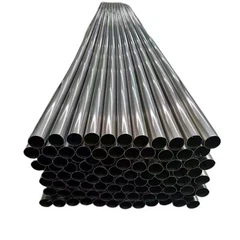
- ASTM B862 Gr1 Titanium Capillary Tube: This tube is made of Grade 1 titanium, which is the purest form of commercially pure titanium. It has excellent corrosion resistance and is suitable for applications where high purity and anti-fouling properties are required.
- Gr2 titanium welded Pipe: Grade 2 titanium is slightly stronger than Grade 1 and is also widely used in various applications. Our Gr2 titanium welded pipes are known for their high quality and anti-fouling performance.
- Titanium Gr 2 Seamless Tubes: These seamless tubes are made of Grade 2 titanium and are suitable for applications where high strength and anti-fouling properties are required. They are commonly used in heat exchangers, condensers, and other industrial equipment.
Comparing with Other Materials
To better understand the advantages of titanium tubes' anti-fouling properties, it's useful to compare them with other materials commonly used in similar applications.
Steel
Steel is a widely used material in many industries, but it is prone to corrosion and fouling. When exposed to water or other corrosive environments, steel can rust, and the rust can provide a surface for fouling to occur. In contrast, titanium's protective oxide layer prevents corrosion and reduces the likelihood of fouling.
Copper
Copper is another material that is often used in heat exchangers and piping systems. While copper has some anti-fouling properties due to its toxicity to some organisms, it can also leach copper ions into the environment, which can be harmful to marine life. Titanium, on the other hand, is a non-toxic material and does not have these environmental concerns.
Maintenance and Longevity
One of the benefits of using titanium tubes with good anti-fouling properties is that they require less maintenance compared to other materials. Since fouling is reduced, the tubes are less likely to experience blockages or reduced efficiency, which means less frequent cleaning and maintenance.
In addition to its low maintenance requirements, titanium tubes also have a long service life. The protective oxide layer on the surface of the titanium tubes can withstand harsh environments and resist corrosion for many years. This longevity makes titanium tubes a cost-effective solution in the long run, despite their higher initial cost compared to some other materials.
Conclusion
In conclusion, titanium tubes have excellent anti-fouling properties due to the formation of a protective oxide layer on their surface. This layer, composed mainly of TiO₂, has photocatalytic properties that can break down organic matter and inhibit the growth of biological organisms. The smoothness of the oxide layer also reduces the likelihood of fouling by providing fewer sites for particles and organisms to adhere to.
These anti-fouling properties make titanium tubes ideal for a wide range of applications, including marine, chemical processing, and power generation. Our company offers a variety of high-quality titanium tubes, such as ASTM B862 Gr1 Titanium Capillary Tube, Gr2 titanium welded Pipe, and Titanium Gr 2 Seamless Tubes, which can meet the diverse needs of our customers.
If you are interested in our titanium tubes or have any questions about their anti-fouling properties, please feel free to contact us for procurement and further discussion. We are committed to providing you with the best products and services.
References
- Zhang, X., & Wang, Y. (2018). Recent advances in anti - biofouling titanium - based materials. Progress in Materials Science, 97, 1 - 46.
- Fujishima, A., Zhang, X., & Tryk, D. A. (2008). TiO₂ photocatalysis and related surface phenomena. Surface Science Reports, 63(12), 515 - 582.
- Callow, M. E., & Callow, J. A. (2011). Marine biofouling: a sticky problem. Biofouling, 27(9), 959 - 970.
Send Inquiry