





How does the surface area affect the performance of a titanium anode?
Jan 07, 2026
Leave a message
Hey there! I'm a supplier of titanium anodes, and today I wanna talk about how the surface area affects the performance of a titanium anode. It's a topic that's super important, not just for us suppliers but also for all you folks out there who use these anodes in various industrial applications.
Let's start with the basics. A titanium anode is a key component in many electrochemical processes. It's used in things like electroplating, water treatment, and even in some types of batteries. The surface area of this anode can have a huge impact on its performance, and I'm gonna break it down for you.
The Role of Surface Area in Reaction Kinetics
One of the most significant ways surface area affects the performance of a titanium anode is through reaction kinetics. In simple terms, reaction kinetics is all about how fast a chemical reaction happens. When you increase the surface area of a titanium anode, you're essentially providing more space for the electrochemical reactions to take place.

Think of it like a party. If you have a small room (small surface area), only a few people can interact at a time. But if you open up a big hall (large surface area), more people can mingle and have conversations. In the case of a titanium anode, more surface area means more active sites for ions to react. This leads to an increase in the reaction rate.
For example, in an electroplating process, the metal ions in the solution need to come into contact with the anode surface to get oxidized. With a larger surface area, there are more spots where these ions can attach and react. As a result, the plating process becomes faster and more efficient.
Impact on Current Distribution
Another crucial aspect is current distribution. When an electrical current is applied to a titanium anode, it needs to be distributed evenly across the surface. If the surface area is too small, the current density (the amount of current per unit area) can become very high in certain spots. This can lead to uneven reactions and even damage to the anode.
On the other hand, a larger surface area helps to spread the current more evenly. This ensures that the electrochemical reactions occur uniformly across the anode, leading to better performance and a longer lifespan for the anode.
Let's say you're using a PbO2 Coated Titanium Anode in a water treatment plant. The even distribution of current across the larger surface area allows for a more consistent removal of contaminants from the water. This not only improves the quality of the treated water but also reduces the need for frequent anode replacements.
Mass Transfer and Surface Area
Mass transfer is also closely related to the surface area of a titanium anode. Mass transfer refers to the movement of substances (like ions) from the bulk of the solution to the anode surface. A larger surface area provides a shorter diffusion path for these substances, which means they can reach the anode surface more quickly.
In a battery application, for instance, the ions need to move from the electrolyte to the anode surface to participate in the electrochemical reactions. With a larger surface area, the mass transfer rate is increased, allowing for a higher discharge rate and better overall battery performance.
Surface Area and Anode Durability
Believe it or not, the surface area can also affect the durability of a titanium anode. When the current density is too high due to a small surface area, it can cause localized heating and corrosion. This can lead to the degradation of the anode material over time.
By increasing the surface area, the current density is reduced, which in turn reduces the stress on the anode. This helps to prevent premature wear and tear, extending the life of the anode.
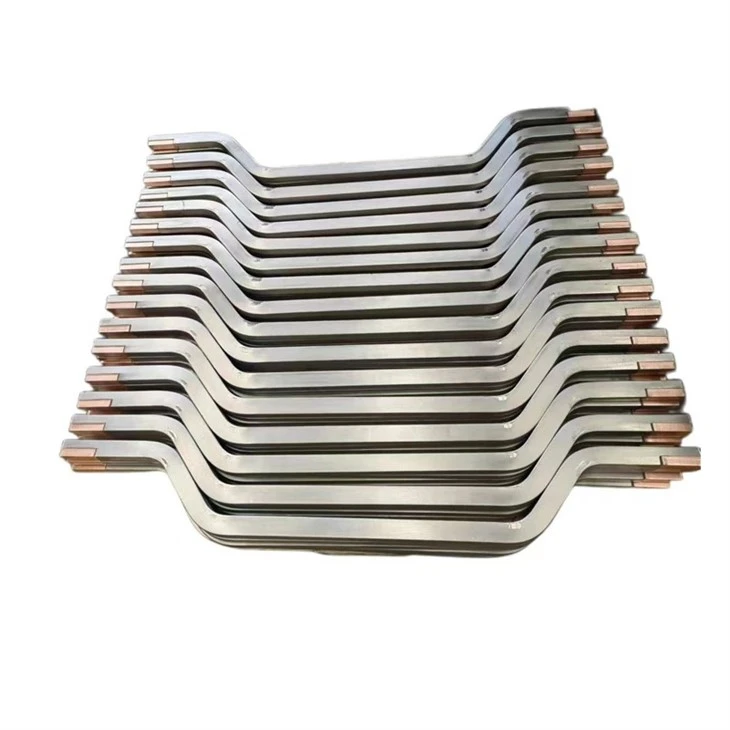
For example, a Titanium Copper Conductive Rod paired with a titanium anode with a larger surface area can ensure a more stable electrical connection and reduce the risk of corrosion at the contact points.
Practical Considerations for Surface Area Design
When designing a titanium anode, there are a few practical considerations regarding surface area. First, you need to balance the surface area with the overall size and cost of the anode. A larger surface area may improve performance, but it can also increase the material and manufacturing costs.
Second, the shape of the anode can also affect the effective surface area. For example, a porous or textured surface can provide a much larger surface area compared to a smooth one. However, these types of surfaces may be more difficult to clean and maintain.
Real - World Examples
Let's look at some real - world examples to see how surface area affects the performance of titanium anodes. In the chlor - alkali industry, which is used to produce chlorine and caustic soda, titanium anodes are widely used. By increasing the surface area of these anodes, manufacturers can increase the production rate of chlorine and reduce energy consumption.
In the field of electro - winning, which is used to extract metals from their ores, a larger surface area of the titanium anode can lead to a more efficient extraction process. This results in higher yields and lower production costs.
Choosing the Right Anode for Your Application
As a titanium anode supplier, I often get asked how to choose the right anode for a specific application. Well, understanding the relationship between surface area and performance is key.
If you need a high - speed reaction, like in a fast - paced electroplating process, you might want to consider an anode with a large surface area. On the other hand, if space is limited or cost is a major factor, you may need to find a balance between surface area and other requirements.
We also offer a variety of anode configurations, including Titanium Cathode Plate, which can be tailored to your specific needs.
Conclusion
In conclusion, the surface area of a titanium anode plays a vital role in its performance. It affects reaction kinetics, current distribution, mass transfer, and durability. By carefully considering the surface area when designing and choosing a titanium anode, you can optimize the efficiency and lifespan of your electrochemical processes.
If you're in the market for high - quality titanium anodes and want to discuss how surface area can impact your specific application, don't hesitate to reach out. We're here to help you make the best choice for your business.
References
- Bard, A. J., & Faulkner, L. R. (2001). Electrochemical Methods: Fundamentals and Applications. Wiley.
- Conway, B. E. (1999). Electrochemical Supercapacitors: Scientific Fundamentals and Technological Applications. Kluwer Academic Publishers.
- Newman, J., & Thomas --Alyea, K. E. (2004). Electrochemical Systems. Wiley - Interscience.
Send Inquiry