





What are the standards for tantalum material?
Oct 22, 2025
Leave a message
Hey there! I'm a supplier of tantalum material, and today I wanna chat about the standards for tantalum material. It's super important for both us suppliers and you buyers to know these standards, as they ensure the quality and usability of the tantalum we're dealing with.
First off, let's talk about the purity of tantalum. Purity is a major factor when it comes to tantalum material. High - purity tantalum is in high demand in many industries, especially in electronics and aerospace. Generally, the purity of tantalum is measured in terms of the percentage of tantalum in the material. For example, a tantalum product with a purity of 99.95% means that 99.95% of the material is tantalum, and the remaining 0.05% consists of other impurities.
The impurities in tantalum can have a significant impact on its properties. Some common impurities include niobium, tungsten, and iron. Niobium is often present in tantalum ores, and it can be a bit tricky to separate completely. Tungsten and iron impurities can affect the mechanical and electrical properties of tantalum. For instance, if there's too much iron in the tantalum, it might make the material more brittle and less conductive. So, strict standards are set to limit the amount of these impurities. In high - end applications, the allowable levels of impurities are extremely low.
Another important standard is the physical form of tantalum. Tantalum comes in various forms, such as Tantalum Plate, tantalum rod, tantalum wire, and tantalum powder. Each form has its own set of standards.


Let's take the tantalum plate as an example. The thickness of the tantalum plate is a crucial parameter. It needs to be uniform across the entire plate. Any significant variation in thickness can lead to problems in the final product that uses the plate. The surface finish of the tantalum plate also matters. A smooth surface is usually preferred, as it can improve the performance of the plate in applications like capacitor manufacturing. Rough surfaces might cause uneven electrical fields or mechanical stress points.
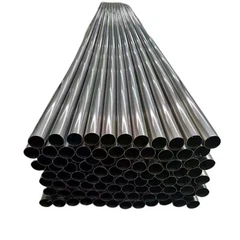
When it comes to tantalum rods and wires, the diameter and straightness are key standards. The diameter should be within a specified tolerance range. If the diameter is too large or too small, it can affect how the rod or wire fits into the equipment where it's used. Straightness is also important, especially for applications where the rod or wire needs to be precisely positioned. A bent or curved rod might not work properly in a high - precision device.
Tantalum powder has its own unique set of standards. The particle size distribution is a critical factor. Different applications require different particle sizes. For example, in the production of tantalum capacitors, fine - grained powder is often used to increase the surface area and improve the capacitance. The flowability of the powder is another important aspect. Good flowability ensures that the powder can be easily processed during manufacturing. If the powder doesn't flow well, it can cause blockages in the production equipment or result in uneven packing in the final product.
In addition to purity and physical form, the mechanical properties of tantalum are also standardized. Tensile strength, yield strength, and elongation are some of the important mechanical properties. Tensile strength refers to the maximum amount of stress a tantalum material can withstand before breaking. Yield strength is the stress at which the material begins to deform plastically. Elongation measures how much the material can stretch before it breaks. These properties are important because they determine how the tantalum material will perform under different loading conditions. For example, in aerospace applications, tantalum components need to have high tensile and yield strengths to withstand the extreme forces during flight.
The chemical reactivity of tantalum is also a factor that's considered in the standards. Tantalum is known for its excellent corrosion resistance. It can resist corrosion in many harsh chemical environments, such as acids and alkalis. However, the degree of corrosion resistance can vary depending on the purity and the presence of impurities. Standards are set to ensure that the tantalum material has a consistent level of corrosion resistance. This is crucial for applications where the tantalum is in contact with corrosive substances, like in chemical processing plants.
Now, let's talk about how these standards are enforced. There are international and national standards organizations that set the rules for tantalum material. For example, the International Organization for Standardization (ISO) and the American Society for Testing and Materials (ASTM) have published a series of standards related to tantalum. These standards are widely recognized and followed by suppliers and buyers around the world.
As a tantalum material supplier, I make sure that all our products meet these strict standards. We have a comprehensive quality control system in place. We use advanced testing equipment to analyze the purity, physical properties, and mechanical properties of our tantalum products. Before any product leaves our factory, it goes through a series of tests to ensure that it meets the required standards.
If you're in the market for tantalum material, whether it's tantalum plates, rods, wires, or powder, you can rest assured that our products are of the highest quality. We understand the importance of these standards and are committed to providing you with the best tantalum materials that meet your specific needs.
If you're interested in purchasing tantalum material, I'd love to have a chat with you about your requirements. Whether you need a small quantity for research purposes or a large - scale supply for industrial production, we can work together to find the right solution. Just reach out, and we can start the procurement and negotiation process.
References
- International Organization for Standardization (ISO) standards related to tantalum materials.
- American Society for Testing and Materials (ASTM) standards for tantalum.
Send Inquiry