





What is the modulus of elasticity of a titanium plate?
Dec 26, 2025
Leave a message
As a seasoned supplier of titanium plates, I often encounter inquiries from clients about various technical aspects of our products. One question that frequently comes up is, "What is the modulus of elasticity of a titanium plate?" In this blog post, I'll delve into this topic, explaining what the modulus of elasticity is, how it applies to titanium plates, and why it matters in different applications.
Understanding the Modulus of Elasticity
The modulus of elasticity, also known as Young's modulus, is a fundamental mechanical property that measures a material's stiffness or its ability to resist deformation under an applied load within the elastic range. In simpler terms, it quantifies how much a material will stretch or compress when a force is applied to it. Mathematically, the modulus of elasticity (E) is defined as the ratio of stress (σ) to strain (ε) within the elastic region of a material's stress - strain curve:
[E=\frac{\sigma}{\varepsilon}]
Stress is the force applied per unit area, and strain is the resulting deformation or change in length relative to the original length. A high modulus of elasticity indicates that a material is stiff and requires a large amount of force to produce a small amount of deformation. Conversely, a low modulus of elasticity means the material is more flexible and will deform more easily under a given load.
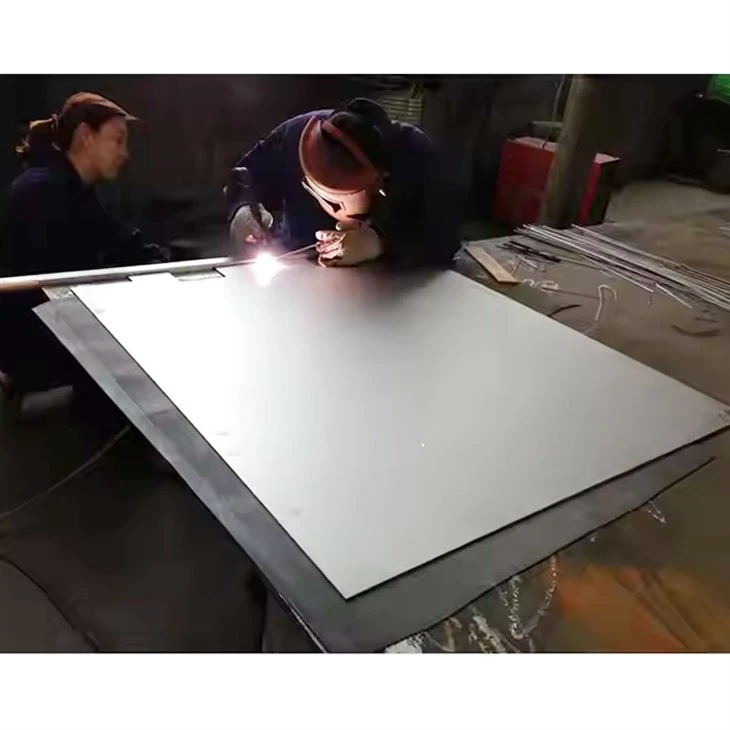

Modulus of Elasticity of Titanium Plates
Titanium is a well - known metal for its excellent combination of strength, low density, and corrosion resistance. The modulus of elasticity of titanium plates can vary depending on several factors, including the specific titanium alloy, the manufacturing process, and the heat treatment.
For pure titanium (Grade 1, Grade 2, etc.), the modulus of elasticity typically ranges from about 103 GPa (15 x 10^6 psi) to 110 GPa (16 x 10^6 psi). Titanium alloys, on the other hand, can have slightly different values. For example, Titanium Grade 12, which is a titanium - molybdenum - nickel alloy, has a modulus of elasticity around 110 GPa.
The consistency of the modulus of elasticity within a particular grade of titanium plate is crucial for ensuring predictable performance in engineering applications. At our company, we conduct rigorous quality control measures to guarantee that the titanium plates we supply meet the specified modulus of elasticity values. This is essential for applications where precise calculations of stress and deformation are required.
Importance of Modulus of Elasticity in Applications
The modulus of elasticity plays a vital role in many applications of titanium plates. Here are some examples:
Aerospace Industry
In the aerospace sector, weight reduction is a top priority without compromising on strength. Titanium plates are widely used in aircraft structures, such as wings, fuselages, and engine components. The high strength - to - weight ratio of titanium, combined with its appropriate modulus of elasticity, allows engineers to design structures that can withstand the complex loads encountered during flight while keeping the overall weight of the aircraft low. For instance, when designing an aircraft wing, the modulus of elasticity of the titanium plates used helps determine how the wing will flex under aerodynamic forces, ensuring safe and efficient flight performance.
Medical Implants
Titanium is a popular choice for medical implants due to its biocompatibility. The modulus of elasticity of titanium plates used in orthopedic implants, such as bone plates and screws, is carefully considered. It needs to be close to the modulus of elasticity of human bone to avoid a phenomenon called stress shielding. Stress shielding occurs when a stiff implant takes on most of the load, causing the surrounding bone to weaken over time. By matching the modulus of elasticity of the implant to that of the bone, the load is more evenly distributed, promoting better bone healing and long - term implant stability.
Chemical Processing
In the chemical processing industry, titanium plates are used in equipment such as heat exchangers and reaction vessels because of their excellent corrosion resistance. The modulus of elasticity is important in these applications to ensure that the equipment can withstand the internal pressures and external forces without excessive deformation. For example, a heat exchanger made of titanium plates needs to maintain its shape and integrity under the pressure of the fluids flowing through it, and the modulus of elasticity helps in designing the appropriate thickness and structure of the plates.
Our Titanium Plate Offerings
We offer a wide range of titanium plates to meet the diverse needs of our customers. Our 10MM Titanium Plate is available in different grades, including pure titanium grades, which have the characteristic modulus of elasticity values mentioned earlier. These plates are suitable for various applications, from general industrial use to specialized aerospace and medical applications.
Our Titanium Grade 12 Plates are known for their good weldability and corrosion resistance in addition to their appropriate modulus of elasticity. They are often used in chemical processing, marine, and oil and gas industries.
We also supply Titanium Plate gr1, which is a pure titanium plate with high ductility and excellent formability. It has a relatively lower modulus of elasticity compared to some of the higher - strength alloys, making it suitable for applications where flexibility is required.
Conclusion
The modulus of elasticity of a titanium plate is a critical property that influences its performance in a wide range of applications. Understanding this property is essential for engineers, designers, and end - users to make informed decisions when selecting the appropriate titanium plate for their specific needs.
As a trusted titanium plate supplier, we are committed to providing high - quality products with consistent mechanical properties, including the modulus of elasticity. Whether you are in the aerospace, medical, chemical processing, or any other industry that requires titanium plates, we have the expertise and the product range to meet your requirements.
If you are interested in learning more about our titanium plates or have specific requirements for your project, we encourage you to contact us for a detailed discussion. Our team of experts is ready to assist you in finding the best titanium plate solution for your application.
References
- Callister, W. D., & Rethwisch, D. G. (2014). Materials Science and Engineering: An Introduction. Wiley.
- ASM Handbook, Volume 2: Properties and Selection: Nonferrous Alloys and Special - Purpose Materials. ASM International.
- Titanium: A Technical Guide, Second Edition. ASM International.
Send Inquiry