





What is the shear strength of a titanium disc?
May 23, 2025
Leave a message
Shear strength is a critical mechanical property that measures a material's ability to resist forces that cause one part of the material to slide past another along a plane. When it comes to titanium discs, understanding their shear strength is essential for various applications, from aerospace components to medical implants. As a leading supplier of titanium discs, we are well - versed in the intricacies of this material's shear strength and its implications.
The Basics of Shear Strength
Shear strength is determined by the maximum shear stress a material can withstand before failure. In the case of a titanium disc, this stress occurs when forces act parallel to the cross - sectional area of the disc. To measure shear strength, standardized testing methods are employed. One common method is the double - shear test, where the disc is placed between two supports, and a force is applied at the center until the disc fails in shear.
The shear strength of a material is influenced by several factors. Firstly, the purity of the titanium plays a significant role. Pure titanium has different mechanical properties compared to titanium alloys. Pure Titanium Target typically has a relatively lower shear strength but offers excellent corrosion resistance. On the other hand, titanium alloys are engineered to enhance specific properties, including shear strength.
Factors Affecting the Shear Strength of Titanium Discs
Alloy Composition
Titanium alloys are created by adding other elements such as aluminum, vanadium, and molybdenum. For example, Grade 5 titanium, also known as Ti - 6Al - 4V, is one of the most widely used titanium alloys. It contains 6% aluminum and 4% vanadium, which significantly improve its strength - to - weight ratio and shear strength compared to pure titanium. Our Grade5 Titanium Forged Ring showcases the enhanced properties of Grade 5 titanium. The alloying elements form a solid - solution strengthening mechanism, which increases the resistance of the material to shear forces.

Heat Treatment
Heat treatment is another crucial factor that can alter the shear strength of titanium discs. Annealing, for instance, is a heat - treatment process that involves heating the titanium disc to a specific temperature and then slowly cooling it. This process relieves internal stresses and can improve the ductility of the material. On the other hand, solution treatment and aging can increase the strength of the titanium alloy by promoting the precipitation of strengthening phases. By carefully controlling the heat - treatment parameters, we can optimize the shear strength of our titanium discs according to the specific requirements of our customers.
Grain Structure
The grain structure of the titanium disc also affects its shear strength. A fine - grained structure generally provides higher shear strength compared to a coarse - grained structure. This is because the grain boundaries act as barriers to the movement of dislocations, which are responsible for plastic deformation. During the manufacturing process, techniques such as forging and rolling can be used to refine the grain structure of the titanium disc, thereby enhancing its shear strength.
Applications and Shear Strength Requirements
The shear strength requirements for titanium discs vary depending on the application. In the aerospace industry, titanium discs are used in components such as turbine blades, engine mounts, and landing gear parts. These applications demand high shear strength to withstand the extreme forces and vibrations experienced during flight. For example, turbine blades need to resist the high - speed rotation and the aerodynamic forces acting on them, and a high shear strength ensures their structural integrity.
In the medical field, titanium discs are used for implants such as dental implants and spinal fusion devices. Although the shear strength requirements in medical applications may not be as high as in aerospace, they still need to be sufficient to withstand the forces exerted during normal use. Additionally, the biocompatibility of titanium makes it an ideal material for medical implants, and the ability to control its shear strength through alloying and heat treatment allows for the customization of implants according to the patient's needs.
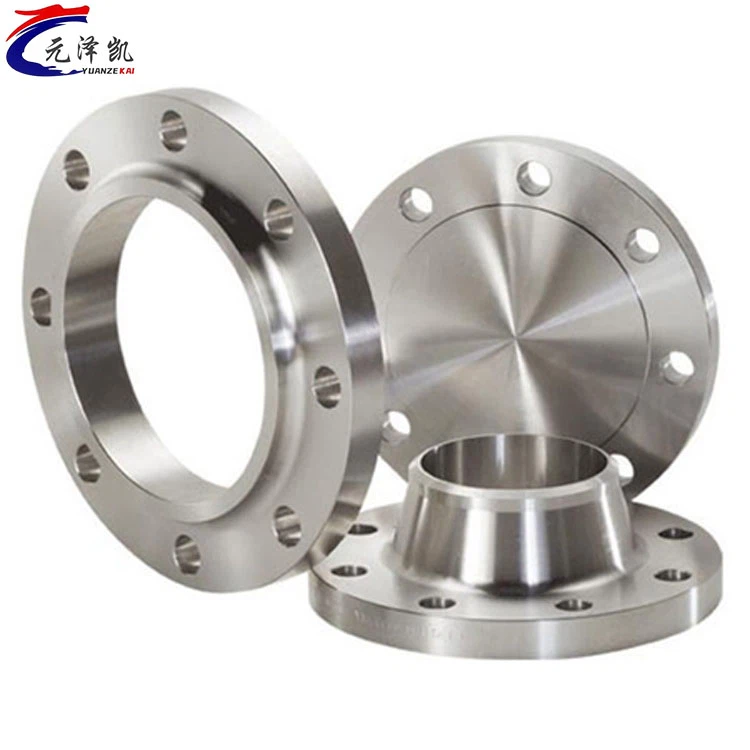
The oil and gas industry also utilizes titanium discs in various applications, such as valves and pumps. These components are exposed to harsh environments, including high pressures and corrosive fluids. Our Corrosion Resistant Titanium Flanges are an example of products that need to have both good corrosion resistance and adequate shear strength to ensure long - term performance in such demanding conditions.
Measuring and Ensuring Shear Strength
As a titanium disc supplier, we are committed to providing products with consistent and reliable shear strength. We use advanced testing equipment to measure the shear strength of our titanium discs. Our quality control process includes both destructive and non - destructive testing methods. Destructive testing, such as the double - shear test mentioned earlier, provides accurate data on the shear strength of the material. Non - destructive testing methods, such as ultrasonic testing and X - ray inspection, are used to detect any internal defects that could potentially affect the shear strength of the disc.
We also work closely with our customers to understand their specific shear strength requirements. By collaborating with them from the design stage, we can select the appropriate titanium alloy, optimize the manufacturing process, and perform the necessary heat treatment to meet their exact needs. Our team of experts is always available to provide technical support and advice on the selection and use of titanium discs.
Conclusion
The shear strength of a titanium disc is a complex property that is influenced by factors such as alloy composition, heat treatment, and grain structure. Understanding these factors is crucial for various industries that rely on titanium discs for their applications. As a trusted titanium disc supplier, we have the expertise and resources to provide high - quality titanium discs with the desired shear strength.
Whether you are in the aerospace, medical, or oil and gas industry, we can offer customized solutions to meet your specific requirements. If you are interested in learning more about our titanium discs or have a specific project in mind, we encourage you to contact us for further discussion and procurement negotiation. Our team is eager to assist you in finding the perfect titanium disc solution for your needs.
References
- "Titanium: A Technical Guide" by John C. Williams
- ASTM Standards for Titanium and Titanium Alloys
- Journal of Materials Science and Engineering articles related to titanium mechanics
Send Inquiry