





What is the surface roughness standard for a titanium rod?
May 21, 2025
Leave a message
Hey there! As a supplier of titanium rods, I often get asked about the surface roughness standard for these bad boys. It's a crucial aspect that can impact how well the titanium rod performs in different applications. So, let's dive right into it and break down what surface roughness means and what the standards are for titanium rods.
First off, what's surface roughness? Well, it's basically a measure of how smooth or rough the surface of an object is. When we talk about a titanium rod, we're looking at the tiny peaks and valleys on its outer surface. These little irregularities can affect things like how the rod fits with other parts, its corrosion resistance, and even its aesthetic appeal.
In the world of manufacturing and engineering, surface roughness is usually measured in micrometers (μm) or microinches (μin). There are a few different ways to measure it, but one of the most common is using a profilometer. This nifty tool scans the surface of the titanium rod and gives you a numerical value that represents the roughness.
Now, let's get to the standards. The surface roughness standard for a titanium rod can vary depending on a few factors, like the application it's going to be used for and the manufacturing process. For example, if the titanium rod is going to be used in a medical device, it'll probably need to have a very smooth surface to prevent any irritation or infection. On the other hand, if it's going to be used in a less critical application, like a structural component in a building, a slightly rougher surface might be acceptable.
One of the most widely recognized standards for surface roughness is the Ra value. Ra stands for "arithmetical mean deviation of the profile." In simple terms, it's the average height of the peaks and valleys on the surface of the titanium rod. The lower the Ra value, the smoother the surface. For titanium rods used in general engineering applications, an Ra value of around 0.8 to 3.2 μm is often considered acceptable. However, for more demanding applications, like aerospace or medical, the Ra value might need to be as low as 0.1 to 0.4 μm.
Another important standard is the Rz value, which stands for "maximum height of the profile." This measures the difference in height between the highest peak and the lowest valley on the surface. The Rz value gives you an idea of the overall roughness of the surface and can be useful for detecting any large irregularities.
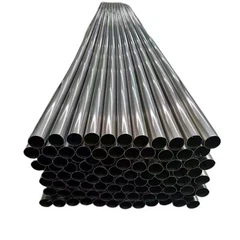
So, how do we ensure that our titanium rods meet these surface roughness standards? Well, it all starts with the manufacturing process. We use a combination of machining, grinding, and polishing techniques to achieve the desired surface finish. For example, we might start by turning the titanium rod on a lathe to remove any excess material and create a rough shape. Then, we'll use a grinder to smooth out the surface and reduce the roughness. Finally, we'll polish the rod to give it a mirror-like finish.
Of course, it's not just about the manufacturing process. We also have a strict quality control system in place to ensure that every titanium rod we produce meets the required surface roughness standards. We use advanced measuring equipment to test the surface roughness of each rod before it leaves our factory. If a rod doesn't meet the standards, we'll either rework it or scrap it to ensure that only the highest quality products reach our customers.
At our company, we offer a wide range of titanium rods to meet the needs of different industries. Whether you're looking for a Titanium Alloy Bar, a Titanium Shaped Titanium Rod, or a Titanium Rod Ends, we've got you covered. Our rods are made from high-quality titanium alloys and are available in a variety of sizes and shapes.
If you're in the market for titanium rods and have any questions about surface roughness or any other aspect of our products, don't hesitate to get in touch. We're here to help you find the right solution for your needs. Whether you're a small business or a large corporation, we can work with you to provide the best possible products and services.
In conclusion, the surface roughness standard for a titanium rod is an important factor that can impact its performance and suitability for different applications. By understanding the standards and using the right manufacturing and quality control processes, we can ensure that our titanium rods meet the highest quality standards. So, if you're looking for high-quality titanium rods, look no further. Contact us today to discuss your requirements and let's work together to find the perfect solution for your project.
References


- ASME B46.1 - Surface Texture (Surface Roughness, Waviness, and Lay)
- ISO 4287 - Geometrical Product Specifications (GPS) - Surface texture: Profile method - Terms, definitions and surface texture parameters
- ASTM B348 - Standard Specification for Titanium and Titanium Alloy Bars and Billets
Send Inquiry