





Are there any design limitations for titanium elbows?
Aug 06, 2025
Leave a message
Hey there! As a supplier of titanium elbows, I've been getting a lot of questions lately about whether there are any design limitations for these nifty components. So, I thought I'd sit down and write a blog post to share my thoughts and insights on this topic.
First off, let's talk a bit about titanium elbows. Titanium is an amazing material known for its high strength, low density, and excellent corrosion resistance. These properties make it a popular choice in a wide range of industries, including aerospace, automotive, chemical processing, and marine applications. Titanium elbows, in particular, are used to change the direction of fluid or gas flow in pipelines, and they come in various shapes and sizes to meet different requirements.
Now, onto the big question: Are there any design limitations for titanium elbows? Well, the answer is yes and no. Let's break it down.
Manufacturing Constraints
One of the main factors that can limit the design of titanium elbows is the manufacturing process. Titanium is a difficult material to work with compared to other metals like steel or aluminum. It has a high melting point, which means it requires specialized equipment and techniques to shape and form. For example, when bending titanium tubes to create elbows, the process needs to be carefully controlled to avoid cracking or wrinkling.
The thickness of the titanium wall also plays a role. If the wall is too thin, it may not be able to withstand the pressure and stress during operation. On the other hand, if it's too thick, it can make the bending process even more challenging and increase the weight of the elbow. This balance between wall thickness and manufacturability is something that we, as suppliers, need to consider when designing titanium elbows.
Geometric Limitations
The geometry of the elbow itself can also pose limitations. The radius of curvature is a crucial parameter. A smaller radius of curvature means a sharper bend, which can be more difficult to achieve in titanium. As the radius decreases, the risk of deformation and cracking increases. Additionally, the angle of the elbow is another factor. Standard angles like 45 degrees and 90 degrees are relatively easier to manufacture, but more complex angles may require more advanced techniques and may not be as readily available.


Another geometric aspect is the size of the elbow. Larger diameter elbows are generally more challenging to produce. The larger the diameter, the more material is involved, and the greater the stress during the bending process. This can lead to issues such as uneven wall thickness and reduced mechanical properties.
Material Properties
Titanium's unique material properties can both be an advantage and a limitation. Its high strength-to-weight ratio is great for applications where weight is a concern, but it also means that it can be more brittle than some other metals. This brittleness can be a problem when the elbow is subjected to sudden impacts or vibrations.
The corrosion resistance of titanium is one of its selling points, but it can also affect the design in some cases. For example, in certain chemical environments, the surface of the titanium may react with the surrounding media, forming a passive oxide layer. While this layer protects the metal from further corrosion, it can also change the surface properties of the elbow, which may need to be considered in the design.
Cost Considerations
Cost is always a factor in any design. Titanium is more expensive than many other metals, and the manufacturing processes for titanium elbows can be costly as well. This means that there are limitations on how elaborate or complex the design can be. For example, adding additional features or using more advanced manufacturing techniques to achieve a specific design may drive up the cost significantly. As a supplier, we need to balance the design requirements with the cost to ensure that our customers get a product that meets their needs without breaking the bank.
Applications and Compatibility
The intended application of the titanium elbow also influences its design. Different industries have different requirements. In the aerospace industry, for example, weight is a critical factor, and the elbows need to be as lightweight as possible while still maintaining their strength and integrity. In the chemical processing industry, the elbows need to be able to withstand the corrosive effects of various chemicals.
Compatibility with other components in the system is also important. The titanium elbow needs to fit seamlessly with the pipes, valves, and other parts of the pipeline. This means that the design needs to take into account the connection methods, such as welding or flanging, and ensure that they are compatible with the overall system.
Overcoming the Limitations
Despite these limitations, there are ways to work around them. At our company, we have a team of experienced engineers who are constantly researching and developing new techniques to improve the design and manufacturing of titanium elbows. We use advanced simulation software to model the bending process and predict any potential issues before we start production. This allows us to optimize the design and ensure that the elbows meet the highest quality standards.
We also offer a range of standard designs that have been proven to work well in different applications. These designs are based on our years of experience and feedback from our customers. However, we also understand that some customers may have unique requirements, and we are more than willing to work with them to develop custom designs.
Product Recommendations
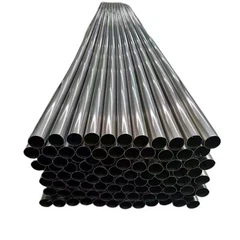
If you're in the market for titanium elbows, we have a few products that I'd like to recommend. The Gr2 Titanium Exhaust Pipe is a great option for automotive and aerospace applications. It offers excellent corrosion resistance and is relatively lightweight. The ASTM B862 Gr1 Titanium Capillary Tube is ideal for applications where precision and small diameters are required, such as in medical devices or laboratory equipment. And the Titanium Alloy GR5 Tube is a high-strength option that can withstand more demanding environments.
Conclusion
So, to sum it up, there are indeed some design limitations for titanium elbows, but they are not insurmountable. With the right expertise and technology, we can design and manufacture titanium elbows that meet a wide range of requirements. If you have any questions about our titanium elbows or need help with a custom design, don't hesitate to reach out. We're here to help you find the perfect solution for your needs. Whether you're in the aerospace, automotive, or any other industry, we're confident that we can provide you with high-quality titanium elbows that will perform well in your application. So, why not get in touch and start the conversation today?
References
- "Titanium: A Technical Guide" by John C. Williams
- "Manufacturing Processes for Engineering Materials" by S. Kalpakjian and S. R. Schmid
Send Inquiry