





Can a titanium disc be magnetized?
Dec 22, 2025
Leave a message
Can a titanium disc be magnetized? This is a question that often arises in the context of materials science and various industrial applications. As a supplier of titanium discs, I've encountered this query numerous times from clients, engineers, and enthusiasts alike. In this blog, we'll delve into the scientific aspects of titanium's magnetic properties, explore the factors that might influence its magnetization potential, and discuss the implications for our titanium disc products.
Understanding Titanium's Magnetic Nature
Titanium is a fascinating metal known for its exceptional strength - to - weight ratio, corrosion resistance, and biocompatibility. When it comes to magnetism, titanium is classified as a paramagnetic material. Paramagnetic substances are those that are weakly attracted to a magnetic field. Unlike ferromagnetic materials such as iron, nickel, and cobalt, which can be strongly magnetized and retain their magnetization even after the external magnetic field is removed, paramagnetic materials only exhibit a weak magnetic response in the presence of an external magnetic field.
The magnetic behavior of titanium can be attributed to its atomic structure. Each titanium atom has unpaired electrons in its outer shells. When an external magnetic field is applied, these unpaired electrons align themselves with the field, creating a weak magnetic moment. However, once the external field is removed, the thermal motion of the atoms causes the electrons to lose their alignment, and the magnetic moment disappears.
Factors Affecting Titanium's Magnetization
Although titanium is inherently paramagnetic, several factors can influence its magnetic response.
Alloying Elements
Titanium is often alloyed with other elements to enhance its mechanical properties. Some alloying elements can change the magnetic behavior of titanium. For example, if titanium is alloyed with ferromagnetic elements like iron, the resulting alloy may exhibit stronger magnetic properties. However, in most commercial titanium alloys, the amount of ferromagnetic elements is carefully controlled to maintain the desired non - magnetic or weakly magnetic characteristics.
Crystal Structure
The crystal structure of titanium can also affect its magnetic properties. Titanium exists in two main crystal structures: alpha (α) and beta (β). The alpha phase is stable at lower temperatures, while the beta phase is stable at higher temperatures. The beta phase generally has a more disordered atomic arrangement, which can lead to a slightly different magnetic response compared to the alpha phase. Heat treatment processes can be used to control the proportion of alpha and beta phases in titanium, thereby influencing its magnetic behavior.
Impurities
Impurities in titanium can have a significant impact on its magnetic properties. Even small amounts of ferromagnetic impurities, such as iron particles, can cause the titanium disc to exhibit stronger magnetic attraction. During the manufacturing process, strict quality control measures are in place to minimize the presence of such impurities. At our company, we ensure that our titanium discs are produced with high - purity titanium to maintain their expected magnetic characteristics.
Applications and Implications for Titanium Discs
The weak magnetic properties of titanium discs have several implications for their applications.

Aerospace and Aviation
In the aerospace and aviation industries, non - magnetic materials are often preferred to avoid interference with sensitive electronic equipment and navigation systems. Titanium discs, with their low magnetic susceptibility, are ideal for use in components such as engine parts, fasteners, and structural elements. For example, in aircraft engines, titanium discs can be used as compressor blades, where their non - magnetic nature ensures that they do not disrupt the operation of nearby sensors and control systems.
Medical Devices
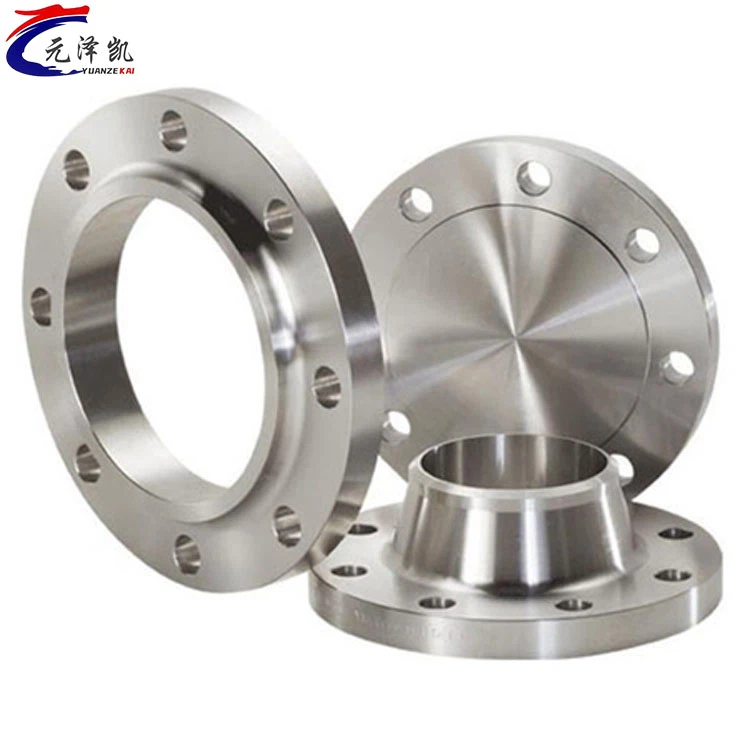
Titanium's biocompatibility and non - magnetic properties make it a popular choice for medical devices. Titanium discs can be used in orthopedic implants, dental implants, and surgical instruments. In magnetic resonance imaging (MRI) procedures, non - magnetic materials are essential to prevent image distortion and ensure accurate diagnosis. Our Corrosion Resistant Titanium Flanges can be used in medical equipment where corrosion resistance and non - magnetic properties are required.
Electronics
In the electronics industry, titanium discs are used in various applications, such as in semiconductor manufacturing and electronic packaging. Their non - magnetic nature helps to prevent electromagnetic interference (EMI) and ensures the proper functioning of electronic components. For example, Gr2 Titanium Blind Flange can be used in electronic enclosures to protect sensitive circuits from external magnetic fields.
Testing the Magnetization of Titanium Discs
To determine the magnetic properties of our titanium discs, we use a variety of testing methods. One common method is the use of a magnetic susceptibility meter, which measures the degree to which a material is attracted to a magnetic field. We also conduct visual inspections and use magnetic particle inspection (MPI) techniques to detect any ferromagnetic impurities on the surface of the titanium discs.
Our Titanium Disc Products
As a leading supplier of titanium discs, we offer a wide range of products with different specifications and grades. Our titanium discs are made from high - quality titanium, ensuring excellent mechanical properties and consistent magnetic characteristics. Whether you need a small - diameter disc for a precision application or a large - scale disc for industrial use, we can provide customized solutions to meet your specific requirements. Our Titanium Forging Round Target is a popular product that is widely used in sputtering applications, where its high purity and uniform structure are highly valued.
Conclusion
In conclusion, while titanium discs cannot be magnetized in the same way as ferromagnetic materials, they do exhibit weak paramagnetic properties. These properties are influenced by factors such as alloying elements, crystal structure, and impurities. The non - magnetic or weakly magnetic nature of titanium discs makes them suitable for a wide range of applications in aerospace, medical, and electronics industries.
If you are interested in our titanium disc products or have any questions about their magnetic properties, we encourage you to contact us for further discussion. Our team of experts is ready to assist you in finding the right titanium disc solution for your needs.
References
- "Introduction to Materials Science for Engineers" by James F. Shackelford
- "Titanium: A Technical Guide" by John C. Williams
Send Inquiry