





What are the rolling processes for titanium stubs?
Nov 28, 2025
Leave a message
Hey there! As a titanium stub supplier, I'm super excited to dive into the world of rolling processes for titanium stubs. Titanium stubs are crucial components in various industries, from aerospace to automotive, and understanding how they're made is key. So, let's get started!
Why Titanium?
First off, why do we even use titanium for stubs? Well, titanium is an amazing metal. It's incredibly strong, yet lightweight. This combination makes it perfect for applications where weight is a concern, like in airplanes or high - performance cars. It also has excellent corrosion resistance, which means titanium stubs can last a long time, even in harsh environments.
The Basics of Rolling
Rolling is a metal - forming process where metal is passed through one or more pairs of rolls to reduce its thickness, change its shape, or improve its mechanical properties. When it comes to titanium stubs, there are a few different rolling processes we commonly use.
Hot Rolling
Hot rolling is one of the most widely used processes for titanium stubs. In hot rolling, the titanium is heated to a high temperature, usually above its recrystallization temperature. This makes the metal more malleable, so it can be easily shaped.
The process starts with a titanium billet. We heat this billet in a furnace until it reaches the right temperature. Once it's hot enough, we pass it through a series of rolling mills. These mills have large rolls that apply pressure to the titanium, gradually reducing its thickness and shaping it into the desired form.
One of the advantages of hot rolling is that it can produce large - scale titanium stubs relatively quickly. It also helps to break down the grain structure of the titanium, which can improve its mechanical properties. However, hot - rolled titanium stubs may have a slightly rougher surface finish compared to cold - rolled ones.
Cold Rolling
Cold rolling is another important process. As the name suggests, cold rolling is done at room temperature or slightly above. After hot rolling, the titanium stubs may go through a cold - rolling process to achieve a more precise thickness and a better surface finish.
In cold rolling, the titanium stub is passed through a set of rolls with a smaller gap than in hot rolling. This further reduces the thickness of the stub and makes its surface smoother. Cold - rolled titanium stubs are often used in applications where a high - quality surface finish is required, such as in some high - end automotive parts.
However, cold rolling has its limitations. Since the metal is not as malleable at room temperature, it can't be reduced as much in a single pass as in hot rolling. Also, cold rolling can increase the hardness of the titanium, which may require additional heat treatment to restore its ductility.


Intermediate Processes
Between hot rolling and cold rolling, there are often some intermediate processes. For example, annealing is a common step. Annealing involves heating the titanium to a specific temperature and then cooling it slowly. This helps to relieve the internal stresses that build up during rolling and restores the metal's ductility.
We might also perform some surface treatments during these intermediate steps. For instance, pickling is used to remove any scale or oxide layers that form on the surface of the titanium during hot rolling. This ensures a clean surface for further processing.
Quality Control
Throughout the rolling processes, quality control is of utmost importance. We use a variety of techniques to ensure that the titanium stubs meet the required specifications.
Non - destructive testing methods, such as ultrasonic testing and eddy - current testing, are used to detect any internal defects in the stubs. We also measure the dimensions of the stubs using precision instruments to make sure they have the right thickness, width, and length.
Applications of Titanium Stubs
Titanium stubs have a wide range of applications. In the aerospace industry, they're used in aircraft engines and structural components. The high strength - to - weight ratio of titanium makes it ideal for these applications, as it helps to reduce the overall weight of the aircraft and improve fuel efficiency.
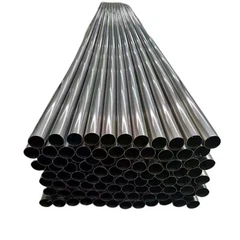
In the automotive industry, titanium stubs can be found in exhaust systems. For example, Gr2 Titanium Exhaust Pipe and Gr 7 Titanium Pipes are often made with titanium stubs. Titanium's corrosion resistance means that these exhaust components can withstand the harsh chemicals and high temperatures in the exhaust system.
The medical industry also uses titanium stubs. Titanium is biocompatible, which means it can be used in implants such as dental implants and bone plates. The ASME SB338 GR2 SEAMLESS TITANIUM TUBE is an example of a product that might be used in medical applications.
Conclusion
So, there you have it - a rundown of the rolling processes for titanium stubs. From hot rolling to cold rolling, and all the intermediate steps in between, each process plays a crucial role in creating high - quality titanium stubs.
If you're in the market for titanium stubs, whether for aerospace, automotive, medical, or any other industry, we're here to help. We have a wide range of titanium stubs available, and we can customize them to meet your specific requirements. Don't hesitate to reach out to us for more information or to start a procurement discussion. We're looking forward to working with you!
References
- "Titanium: A Technical Guide" by John R. Davis
- "Metal Forming Processes and Die Design" by P. S. Sidhu
Send Inquiry