





What is the modulus of rigidity of tantalum rods?
Dec 16, 2025
Leave a message
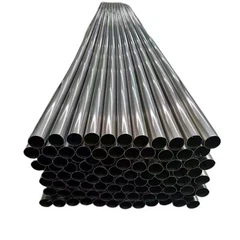
Hey there! As a supplier of tantalum rods, I often get asked a bunch of technical questions about these nifty little metal sticks. One question that pops up quite a bit is, "What is the modulus of rigidity of tantalum rods?" Well, let's dive right in and break it down.
First off, let's talk a bit about what the modulus of rigidity actually means. In simple terms, the modulus of rigidity, also known as the shear modulus, is a measure of how much a material can resist deformation when a force is applied parallel to one of its surfaces. Think of it like this: if you were to try and twist a tantalum rod, the modulus of rigidity tells you how much the rod will resist that twisting motion.
Now, tantalum is a pretty unique metal. It's known for its high melting point, excellent corrosion resistance, and good ductility. These properties make it a popular choice in a wide range of industries, from electronics to aerospace. But when it comes to the modulus of rigidity, tantalum has some interesting characteristics.
The modulus of rigidity of tantalum is typically around 68 GPa (gigapascals). That's a pretty high number, which means that tantalum rods are quite resistant to shear stress. In other words, they can take a fair amount of twisting and bending without deforming permanently. This is one of the reasons why tantalum is used in applications where high strength and durability are required.
But why is the modulus of rigidity so important for tantalum rods? Well, in many engineering applications, materials are subjected to various types of forces, including shear forces. For example, in a mechanical component, a tantalum rod might be used to transmit torque or to support a load that causes shear stress. If the rod doesn't have a high enough modulus of rigidity, it could deform or even break under these forces, leading to failure of the component.


Another factor to consider is the relationship between the modulus of rigidity and other mechanical properties of tantalum. For instance, the modulus of rigidity is related to the Young's modulus (a measure of a material's stiffness in tension or compression) and the Poisson's ratio (a measure of how a material contracts laterally when stretched longitudinally). Understanding these relationships can help engineers design better components and structures using tantalum rods.
Now, as a tantalum rod supplier, I know that different customers have different requirements. Some might need tantalum rods with a specific modulus of rigidity for a particular application, while others might be more concerned with other properties like purity or surface finish. That's why we offer a wide range of tantalum rods with different specifications to meet the diverse needs of our customers.
In addition to the technical aspects, I also want to mention that we take quality control very seriously. We source our tantalum from reliable suppliers and use advanced manufacturing processes to ensure that our rods meet the highest standards. We also perform rigorous testing on every batch of rods to verify their mechanical properties, including the modulus of rigidity.
If you're in the market for tantalum rods, you might also be interested in other tantalum products we offer. For example, we also supply Tantalum Plate, which has its own unique set of properties and applications. Tantalum plates are often used in chemical processing equipment, heat exchangers, and other industrial applications where corrosion resistance is crucial.
So, if you're looking for high-quality tantalum rods or other tantalum products, don't hesitate to get in touch with us. Whether you have a specific project in mind or just want to learn more about tantalum, our team of experts is here to help. We can provide you with detailed technical information, samples, and competitive quotes to assist you in making the right choice for your application.
In conclusion, the modulus of rigidity of tantalum rods is an important property that plays a crucial role in many engineering applications. With its high modulus of rigidity and other excellent mechanical properties, tantalum is a versatile and reliable material for a wide range of industries. As a supplier, we're committed to providing our customers with the best quality tantalum products and exceptional service. So, if you're interested in purchasing tantalum rods or other tantalum materials, feel free to contact us to start a discussion about your requirements.
References
- Callister, W. D., & Rethwisch, D. G. (2017). Materials Science and Engineering: An Introduction. Wiley.
- ASM Handbook Committee. (1990). ASM Handbook Volume 2: Properties and Selection: Nonferrous Alloys and Special-Purpose Materials. ASM International.
Send Inquiry