





What are the swaging processes for titanium material?
Oct 16, 2025
Leave a message
Swaging is a crucial metalworking process that involves shaping metals by deforming them under pressure. When it comes to titanium materials, swaging plays a significant role in creating various products with specific shapes and properties. As a leading titanium material supplier, we have in - depth knowledge and extensive experience in the swaging processes for titanium. In this blog, we will explore the different swaging processes for titanium materials.
Rotary Swaging
Rotary swaging is one of the most commonly used swaging methods for titanium. In this process, a set of rotating dies is used to apply radial pressure on the titanium workpiece. The dies strike the workpiece rapidly, causing it to deform and reduce in diameter or change its shape.
The main advantage of rotary swaging for titanium is its ability to produce precise and uniform shapes. This process can be used to create complex profiles, such as tapered rods or tubes. For example, when manufacturing Titanium Wheel Bolts, rotary swaging can ensure that the bolts have the correct diameter and shape, which is crucial for their performance and safety.
Another benefit is the improvement in the mechanical properties of the titanium. The deformation during rotary swaging can refine the grain structure of the titanium, leading to increased strength and hardness. This is particularly important for applications where high - strength components are required.
However, rotary swaging also has some limitations. It requires specialized equipment, which can be expensive to purchase and maintain. Additionally, the process is relatively slow, especially when dealing with large - scale production.
Impact Swaging
Impact swaging, also known as hammer swaging, involves using a hammer or a series of hammers to strike the titanium workpiece. The impact force deforms the material and changes its shape. This process is often used for smaller - scale production or for creating custom - shaped components.
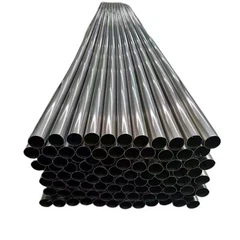
One of the advantages of impact swaging is its simplicity. It does not require complex machinery, and it can be easily adapted to different workpiece sizes and shapes. For instance, if a customer needs a small batch of custom - designed Gr4 Titanium Tube, impact swaging can be a cost - effective solution.
Impact swaging can also be used to introduce compressive stresses on the surface of the titanium, which can improve its fatigue resistance. This is beneficial for components that are subjected to cyclic loading.
On the other hand, impact swaging may result in less precise shapes compared to rotary swaging. The force applied by the hammer can be difficult to control precisely, which may lead to variations in the final dimensions of the workpiece.
Cold Swaging
Cold swaging is a process where the titanium material is swaged at room temperature. This process is often preferred when maintaining the original properties of the titanium is crucial. Since there is no heating involved, there is no risk of phase changes or oxidation that can occur at high temperatures.
Cold swaging can be used with both rotary and impact swaging methods. It is suitable for applications where the material needs to retain its high corrosion resistance, such as in the aerospace and marine industries. For example, many aerospace components made of titanium, like fasteners and tubing, are cold - swaged to ensure their performance in harsh environments.
However, cold swaging requires more force compared to hot swaging because the titanium is less ductile at room temperature. This means that the equipment used for cold swaging needs to be more powerful, and there is a higher risk of cracking or other defects in the workpiece if the process is not carefully controlled.
Hot Swaging
Hot swaging involves heating the titanium material to a specific temperature before swaging. Heating the titanium increases its ductility, making it easier to deform. This allows for larger reductions in diameter or more complex shape changes to be achieved with less force.
Hot swaging is commonly used for large - scale production and for creating components with significant shape changes. For example, when manufacturing large - diameter High Quality Niobium Bars that are alloyed with titanium, hot swaging can be used to achieve the desired shape and dimensions.
The main advantage of hot swaging is the reduced risk of cracking and the ability to work with larger workpieces. The increased ductility at high temperatures also allows for a more uniform deformation, resulting in better - quality products.
But hot swaging has its drawbacks. Heating the titanium requires additional energy and equipment, which increases the production cost. There is also a risk of oxidation and other surface defects if the heating and swaging processes are not carried out in a controlled environment.
Factors Affecting Swaging of Titanium
Several factors need to be considered when swaging titanium materials. One of the most important factors is the alloy composition of the titanium. Different titanium alloys have different mechanical properties and responses to swaging. For example, some alloys may be more prone to cracking during cold swaging, while others may require higher temperatures for hot swaging.
The initial shape and dimensions of the workpiece also play a role. The amount of deformation that can be achieved in a single swaging operation depends on the original size and shape of the titanium piece. In some cases, multiple swaging operations may be required to achieve the desired final shape.
The lubrication used during the swaging process is another critical factor. Lubricants can reduce friction between the dies and the titanium, which helps to prevent surface damage and improve the quality of the swaged product. Different types of lubricants are suitable for different swaging methods and operating conditions.
Quality Control in Swaging of Titanium
Quality control is essential in the swaging of titanium materials to ensure that the final products meet the required specifications. Non - destructive testing methods, such as ultrasonic testing and X - ray inspection, can be used to detect internal defects in the swaged components.
Dimensional inspection is also crucial. Precise measurements need to be taken to ensure that the swaged parts have the correct diameter, length, and other dimensions. This can be done using tools such as calipers, micrometers, and coordinate measuring machines.
Surface finish is another aspect of quality control. The surface of the swaged titanium should be smooth and free of defects such as scratches or cracks. Visual inspection and surface roughness measurements can be used to assess the surface quality.
Applications of Swaged Titanium Products
Swaged titanium products have a wide range of applications in various industries. In the aerospace industry, swaged titanium components are used in aircraft engines, airframes, and landing gear. The high strength - to - weight ratio and corrosion resistance of titanium make it an ideal material for these critical applications.
In the automotive industry, Titanium Wheel Bolts and other swaged titanium parts are used to reduce weight and improve performance. The use of titanium in automotive components can also enhance fuel efficiency.
The medical industry also benefits from swaged titanium products. Titanium is biocompatible, which means it can be used in implants such as bone screws and dental implants. Swaging can be used to create these components with the required precision and strength.
Conclusion
Swaging is a versatile process for shaping titanium materials, and different swaging methods offer unique advantages and disadvantages. As a titanium material supplier, we understand the importance of choosing the right swaging process based on the specific requirements of the application. Whether it is rotary swaging for precision parts, impact swaging for custom - made components, cold swaging for maintaining material properties, or hot swaging for large - scale production, we have the expertise and resources to provide high - quality swaged titanium products.
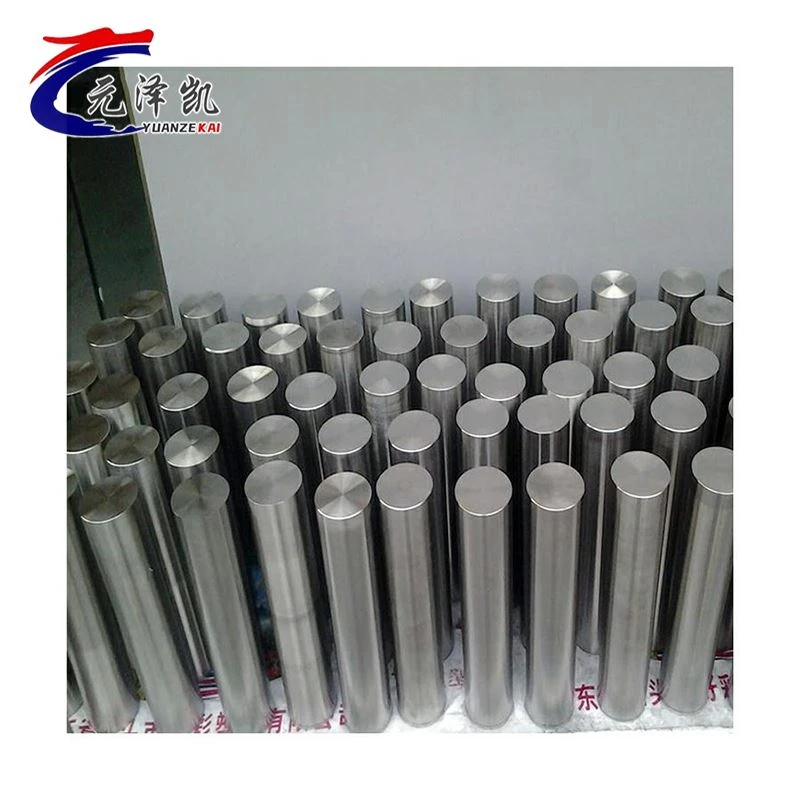

If you are interested in purchasing titanium materials or have specific requirements for swaged titanium components, we invite you to contact us for a detailed discussion. Our team of experts will be happy to assist you in finding the best solutions for your needs.
References
- Boyer, R., Welsch, G., & Collings, E. W. (1994). Materials Properties Handbook: Titanium Alloys. ASM International.
- Davis, J. R. (2000). Titanium: A Technical Guide. ASM International.
Send Inquiry