





What is the chlorine evolution reaction on a titanium anode?
May 16, 2025
Leave a message
Hey there! As a supplier of titanium anodes, I often get asked about the chlorine evolution reaction on a titanium anode. So, I thought I'd take a moment to break it down and explain what it is, how it works, and why it's important.
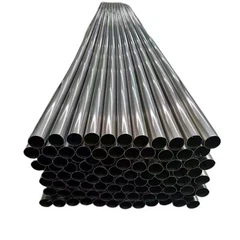
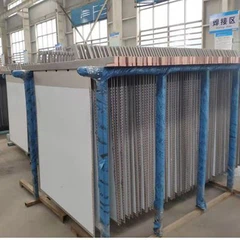
First off, let's talk about what a titanium anode is. A titanium anode is a type of electrode that's made from titanium, a strong and corrosion-resistant metal. These anodes are used in a variety of applications, including electroplating, water treatment, and chlor-alkali production. In each of these applications, the titanium anode plays a crucial role in facilitating chemical reactions by providing a surface for electrons to flow.
Now, onto the chlorine evolution reaction. The chlorine evolution reaction (CER) is a chemical reaction that occurs when an electric current is passed through a solution containing chloride ions (Cl⁻). When this happens, the chloride ions are oxidized at the anode surface, releasing chlorine gas (Cl₂). The reaction can be represented by the following equation:
2Cl⁻ → Cl₂ + 2e⁻
This reaction is important for a few reasons. First, chlorine is a powerful disinfectant and is commonly used in water treatment to kill bacteria and other harmful microorganisms. By producing chlorine gas through the CER, we can effectively treat water and make it safe for consumption. Second, chlorine is also used in the production of a variety of chemicals, including PVC, bleach, and pesticides. The CER provides a reliable and efficient way to produce chlorine on an industrial scale.
So, how does the titanium anode fit into all of this? Well, titanium is an ideal material for use as an anode in the CER for a few reasons. First, titanium is highly resistant to corrosion, which means it can withstand the harsh chemical environment of the electrolyte solution without deteriorating. This makes it a long-lasting and reliable choice for use in industrial applications. Second, titanium has a high overpotential for the CER, which means it requires a relatively high voltage to initiate the reaction. This is actually a good thing, as it helps to prevent the formation of unwanted side reactions and ensures that the CER proceeds efficiently.

In addition to its corrosion resistance and high overpotential, titanium anodes can also be coated with a variety of materials to enhance their performance. One common coating is a mixed metal oxide (MMO) coating, which consists of a layer of metal oxides that are applied to the surface of the titanium anode. The MMO coating helps to increase the surface area of the anode, which in turn increases the rate of the CER. It also helps to reduce the overpotential required for the reaction, making it more energy-efficient.
Another type of coating that's commonly used on titanium anodes is a dimensionally stable anode (DSA) coating. DSA coatings are made from a mixture of precious metals, such as iridium and ruthenium, and are designed to provide a stable and long-lasting surface for the CER. These coatings are particularly effective in applications where high currents and long operating times are required.
If you're in the market for a high-quality titanium anode, I'd like to recommend our High Quality Titanium Anode. Our anodes are made from the highest quality titanium and are coated with a proprietary MMO coating that provides excellent performance and durability. We also offer a range of DSA Titanium Anodes that are designed for use in high-current applications.
In conclusion, the chlorine evolution reaction on a titanium anode is an important chemical reaction that has a wide range of applications in industry and water treatment. Titanium anodes are an ideal choice for use in the CER due to their corrosion resistance, high overpotential, and ability to be coated with a variety of materials to enhance their performance. If you're interested in learning more about our titanium anodes or would like to discuss your specific requirements, please don't hesitate to get in touch. We'd be happy to help you find the right solution for your needs.

References:
- Bard, A. J., & Faulkner, L. R. (2001). Electrochemical Methods: Fundamentals and Applications. John Wiley & Sons.
- Conway, B. E. (1999). Electrochemical Supercapacitors: Scientific Fundamentals and Technological Applications. Kluwer Academic Publishers.
- Trasatti, S. (1980). Electrodes of Conductive Metallic Oxides. Part I. General Properties. Electrochimica Acta, 25(7), 733-745.
Send Inquiry