

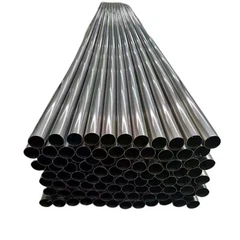




What is the difference between seamless and welded titanium tubes?
Jun 12, 2025
Leave a message
Titanium tubes are widely used in various industries due to their excellent properties such as high strength-to-weight ratio, corrosion resistance, and biocompatibility. When it comes to titanium tubes, two common types are seamless and welded titanium tubes. As a titanium tube supplier, I often encounter customers who are confused about the differences between these two types. In this blog, I will delve into the key differences between seamless and welded titanium tubes to help you make an informed decision for your specific applications.
Manufacturing Process
The most fundamental difference between seamless and welded titanium tubes lies in their manufacturing processes.
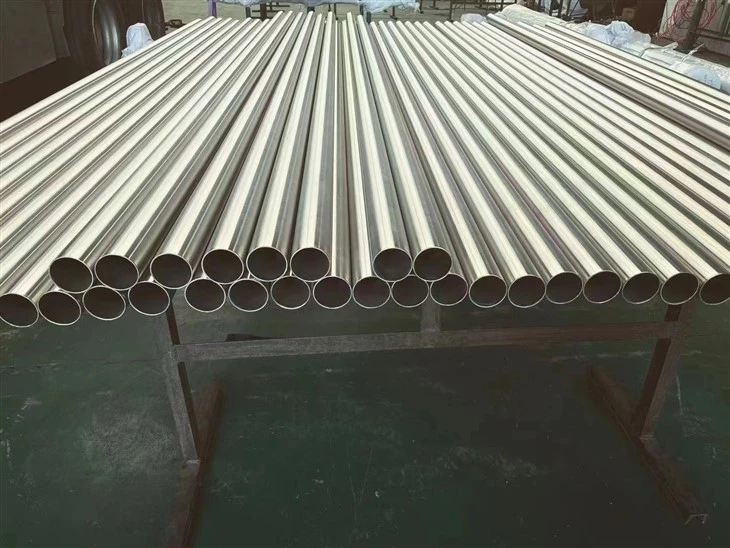

Seamless titanium tubes are produced through a process called extrusion or piercing. In the extrusion process, a solid titanium billet is heated to a high temperature and then forced through a die to create a tube shape. The piercing process involves using a mandrel to pierce a hole through the center of the heated billet, forming a hollow tube. These processes result in a tube with a continuous, seamless structure. This seamless construction eliminates the need for welding, which can be a potential weak point in the tube.
On the other hand, welded titanium tubes are made by rolling a flat titanium sheet into a tube shape and then welding the edges together. There are different welding methods used, such as TIG (Tungsten Inert Gas) welding, which provides a high - quality weld. The welding process allows for the production of tubes in large diameters and various lengths with relative ease. However, the weld seam is a distinct characteristic of welded tubes and can affect their performance in certain applications.
Mechanical Properties
Mechanical properties are crucial factors to consider when choosing between seamless and welded titanium tubes.
Seamless titanium tubes generally have more uniform mechanical properties throughout the tube. Since there is no weld seam, the tube has consistent strength and ductility in all directions. This makes seamless tubes ideal for applications where high - pressure and high - stress conditions are present, such as in aerospace and chemical processing industries. For example, in an aircraft hydraulic system, seamless titanium tubes can withstand the high - pressure fluid flow without the risk of failure at a weld seam.
Welded titanium tubes, while having good mechanical properties, may have some variation in strength and ductility around the weld area. The welding process can introduce residual stresses and microstructural changes in the weld zone. However, with proper welding techniques and post - weld heat treatment, these effects can be minimized. Welded tubes are still suitable for many applications where the pressure and stress levels are relatively lower, such as in architectural and decorative applications.
Surface Finish
The surface finish of titanium tubes can also differ between seamless and welded types.
Seamless titanium tubes typically have a smoother and more uniform surface finish. The extrusion or piercing process results in a surface that is free from the irregularities associated with welding. This smooth surface is beneficial in applications where a low - friction or aesthetically pleasing finish is required. For instance, in medical devices, a smooth surface finish on seamless titanium tubes can reduce the risk of bacterial adhesion.
Welded titanium tubes may have a visible weld bead on the surface. While this can be ground down to improve the appearance, it may still be distinguishable. In some cases, the weld area may have a slightly different texture compared to the rest of the tube. However, for applications where the surface finish is not a critical factor, such as in industrial piping systems, the presence of a weld bead may not be a significant concern.
Dimensional Accuracy
Dimensional accuracy is an important consideration, especially in applications where precise fitting is required.
Seamless titanium tubes offer high dimensional accuracy. The extrusion and piercing processes allow for tight control of the tube's outer diameter, inner diameter, and wall thickness. This makes seamless tubes well - suited for applications such as precision engineering and automotive components, where a perfect fit is essential.
Welded titanium tubes can also achieve good dimensional accuracy, but the welding process may introduce some minor variations. The heat generated during welding can cause some distortion, which may require additional machining or finishing operations to meet the required dimensional tolerances. However, modern welding techniques and quality control measures have significantly improved the dimensional accuracy of welded tubes.
Cost
Cost is often a deciding factor in the selection of titanium tubes.
Seamless titanium tubes are generally more expensive than welded tubes. The manufacturing process of seamless tubes is more complex and requires specialized equipment. The raw material requirements for seamless tube production are also more stringent, as the billet needs to be of high quality to ensure a defect - free tube. Additionally, the production rate of seamless tubes is relatively lower compared to welded tubes, which further contributes to their higher cost.
Welded titanium tubes are more cost - effective. The use of flat sheets and the welding process make the production more efficient and less expensive. This makes welded tubes a popular choice for applications where cost is a major concern and the performance requirements can be met with a welded tube.
Applications
The differences in properties between seamless and welded titanium tubes lead to different application scenarios.
Seamless titanium tubes are commonly used in high - end applications where reliability and performance are critical. In the aerospace industry, seamless tubes are used in aircraft engines, hydraulic systems, and structural components. The chemical processing industry also relies on seamless titanium tubes for transporting corrosive chemicals at high pressures. In the medical field, seamless tubes are used in implants and surgical instruments due to their biocompatibility and high - quality surface finish. For example, GR9 Titanium Seamless Tube is often used in high - performance bicycle frames because of its excellent strength - to - weight ratio and seamless construction.
Welded titanium tubes find applications in a wide range of industries where cost - effectiveness is important. In architecture, welded tubes are used for handrails, structural supports, and decorative elements. The automotive industry uses welded tubes in exhaust systems and other non - critical components. In the water treatment industry, welded tubes can be used for transporting water and other non - corrosive fluids. Titanium Grade 2 Welded Tube is a popular choice for these types of applications due to its good corrosion resistance and relatively low cost.
Quality Control
Quality control is essential for both seamless and welded titanium tubes to ensure they meet the required standards.
For seamless titanium tubes, quality control starts with the selection of high - quality raw materials. The billets are inspected for defects such as cracks and inclusions. During the manufacturing process, the temperature, pressure, and other process parameters are closely monitored to ensure the tube's integrity. Non - destructive testing methods such as ultrasonic testing and eddy - current testing are used to detect any internal defects in the tube.
For welded titanium tubes, quality control focuses on the welding process. The welding parameters, such as welding current, voltage, and travel speed, are carefully controlled to ensure a strong and defect - free weld. Visual inspection of the weld bead is carried out to check for any surface defects, and non - destructive testing methods are also used to detect internal defects in the weld area.
Conclusion
In conclusion, the choice between seamless and welded titanium tubes depends on a variety of factors, including the application requirements, mechanical properties, surface finish, dimensional accuracy, cost, and quality control. Seamless titanium tubes offer superior performance in high - pressure, high - stress, and precision applications but come at a higher cost. Welded titanium tubes are more cost - effective and suitable for a wide range of applications where the performance requirements are not as demanding.
As a titanium tube supplier, I have a wide range of seamless and welded titanium tubes available to meet your specific needs. Whether you need Gr2 Titanium Stub End for your industrial project or GR9 seamless tubes for a high - performance application, I can provide you with high - quality products. If you are interested in purchasing titanium tubes, I encourage you to contact me for a detailed discussion about your requirements. I am committed to providing you with the best solutions and ensuring your satisfaction.
References
- ASM Handbook Volume 2: Properties and Selection: Nonferrous Alloys and Special - Purpose Materials
- Titanium: A Technical Guide, Second Edition by John C. Williams
- Welding Metallurgy and Weldability of Titanium Alloys by Yuri A. Zhukov and Sergey L. Semiatin
Send Inquiry