





What is the formability of a titanium plate?
Oct 20, 2025
Leave a message
As a titanium plate supplier, I've witnessed firsthand the remarkable properties and diverse applications of titanium. One of the most crucial aspects that engineers, manufacturers, and designers often inquire about is the formability of a titanium plate. In this blog, I'll delve into the concept of formability, the factors that influence it, and how it impacts the use of titanium plates in various industries.


Understanding Formability
Formability refers to the ability of a material to undergo plastic deformation without cracking or failing. In the context of titanium plates, it's about how easily the plate can be shaped into different forms such as bends, curves, and complex geometries through processes like bending, stretching, and deep drawing. Good formability is essential as it allows manufacturers to create parts and components with the desired shapes and dimensions, meeting the specific requirements of different applications.
Factors Affecting the Formability of Titanium Plates
1. Alloy Composition
Titanium is often alloyed with other elements such as aluminum, vanadium, and molybdenum to enhance its properties. Different alloy compositions have varying effects on formability. For example, commercially pure titanium (CP titanium) is known for its excellent formability. It has a relatively simple composition, mainly consisting of titanium with only small amounts of impurities. This simplicity allows for easier plastic deformation, making it suitable for applications where complex shapes are required.
On the other hand, some high - strength titanium alloys may have reduced formability due to their more complex microstructures and the presence of alloying elements that can make the material more brittle. However, these alloys are often used in applications where high strength is the primary requirement, such as aerospace components.
2. Microstructure
The microstructure of a titanium plate plays a significant role in its formability. A fine - grained microstructure generally offers better formability compared to a coarse - grained one. Fine grains provide more grain boundaries, which can act as barriers to dislocation movement. This results in more uniform deformation and reduces the likelihood of cracking during forming processes.
Heat treatment can be used to modify the microstructure of titanium plates. For instance, annealing can refine the grain size and improve formability by relieving internal stresses and promoting a more homogeneous microstructure.
3. Temperature
Temperature has a profound impact on the formability of titanium plates. Titanium exhibits better formability at elevated temperatures. At room temperature, titanium has a relatively high yield strength, which can make it more difficult to deform. However, as the temperature increases, the yield strength decreases, and the material becomes more ductile.
Hot forming processes are commonly used for titanium plates when complex shapes need to be achieved. By heating the plate to an appropriate temperature, manufacturers can reduce the forming forces required and minimize the risk of cracking. However, it's important to control the temperature carefully as excessive heating can lead to oxidation and other surface defects.
4. Surface Condition
The surface condition of the titanium plate can also affect its formability. A smooth and clean surface is preferable as it reduces friction during the forming process. Surface defects such as scratches, pits, or oxides can act as stress concentrators, increasing the likelihood of cracking.
Before forming, the titanium plate may need to be cleaned and treated to ensure a good surface finish. This can involve processes such as pickling to remove oxides or applying lubricants to reduce friction.
Applications and the Importance of Formability
1. Aerospace Industry
In the aerospace industry, titanium plates are widely used due to their high strength - to - weight ratio and excellent corrosion resistance. Formability is crucial in this industry as many aerospace components, such as aircraft frames, engine parts, and wing structures, require complex shapes. For example, the fuselage of an aircraft may have curved sections that need to be formed from titanium plates. The ability to form these plates into the desired shapes ensures the structural integrity and aerodynamic performance of the aircraft.
2. Medical Industry
Titanium is a popular material in the medical industry because of its biocompatibility. Titanium plates are used in orthopedic implants, such as bone plates and screws. Formability is important here as the implants need to be customized to fit the patient's anatomy. Surgeons may require plates with specific curvatures to match the shape of the bones. The ability to form titanium plates into these complex shapes allows for better patient outcomes and more effective treatment.
3. Chemical Processing Industry
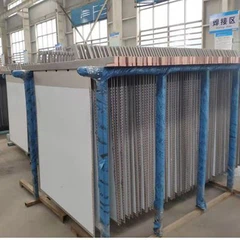
In the chemical processing industry, titanium plates are used in equipment such as heat exchangers, reactors, and storage tanks. These components often need to be formed into various shapes to optimize their performance. For example, a heat exchanger may require tubes or fins to be formed from titanium plates. Good formability ensures that these components can be manufactured with high precision, improving the efficiency and reliability of the chemical processing equipment.
Our Titanium Plate Offerings
As a titanium plate supplier, we offer a wide range of titanium plates with different alloy compositions, thicknesses, and sizes to meet the diverse needs of our customers. Our Titanium Mesh Sheet is known for its unique structure and good formability, making it suitable for applications such as filtration and separation.
Our Titanium Grade 12 Plates combine good formability with excellent corrosion resistance, making them a popular choice in the chemical processing and marine industries.
For applications requiring special properties, we also provide Super elastic Shape Memory NiTi Sheets. These sheets exhibit superelasticity and shape memory effects, which can be utilized in various high - tech applications.
Conclusion
The formability of a titanium plate is a complex and important property that is influenced by multiple factors. Understanding these factors is crucial for manufacturers and designers who work with titanium plates. Whether it's in the aerospace, medical, or chemical processing industries, the ability to form titanium plates into the desired shapes is essential for creating high - quality components and products.
If you're in need of titanium plates for your projects and have questions about formability or any other aspects of our products, we're here to help. Contact us to discuss your specific requirements and explore how our titanium plates can meet your needs. We look forward to partnering with you in your next project.
References
- Boyer, R. R., Welsch, G., & Collings, E. W. (1994). Materials Properties Handbook: Titanium Alloys. ASM International.
- Donachie, M. J. (2000). Titanium: A Technical Guide. ASM International.
- Lütjering, G., & Williams, J. C. (2007). Titanium. Springer Science & Business Media.
Send Inquiry