





Features of titanium exhaust pipe and muffler
Oct 16, 2025
Leave a message
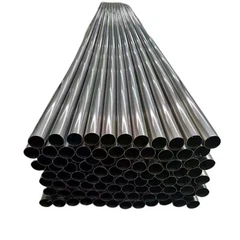
With the trend toward lightweight motorcycles, there's a growing demand for titanium in components like exhaust pipes and mufflers, which have a significant impact on power output and driving safety. However, these parts are large components of the vehicle body, and the increased material weight inevitably impacts the price of the finished product, leading to a price that's lower than the engine. Exhaust pipes and mufflers are commonly made of ordinary steel, stainless steel, aluminum alloy, or FRP. These components are large structural components of the vehicle body, making them easy to lightweight and crucial for reducing fuel costs, engine power output, and improving driving safety. Titanium exhaust pipes and mufflers first appeared in the late-stage market for large two-wheeled vehicles in 1997, and were adopted on large motorcycles in 1998. This market has now grown into a multi-million-ton market, and motorcycles equipped with titanium exhaust pipes and mufflers are now commonplace. Even four-wheeled vehicles, where lightweighting and design are a priority, are using titanium exhaust pipes and mufflers. Furthermore, due to direct contact with exhaust gas, titanium exhibits superior heat resistance compared to aluminum alloys at temperatures exceeding 400°C. Its specific strength is higher than that of steel, making it easier to achieve lightweighting.
Titanium's coefficient of thermal expansion and Young's modulus are lower than those of ferritic heat-resistant steel, halving the stresses generated by thermal expansion and contraction, which improves thermal cycle fatigue resistance. For example, the stress value (thermal expansion coefficient x Young's modulus) generated by thermal expansion is 1 for ferritic stainless steel, 1.5 for austenitic stainless steel, and only 0.45 for titanium. Therefore, we must prioritize strength and productivity and develop inexpensive titanium materials based on pure titanium (Type 2). The permissible impurity level of pure titanium significantly impacts mechanical properties. Therefore, when raw materials contain high levels of impurities, the chemical composition and mechanical properties of key parts manufactured using substandard sponge titanium are determined by the bendability, weldability, and required properties of the parts. This, in turn, determines the permissible impurity level, which should be managed and implemented from the perspective of oxygen equivalent. One of titanium plate's weaknesses is its oxidation resistance. The oxidation limit temperature of exhaust heat-resistant stainless steel is approximately 850-1050°C, while titanium begins to oxidize rapidly around 700°C. With the increasing power output of engines and the requirements of new exhaust systems, improving oxidation resistance will become a key issue. To enhance the added value of titanium alloys, surface treatments such as shot peening and atmospheric oxidation are applied. When emphasizing titanium's unique surface texture, the uniformity of the material texture is particularly important. Compared to conventional stainless steel, the exhaust pipe weighs 1.3 kg and the muffler weighs 1.2 kg, achieving a significant weight reduction. This lightweighting of the vehicle contributes to excellent power performance and handling stability.
Send Inquiry