





Can titanium equipment be used in the automotive industry?
Jan 12, 2026
Leave a message
In recent years, the automotive industry has witnessed a continuous pursuit of innovation and improvement, with a strong focus on enhancing performance, fuel efficiency, and safety. One material that has emerged as a promising candidate for automotive applications is titanium. As a leading supplier of titanium equipment, I am excited to explore the potential and feasibility of using titanium equipment in the automotive industry.
The Unique Properties of Titanium
Titanium is a remarkable metal known for its exceptional properties. Firstly, it has a very high strength - to - weight ratio. Compared to steel, titanium can provide similar strength while being significantly lighter. This characteristic is crucial in the automotive industry, as reducing the vehicle's weight is directly related to improving fuel efficiency. Lighter vehicles require less energy to move, which in turn decreases fuel consumption and greenhouse gas emissions.
Secondly, titanium exhibits excellent corrosion resistance. In the harsh automotive environment, which includes exposure to road salt, chemicals, and moisture, corrosion can be a major problem. Titanium's ability to resist corrosion helps to extend the service life of automotive components, reducing maintenance costs and enhancing the overall durability of the vehicle.
Another important property of titanium is its high temperature resistance. Automotive engines and exhaust systems generate a large amount of heat. Titanium can maintain its mechanical properties at high temperatures, making it suitable for applications where heat resistance is essential, such as exhaust manifolds and turbocharger components.
Potential Applications of Titanium Equipment in the Automotive Industry
Engine Components
The engine is the heart of a vehicle, and titanium has the potential to revolutionize engine design. Connecting rods, for example, can be made from titanium. Titanium connecting rods are lighter than their steel counterparts, which reduces the reciprocating mass in the engine. This results in less vibration, smoother engine operation, and increased power output. Additionally, titanium valves can withstand higher temperatures and speeds, allowing engines to operate more efficiently at high - RPM ranges.
A gr1 Titanium reactor - like precision - engineered titanium component can also be used in the engine's fuel injection or cooling systems. These reactors can be custom - designed to meet the specific requirements of different engine models, ensuring optimal performance and reliability.
Exhaust Systems
Exhaust systems are exposed to high temperatures and corrosive gases. Titanium is an ideal material for exhaust components due to its heat resistance and corrosion resistance. Titanium exhaust systems are not only lighter but also have better acoustic properties compared to traditional steel systems. They can produce a more distinctive and sporty exhaust note, which is highly desirable for automotive enthusiasts. The use of Shell And Tube Heat Exchangers made of titanium in the exhaust system can also help in efficient heat transfer, improving the overall performance of the engine.
Chassis and Suspension
In the chassis and suspension systems, titanium can be used to produce lighter and stronger components. For example, titanium springs can offer a better spring rate and weight - saving benefits. Lighter chassis components made of titanium can improve the vehicle's handling and agility by reducing unsprung mass. This allows the tires to maintain better contact with the road surface, enhancing traction and braking performance.
Interior and Exterior Trim
Titanium's unique appearance can also be utilized in the vehicle's interior and exterior trim. Its metallic luster and modern look can add a touch of luxury and sophistication to the car. Titanium trim pieces are not only aesthetically pleasing but also highly durable, resistant to scratches and wear.
Challenges and Limitations
Despite its many advantages, there are several challenges that need to be addressed before titanium equipment can be widely adopted in the automotive industry. The primary challenge is the high cost of titanium. Titanium is more expensive to produce than traditional automotive materials such as steel and aluminum. The extraction and processing of titanium are complex and energy - intensive, which drives up the cost. This high cost can make vehicles using titanium components more expensive for consumers, limiting their market appeal.
Another challenge is the difficulty of machining titanium. Titanium is a hard and tough metal, which requires specialized tools and machining techniques. This increases the manufacturing cost and time, especially for complex automotive components. Skilled labor is also needed to work with titanium, adding to the overall cost of production.
Overcoming the Challenges
To overcome the cost challenge, several strategies can be employed. One approach is to use titanium in combination with other materials. For example, a hybrid component can be designed with a titanium core and an outer layer of a less expensive material. This way, the benefits of titanium can be retained while reducing the overall cost.
In terms of machining, continuous research and development are being carried out to improve machining techniques and reduce the cost. New cutting tools and manufacturing processes are being developed to make the machining of titanium more efficient and cost - effective.
The Future of Titanium in the Automotive Industry
The automotive industry's demand for lightweight, high - performance, and durable materials is expected to increase in the coming years. As technology advances and the cost of titanium production decreases, the use of titanium equipment in the automotive industry is likely to grow.
Some high - end and sports car manufacturers have already started to use titanium in their vehicles as a way to differentiate themselves in the market. As the automotive industry moves towards electric vehicles, the need for lightweight materials becomes even more critical to extend the vehicle's range. Titanium's properties make it an attractive option for electric vehicle manufacturers, especially in battery enclosures and other structural components.
Conclusion
In conclusion, titanium equipment has great potential in the automotive industry. Its unique properties, such as high strength - to - weight ratio, corrosion resistance, and high temperature resistance, make it suitable for a wide range of automotive applications. Although there are challenges in terms of cost and machining, with continuous technological innovation and cost - reduction measures, the use of titanium in the automotive industry is likely to become more widespread.
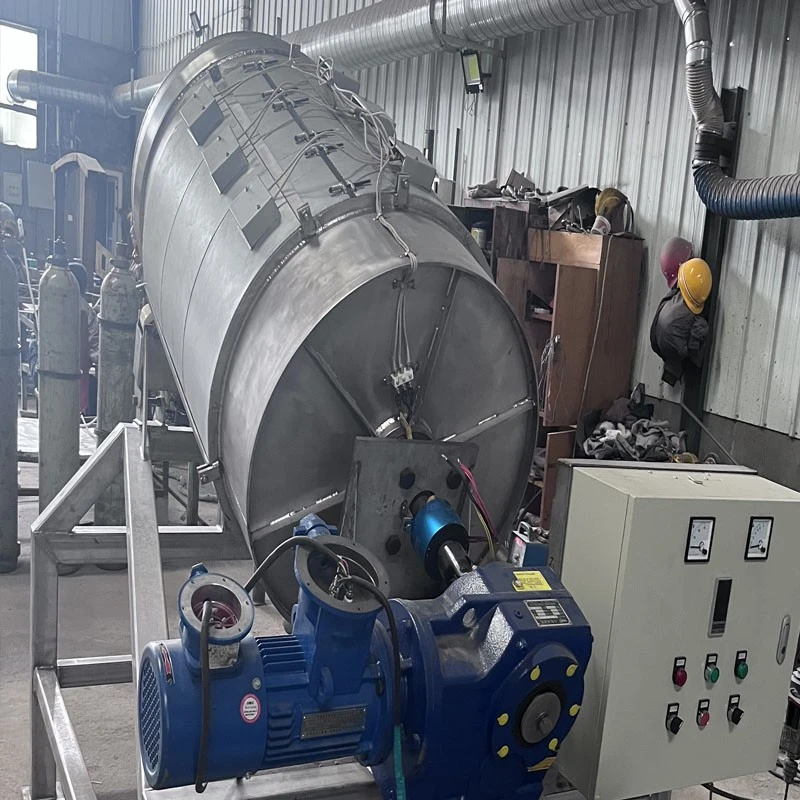

If you are interested in exploring the use of titanium equipment in your automotive manufacturing processes, I encourage you to contact me. As a professional titanium equipment supplier, I can provide you with high - quality Titanium Reaction Kettle, gr1 Titanium reactors, and Shell And Tube Heat Exchangers. We can work together to find the most suitable titanium solutions for your specific automotive needs. Let's embrace the future of automotive manufacturing with the power of titanium!
References
- ASM International. "Titanium and Titanium Alloys Handbook."
- Automotive Engineering International Magazine, various issues on lightweight materials in automotive.
- David T. Llewellyn, "The Physical Metallurgy of Titanium Alloys."
- SAE International technical papers on automotive material developments.
Send Inquiry