





Can titanium stubs be used in the telecommunications industry?
Jul 30, 2025
Leave a message
In the ever - evolving landscape of the telecommunications industry, the search for innovative and high - performance materials is a constant pursuit. As a supplier of titanium stubs, I am often asked about the potential use of titanium stubs in this sector. This blog aims to explore whether titanium stubs can be effectively used in the telecommunications industry, examining their properties, advantages, and potential applications.
Properties of Titanium Stubs
Titanium is a remarkable metal known for its unique combination of properties. First and foremost, titanium has an excellent strength - to - weight ratio. It is as strong as steel but significantly lighter, which makes it an attractive option for applications where weight reduction is crucial. In the telecommunications industry, where equipment is often installed on rooftops, towers, or other elevated structures, the reduced weight of titanium stubs can ease the load - bearing requirements of these installations.


Another important property of titanium is its high corrosion resistance. Titanium forms a thin, stable oxide layer on its surface when exposed to oxygen, which protects it from further corrosion. In the telecommunications field, equipment is frequently exposed to various environmental conditions, including moisture, salt spray (especially in coastal areas), and industrial pollutants. The corrosion - resistant nature of titanium stubs ensures their long - term durability, reducing the need for frequent replacements and maintenance.
Titanium also has good heat resistance. Telecommunications equipment generates heat during operation, and effective heat management is essential to ensure the proper functioning of the devices. Titanium stubs can withstand relatively high temperatures without significant deformation or loss of structural integrity, which is beneficial for applications where heat dissipation is a concern.
Advantages of Using Titanium Stubs in Telecommunications
1. Signal Integrity
In telecommunications, maintaining signal integrity is of utmost importance. Titanium has low electrical conductivity compared to metals like copper. While this might seem like a disadvantage at first glance, it can actually be beneficial in certain applications. For example, in some cases, titanium stubs can be used as insulators or shields to prevent electromagnetic interference (EMI). EMI can cause signal degradation, noise, and even complete signal loss in telecommunications systems. By using titanium stubs as shields around sensitive components, the risk of EMI can be significantly reduced, thereby improving the overall signal quality.
2. Long - Term Cost Savings
Although the initial cost of titanium stubs may be higher than some traditional materials, their long - term cost - effectiveness cannot be overlooked. As mentioned earlier, the high corrosion resistance and durability of titanium stubs mean that they have a longer service life. This reduces the frequency of replacements, which in turn cuts down on maintenance and replacement costs over time. Additionally, the lightweight nature of titanium can lead to savings in installation costs, as less heavy - duty equipment is required for installation.
3. Compatibility with Other Materials
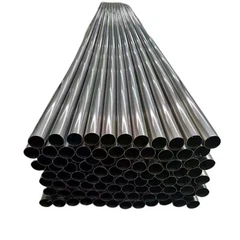
Titanium stubs can be easily integrated with other materials commonly used in the telecommunications industry. For instance, they can be combined with plastics, composites, and other metals. This compatibility allows for the design of more complex and efficient telecommunications equipment. For example, titanium stubs can be used in conjunction with Titanium Alloy GR5 Tube to create hybrid structures that offer the best of both worlds in terms of strength, weight, and performance.
Potential Applications of Titanium Stubs in Telecommunications
1. Antenna Systems
Antennas are a critical component of telecommunications networks. Titanium stubs can be used in antenna design in several ways. For example, they can be used as structural supports for antenna arrays. The lightweight yet strong nature of titanium stubs allows for the construction of large - scale antenna arrays without adding excessive weight. Moreover, the corrosion resistance of titanium ensures that these supports can withstand outdoor conditions for extended periods.
In addition, titanium stubs can be used in the tuning of antennas. By adjusting the length and position of titanium stubs, the resonance frequency of the antenna can be fine - tuned, which is essential for optimizing the antenna's performance and ensuring efficient signal transmission and reception.
2. Enclosures and Cabinets
Telecommunications equipment is often housed in enclosures and cabinets to protect it from the environment. Titanium stubs can be used in the construction of these enclosures. The corrosion - resistant property of titanium provides excellent protection against moisture, dust, and other contaminants. At the same time, the heat - resistant nature of titanium helps in dissipating the heat generated by the equipment inside the enclosure. For example, 90 Degree Titanium Elbow can be incorporated into the design of the enclosure's ventilation system to ensure proper air circulation and heat dissipation.
3. Cable Management
Cable management is an important aspect of telecommunications infrastructure. Titanium stubs can be used to support and organize cables. Their strength and durability ensure that they can hold the weight of multiple cables without sagging or breaking. The lightweight nature of titanium also makes it easier to install and re - arrange cable management systems as needed. Additionally, the low electrical conductivity of titanium reduces the risk of short - circuits and electrical interference in the cable management system.
Challenges and Considerations
While titanium stubs offer many advantages in the telecommunications industry, there are also some challenges and considerations that need to be addressed. One of the main challenges is the high cost of titanium compared to some other materials. This may limit its widespread use, especially in cost - sensitive applications. However, as the technology for titanium production improves and economies of scale are achieved, the cost of titanium stubs is likely to decrease over time.
Another consideration is the machining and fabrication of titanium. Titanium is a difficult material to machine due to its high strength and low thermal conductivity. Specialized tools and processes are required for machining titanium stubs, which can increase the manufacturing cost. However, with the development of advanced machining technologies, such as CNC machining, the efficiency and precision of titanium stub manufacturing have been significantly improved.
Conclusion
In conclusion, titanium stubs have great potential for use in the telecommunications industry. Their unique properties, such as high strength - to - weight ratio, corrosion resistance, heat resistance, and low electrical conductivity, offer several advantages in terms of signal integrity, long - term cost savings, and compatibility with other materials. Although there are some challenges, such as high cost and difficult machining, the benefits of using titanium stubs in telecommunications applications make them a viable option for many operators and equipment manufacturers.
If you are interested in exploring the use of titanium stubs in your telecommunications projects, I encourage you to contact us for further discussion and procurement. We are committed to providing high - quality titanium stubs and professional technical support to meet your specific needs.
References
- "Materials Science and Engineering: An Introduction" by William D. Callister, Jr. and David G. Rethwisch
- "Telecommunications Engineering Handbook" edited by Richard C. Dorf
Send Inquiry