





Do titanium tubes have good formability?
Jul 08, 2025
Leave a message
Hey there! I'm a supplier of titanium tubes, and today I wanna chat about whether titanium tubes have good formability. It's a question I get a lot from my customers, so let's dig into it.
First off, let's understand what formability means. In simple terms, it's how easily a material can be shaped into different forms without cracking or breaking. When it comes to titanium tubes, formability is a crucial factor, especially for industries like aerospace, automotive, and chemical processing, where custom shapes are often required.
Titanium is known for its high strength - to - weight ratio, corrosion resistance, and biocompatibility. But how does it fare in terms of formability? Well, it's a bit of a mixed bag.
Factors Affecting the Formability of Titanium Tubes
1. Alloy Type
There are different types of titanium alloys, and each has its own formability characteristics. For example, commercially pure titanium (CP titanium) generally has better formability compared to some high - strength titanium alloys. CP titanium has a lower yield strength, which means it can be deformed more easily under stress.
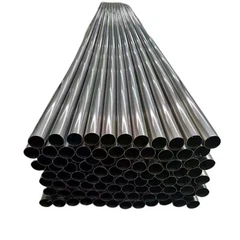
Take ASME SB338 GR2 SEAMLESS TITANIUM TUBE. This is a type of CP titanium tube. It's relatively soft and ductile, making it suitable for various forming processes such as bending, flaring, and rolling. You can shape it into different geometries without too much hassle.
On the other hand, alloys like Gr12 Titanium Tube, which is a titanium - molybdenum - nickel alloy, have higher strength. While they offer better mechanical properties in terms of strength and corrosion resistance in certain environments, their formability is a bit more limited. The higher alloy content makes the material stiffer, and more force is required to deform it. However, with the right tools and techniques, it's still possible to form these tubes into useful shapes.
2. Temperature
Temperature plays a huge role in the formability of titanium tubes. Titanium has a narrow range of temperatures where it exhibits good formability. At room temperature, titanium is relatively stiff and has limited ductility. But as the temperature increases, the material becomes more malleable.
For hot forming processes, the temperature needs to be carefully controlled. If it's too low, the tube may crack during forming. If it's too high, the titanium can react with oxygen in the air, forming a hard and brittle oxide layer on the surface. So, in hot forming operations like hot bending or hot rolling, we need to use special heating equipment and often work in an inert gas environment to prevent oxidation.
Cold forming, on the other hand, is done at or near room temperature. It's suitable for less complex shapes and for materials with good room - temperature ductility, like some CP titanium tubes. Cold forming processes such as cold drawing can be used to reduce the diameter or wall thickness of the tube while maintaining its integrity.
3. Grain Structure
The grain structure of titanium tubes also affects their formability. A fine - grained structure generally provides better formability compared to a coarse - grained one. Fine - grained titanium has more grain boundaries, which can act as barriers to the movement of dislocations during deformation. This allows the material to deform more uniformly without cracking.
Manufacturing processes can influence the grain structure. For example, extrusion and rolling can refine the grain size, improving the formability of the tube. Heat treatment can also be used to modify the grain structure and enhance the material's formability characteristics.
Forming Processes for Titanium Tubes
1. Bending
Bending is one of the most common forming processes for titanium tubes. It can be done using different methods, such as rotary draw bending, compression bending, and roll bending.


Rotary draw bending is a precise method that can produce tight bends with a high degree of accuracy. It's suitable for applications where the tube needs to follow a specific curvature, like in heat exchangers or exhaust systems.
Compression bending is a simpler method, often used for larger - diameter tubes. It involves applying a compressive force to the tube to bend it. Roll bending is used to create large - radius bends, for example, in the construction of cylindrical structures.
When bending titanium tubes, especially high - strength alloys, it's important to use proper tooling and lubrication. The tooling should be made of a material that can withstand the high forces involved in bending titanium, and lubrication helps reduce friction and prevent the tube from sticking to the tool.
2. Flaring
Flaring is the process of expanding the end of a tube to create a flared shape. This is useful for connecting tubes to other components or for creating a sealing surface. Titanium tubes can be flared using mechanical or hydraulic flaring tools.
Similar to bending, the formability of the tube during flaring depends on factors like alloy type, temperature, and grain structure. For high - strength titanium alloys, the flaring process may require more force and careful control to avoid cracking at the flared end.
3. Welding and Joining
Welding is another important aspect when it comes to forming titanium tubes into complex structures. Titanium can be welded using various methods, such as gas tungsten arc welding (GTAW) and laser welding.
However, welding titanium requires special techniques and precautions. Titanium is highly reactive with oxygen, nitrogen, and hydrogen at high temperatures. So, welding needs to be done in an inert gas environment to prevent contamination. Improper welding can lead to the formation of brittle intermetallic compounds, which can reduce the strength and formability of the welded joint.
Advantages and Disadvantages of Titanium Tube Formability
Advantages
- Lightweight and Strong Shapes: Despite the challenges, titanium tubes can be formed into lightweight yet strong components. This is a huge advantage in industries like aerospace, where reducing weight is crucial for fuel efficiency and performance.
- Corrosion - Resistant Forms: Titanium's excellent corrosion resistance means that formed tubes can be used in harsh environments, such as in chemical plants or marine applications. The ability to form these tubes into custom shapes allows for the creation of corrosion - resistant equipment tailored to specific needs.
Disadvantages
- Cost: The processes involved in forming titanium tubes, especially those that require precise temperature control and special tooling, can be expensive. This includes the cost of heating equipment, inert gas for hot forming, and high - quality tooling.
- Complexity: Forming titanium tubes is more complex compared to other materials like steel or aluminum. It requires skilled operators and specialized knowledge to ensure that the tubes are formed without defects.
Conclusion
So, do titanium tubes have good formability? Well, it depends on several factors. Commercially pure titanium tubes generally have better formability, especially at elevated temperatures. High - strength titanium alloys have more limited formability but can still be shaped with the right techniques.
As a titanium tube supplier, I've seen firsthand the challenges and opportunities in working with these materials. We're constantly looking for ways to improve the formability of our tubes, whether it's through better alloy design, more precise manufacturing processes, or advanced forming techniques.
If you're in the market for titanium tubes and have specific forming requirements, I'd love to hear from you. Whether you need ASME SB338 GR2 SEAMLESS TITANIUM TUBE for its good formability or High Quality Titanium Elbow for a custom - shaped component, we can work together to find the best solution for your project. Just reach out, and we can start a conversation about your needs.
References
- Boyer, R. R., Welsch, G., & Collings, E. W. (1994). Materials Properties Handbook: Titanium Alloys. ASM International.
- Totten, G. E., & MacKenzie, D. A. (2003). Handbook of Aluminum Forming. CRC Press.
- Lütjering, G., & Williams, J. C. (2007). Titanium. Springer.
Send Inquiry