

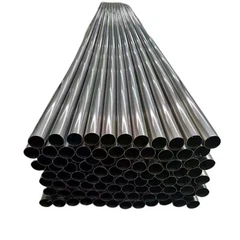




What is the grain size of a titanium rod?
Jul 08, 2025
Leave a message
Hey there! As a supplier of titanium rods, I often get asked about the grain size of these rods. So, I thought I'd write a blog post to break it down for you.
First off, let's talk about what grain size actually means in the context of a titanium rod. In simple terms, the grain size refers to the size of the individual crystals that make up the titanium metal. These crystals form during the manufacturing process, and their size can have a big impact on the properties of the rod.
Now, why does grain size matter? Well, it can affect a bunch of things, like the strength, ductility, and corrosion resistance of the titanium rod. Generally speaking, smaller grain sizes tend to result in a stronger and more ductile material. This is because smaller grains have more boundaries between them, which can help to prevent the movement of dislocations within the metal. Dislocations are basically defects in the crystal structure that can cause the material to deform or break under stress. So, by having more grain boundaries, the material can better resist these dislocations and maintain its integrity.
On the other hand, larger grain sizes can sometimes lead to a more brittle material. This is because there are fewer grain boundaries to stop the dislocations from moving, which can make the material more prone to cracking and failure. However, it's important to note that the relationship between grain size and properties isn't always straightforward. Other factors, like the alloy composition and the manufacturing process, can also play a role.
So, how do we control the grain size of a titanium rod? Well, there are a few different methods. One common approach is to use heat treatment. By heating the titanium rod to a specific temperature and then cooling it at a controlled rate, we can influence the growth and formation of the grains. For example, rapid cooling can help to produce smaller grains, while slower cooling can result in larger grains.
Another method is to use mechanical processing, such as rolling or forging. These processes can deform the titanium metal and create new grain boundaries, which can help to refine the grain size. By repeating these processes multiple times, we can further reduce the grain size and improve the properties of the rod.
Now, let's talk about the different grain sizes that are commonly found in titanium rods. There are generally three main categories: fine-grained, medium-grained, and coarse-grained.
Fine-grained titanium rods typically have a grain size of less than 10 microns. These rods are known for their high strength, good ductility, and excellent corrosion resistance. They are often used in applications where these properties are critical, such as in the aerospace and medical industries. For example, Gr5 Medical Titanium Rods are commonly used in medical implants because of their biocompatibility and high strength.
Medium-grained titanium rods have a grain size between 10 and 100 microns. These rods offer a good balance between strength and ductility, and they are often used in a variety of applications, including automotive, marine, and chemical processing. Gr1 Titanium Polished Round Bars are a popular choice for these types of applications because of their versatility and affordability.
Coarse-grained titanium rods have a grain size greater than 100 microns. These rods are generally less strong and less ductile than fine-grained or medium-grained rods, but they can still be useful in certain applications where high strength isn't as important. For example, Titanium Hexagonal Bar Gr5 can be used in structural applications where the material needs to be able to withstand moderate loads.
When choosing a titanium rod, it's important to consider the specific requirements of your application. If you need a rod with high strength and good ductility, then a fine-grained or medium-grained rod may be the best choice. However, if you're working on a project where cost is a major factor and high strength isn't as critical, then a coarse-grained rod may be a more economical option.
In conclusion, the grain size of a titanium rod is an important factor that can have a significant impact on its properties and performance. By understanding how grain size affects the material and how it can be controlled, you can make an informed decision when choosing a titanium rod for your application.
If you're interested in learning more about our titanium rods or have any questions about grain size or other properties, please don't hesitate to get in touch. We're here to help you find the right solution for your needs.


References:
- "Titanium: A Technical Guide" by J. C. Williams
- "Materials Science and Engineering: An Introduction" by William D. Callister Jr. and David G. Rethwisch
Send Inquiry