





How to straighten a bent titanium stub?
Nov 10, 2025
Leave a message
As a supplier of titanium stubs, I often encounter customers who face the issue of bent titanium stubs. In this blog, I'll share some effective methods on how to straighten a bent titanium stub, along with some important considerations.
Understanding Titanium's Properties
Titanium is a remarkable metal known for its high strength - to - weight ratio, excellent corrosion resistance, and biocompatibility. However, these properties also make it more challenging to work with compared to some other metals. Titanium has a relatively low modulus of elasticity, which means it can resist deformation but requires specific techniques to be reshaped once bent.
Assessing the Bend
Before attempting to straighten a bent titanium stub, it's crucial to assess the severity and location of the bend. Minor bends may be easier to correct, while more significant bends might require more advanced methods. Inspect the stub carefully for any signs of cracks or damage. If there are visible cracks, straightening the stub may not be advisable as it could lead to further structural failure.
Cold Straightening
For minor bends, cold straightening can be a viable option. This method involves applying force to the bent area without heating the titanium.

Using a Press
A hydraulic or mechanical press can be used to apply a controlled amount of force to the bent titanium stub. Place the stub in the press with the bent area centered under the pressing tool. Gradually apply pressure in the opposite direction of the bend. It's important to apply the force slowly and in small increments. This helps prevent over - straightening or causing additional damage to the stub.
Manual Tools
For smaller stubs or less severe bends, manual tools such as pliers or a vise can be used. If using pliers, grip the stub firmly on either side of the bend and gently apply pressure to straighten it. When using a vise, place the stub in the vise with the bent area protruding. Then, use a hammer or a mallet to gently tap the bent area back into shape. However, be extremely careful when using manual tools as excessive force can cause the titanium to crack.
Hot Straightening
When dealing with more severe bends, hot straightening may be necessary. Heating the titanium reduces its yield strength, making it more malleable and easier to reshape.
Induction Heating
Induction heating is a precise method that uses an electromagnetic field to heat the titanium stub. This method allows for targeted heating of the bent area, minimizing the risk of over - heating the entire stub. Once the bent area reaches the appropriate temperature (usually between 700 - 900°C for most titanium alloys), the stub can be carefully straightened using a press or other suitable tools. It's important to monitor the temperature closely during the process to avoid over - heating, which can cause the titanium to lose its mechanical properties.
Furnace Heating
For larger stubs or when a more uniform heating is required, a furnace can be used. Place the bent titanium stub in the furnace and heat it to the recommended temperature. Once heated, remove the stub from the furnace using appropriate heat - resistant tools and quickly straighten it. Keep in mind that the titanium will cool rapidly outside the furnace, so the straightening process must be carried out efficiently.
Post - Straightening Treatment
After straightening the titanium stub, it's important to perform some post - straightening treatments to ensure its quality and performance.
Stress Relieving
Straightening the stub can introduce internal stresses. Stress relieving involves heating the stub to a specific temperature (usually lower than the hot - straightening temperature) and holding it at that temperature for a certain period. This helps to reduce the internal stresses and improve the dimensional stability of the stub.
Inspection
Inspect the straightened stub thoroughly for any signs of damage, such as cracks or unevenness. Non - destructive testing methods, such as ultrasonic testing or dye penetrant testing, can be used to detect any hidden defects.
Considerations for Different Titanium Alloys
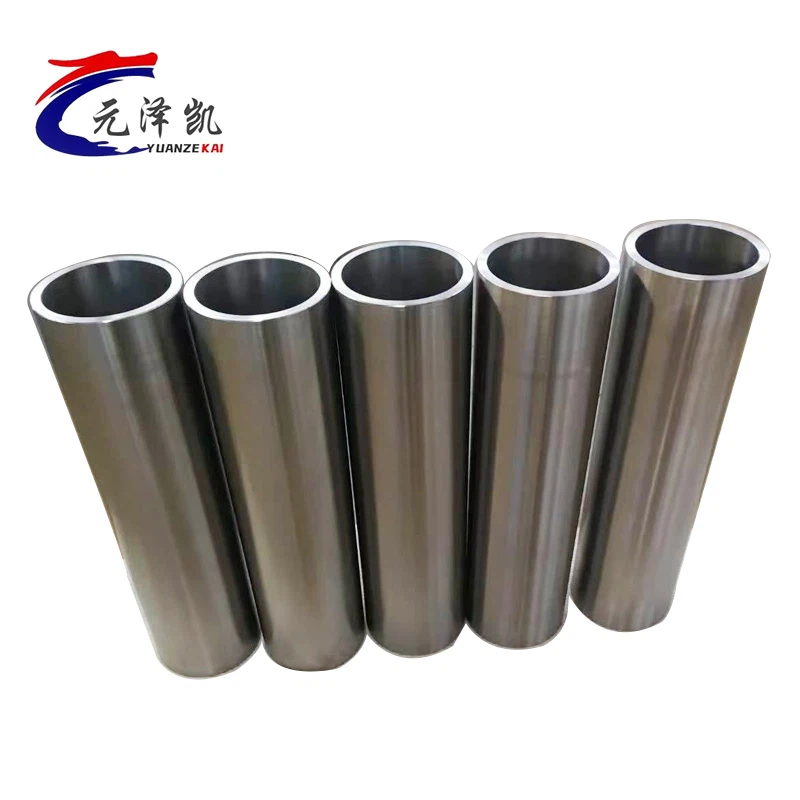
Different titanium alloys have different mechanical properties, which can affect the straightening process. For example, Titanium Alloy GR5 Tube is a widely used alloy known for its high strength. It may require more force and careful control during the straightening process compared to a more ductile alloy like Gr12 Titanium Tube.
Safety Precautions
When working with titanium, safety should always be a top priority. Wear appropriate personal protective equipment, such as heat - resistant gloves, safety glasses, and a face shield when using hot - straightening methods. When using presses or other heavy machinery, follow all safety procedures to avoid accidents.
Conclusion
Straightening a bent titanium stub requires a combination of knowledge, skill, and the right tools. Whether you choose cold straightening or hot straightening depends on the severity of the bend and the type of titanium alloy. As a titanium stub supplier, I understand the importance of providing high - quality products. If you have any questions about titanium stubs, such as Titanium Elbow, or need assistance with straightening issues, I'm here to help. If you're interested in purchasing titanium stubs or other titanium products, feel free to contact me for a detailed discussion and to explore the best solutions for your needs.
References
- ASM Handbook Volume 6: Welding, Brazing, and Soldering
- Titanium: A Technical Guide, Second Edition by John C. Williams
Send Inquiry