





What are the acoustic properties of titanium equipment?
Jan 20, 2026
Leave a message
Hey there! As a supplier of titanium equipment, I often get asked about the acoustic properties of our products. It's not a topic that comes up every day, but it's definitely an interesting one. In this blog, I'll dive into the acoustic characteristics of titanium equipment and why they matter.
What is Titanium and Why is it Used in Equipment?
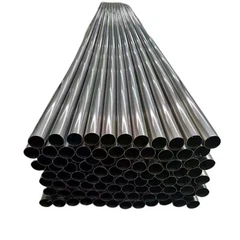
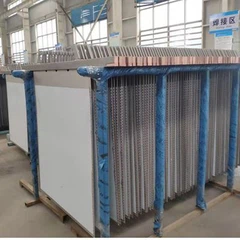
First off, let's talk a bit about titanium. Titanium is a super cool metal. It's strong, lightweight, and highly resistant to corrosion. These properties make it an ideal material for all sorts of equipment, from Titanium Heat Exchanger to Titanium pipe Coil and Titanium Coil Heat Exchanger Cooling Coil.
In industries like chemical processing, marine engineering, and power generation, titanium equipment is a go - to choice. Its corrosion resistance means it can withstand harsh environments, and its strength - to - weight ratio allows for efficient design and operation.
Acoustic Properties of Titanium
Sound Transmission
One of the key acoustic properties of titanium is its sound transmission characteristics. Titanium has a relatively low density compared to many other metals. This low density affects how sound waves travel through it. When sound waves hit a titanium surface, they interact with the material in a unique way.
Sound waves travel through titanium at a different speed than they would through, say, steel or aluminum. The speed of sound in titanium is around 6,070 meters per second. This is faster than in some common metals, which can have implications for applications where sound propagation is a concern.
For example, in a heat exchanger, the way sound travels through the titanium walls can affect the overall noise level of the system. If the sound waves can travel quickly and efficiently through the material, it might lead to less sound being absorbed or scattered within the equipment. This could potentially result in a more audible noise output from the heat exchanger, which might not be ideal in some settings.
Sound Absorption
Titanium is not a great sound absorber on its own. Sound absorption is the ability of a material to convert sound energy into heat energy. Materials like rubber or certain foams are excellent sound absorbers because they have internal structures that can dissipate sound energy effectively.


Titanium has a relatively rigid atomic structure, which doesn't allow it to absorb sound very well. When sound waves hit a titanium surface, most of the energy is either reflected or transmitted through the material. However, in some applications, this might not be a bad thing. For instance, in a titanium pipe coil used in a high - pressure fluid system, the low sound absorption might mean that the system can operate more efficiently without the need for additional sound - absorbing materials.
Resonance
Resonance is another important acoustic aspect. Resonance occurs when an object vibrates at its natural frequency in response to an external sound or vibration. Titanium equipment has its own set of natural frequencies based on its shape, size, and the way it's constructed.
If an external vibration source has a frequency that matches the natural frequency of the titanium equipment, resonance can occur. This can lead to increased vibration amplitudes and potentially cause damage to the equipment over time. For example, in a titanium coil heat exchanger cooling coil, if the flow of the cooling fluid creates vibrations at a frequency that matches the natural frequency of the coil, it could lead to excessive wear and tear.
To avoid resonance issues, engineers need to carefully design the titanium equipment. They can use techniques like changing the shape or adding damping materials to shift the natural frequencies of the equipment away from the frequencies of potential external vibration sources.
Applications and Acoustic Considerations
Chemical Processing
In chemical processing plants, titanium heat exchangers are commonly used. The acoustic properties of the titanium in these heat exchangers can impact the overall noise levels in the plant. Workers in the plant need to be able to communicate and work in a relatively quiet environment. So, understanding how sound travels through the titanium heat exchanger and what can be done to reduce noise is crucial.
For example, adding sound - insulating enclosures around the heat exchangers can help to reduce the noise that escapes into the surrounding area. Also, choosing the right thickness of the titanium walls can affect the sound transmission characteristics. Thicker walls might reduce sound transmission to some extent, but it also needs to be balanced with other design considerations like heat transfer efficiency.
Marine Applications
In the marine industry, titanium is used in a variety of equipment such as pipes and valves. When the ship is in operation, there are many sources of noise, including the engine, the propeller, and the flow of water over the hull. The acoustic properties of the titanium equipment can either contribute to or help mitigate this noise.
Titanium pipes, for instance, can transmit sound from the fluid flowing inside them. If the pipes are not properly designed, they can act as conduits for noise, carrying it throughout the ship. By using techniques like flexible mounts or acoustic linings in the pipes, the sound transmission can be reduced. This makes the ship a more comfortable place for the crew and can also help to reduce the acoustic signature of the vessel, which is important for military applications.
Power Generation
In power generation, especially in plants that use titanium cooling coils, the acoustic properties play a role in the overall operation. The noise generated by the cooling system can be a nuisance for nearby communities. By understanding the sound transmission and resonance characteristics of the titanium coils, engineers can design systems that are quieter.
For example, they can adjust the flow rate of the coolant to avoid vibrations at resonant frequencies. They can also use materials with better sound - absorbing properties in the vicinity of the coils to reduce the overall noise output.
How Our Titanium Equipment Addresses These Acoustic Concerns
As a supplier of titanium equipment, we take the acoustic properties of our products very seriously. Our engineering team is constantly working on improving the design of our equipment to minimize noise issues.
When it comes to heat exchangers, we use advanced computer simulations to analyze the sound transmission and resonance characteristics. This allows us to optimize the shape, thickness, and material properties of the titanium components. We also offer options for sound - insulating enclosures that can be customized to fit our customers' specific needs.
For our titanium pipe coils, we have developed techniques to reduce sound transmission. We use flexible connectors and vibration - damping materials to break the sound path and absorb some of the vibration energy. This helps to keep the noise levels down, especially in high - flow applications.
In the case of our titanium coil heat exchanger cooling coils, we pay close attention to the flow dynamics to avoid resonance. We adjust the design parameters such as the coil pitch and the diameter to ensure that the natural frequencies of the coil are well away from the frequencies of the coolant flow.
Why Choose Our Titanium Equipment
Choosing our titanium equipment means getting products that are not only high - quality in terms of strength and corrosion resistance but also designed with acoustic considerations in mind. We understand that in many industries, noise reduction is an important factor for the overall success of a project.
Our team of experts is always ready to work with you to find the best solutions for your specific application. Whether you're in the chemical, marine, or power generation industry, we can provide you with equipment that meets your acoustic and performance requirements.
Let's Talk
If you're interested in learning more about our titanium equipment and how our products can address your acoustic concerns, don't hesitate to reach out. We're here to have a chat, answer your questions, and discuss your procurement needs. Whether you need a single heat exchanger or a large - scale installation of titanium pipe coils, we've got you covered.
Let's start the conversation and see how we can work together to make your project a success!
References
- "Titanium: Properties, Production, and Applications" by Marc A. Meyers et al.
- "Acoustic Properties of Metals" in the Journal of Acoustics Research.
- Technical reports from leading titanium manufacturers on the engineering aspects of titanium equipment.
Send Inquiry