





What are the surface roughness requirements for titanium equipment?
Dec 11, 2025
Leave a message
What are the surface roughness requirements for titanium equipment?
Hey there! As a supplier of titanium equipment, I often get asked about the surface roughness requirements for different titanium products. In this blog, I'll share some insights on this topic to help you better understand what goes into the manufacturing of high - quality titanium equipment.
First off, let's talk about why surface roughness matters in titanium equipment. Titanium is widely used in various industries like chemical processing, aerospace, and marine due to its excellent corrosion resistance, high strength - to - weight ratio, and biocompatibility. The surface roughness of titanium equipment can have a significant impact on its performance.
In chemical processing, for example, a smooth surface on a Gr2 Titanium Tank Or Bucket can prevent the build - up of chemical residues. When chemicals are stored or processed in a tank, a rough surface can create pockets where chemicals can get trapped. Over time, these residues can cause corrosion, which not only shortens the lifespan of the tank but can also contaminate the chemicals being processed. A smooth surface, on the other hand, allows for easy cleaning and reduces the risk of corrosion.
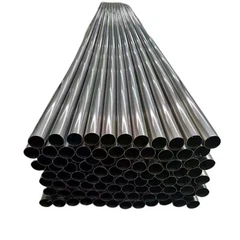
For Titanium pipe Coil used in heat exchange applications, the surface roughness affects the heat transfer efficiency. A rough surface can disrupt the flow of the fluid inside the pipe, creating turbulence. While a little turbulence can sometimes enhance heat transfer to a certain extent, excessive roughness can lead to increased pressure drop. This means that more energy is required to pump the fluid through the coil, making the entire heat exchange process less efficient. The ideal surface roughness for a titanium pipe coil should be such that it promotes good heat transfer without causing an unacceptable pressure drop.
In the aerospace industry, where weight and performance are critical, the surface roughness of titanium components can impact aerodynamics. A rough surface can increase drag, which in turn requires more fuel to maintain the same speed. This is a big deal when you're talking about long - haul flights or high - performance aircraft. So, for aerospace applications, titanium parts often need to have a very smooth surface finish.
Now, let's get into the specific surface roughness requirements. The requirements are usually specified in terms of Ra (arithmetical mean deviation of the assessed profile). Ra is a commonly used parameter to describe the surface roughness.
For general industrial applications where corrosion resistance is the main concern, such as storage tanks and pipes, an Ra value of around 0.8 - 1.6 micrometers is often sufficient. This level of smoothness helps to prevent the accumulation of corrosive substances and makes the equipment easier to clean.
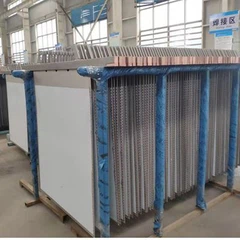
In more demanding applications like heat exchangers, a lower Ra value is typically required. For Shell And Tube Heat Exchangers, an Ra value of 0.4 - 0.8 micrometers is often targeted. This smoother surface allows for better heat transfer and reduces the pressure drop across the exchanger, improving overall efficiency.
In aerospace applications, the surface roughness requirements are even more stringent. Titanium parts used in aircraft engines or other critical components may need an Ra value of less than 0.2 micrometers. Achieving such a smooth surface requires advanced manufacturing techniques and strict quality control.
At our company, we understand the importance of meeting these surface roughness requirements. We use state - of - the - art manufacturing processes to produce titanium equipment with the desired surface finish. Our team of experts carefully monitors the production process to ensure that each piece of equipment meets the specified Ra values.
We start with high - quality titanium raw materials. The initial machining process is crucial in determining the surface roughness. We use precision machining tools and techniques to achieve a close - to - final surface finish during this stage. After the initial machining, we may perform additional finishing processes such as polishing or grinding to further improve the surface quality.
We also have a comprehensive quality control system in place. Before any equipment leaves our facility, it undergoes rigorous testing to measure the surface roughness. We use advanced measuring instruments to ensure that the Ra values are within the specified range.
So, if you're in the market for high - quality titanium equipment with the right surface roughness, look no further. Whether you need a Gr2 Titanium Tank Or Bucket, a Titanium pipe Coil, or a Shell And Tube Heat Exchangers, we've got you covered.
If you have specific requirements for your titanium equipment, don't hesitate to reach out. We can work with you to customize the surface roughness to meet your exact needs. Contact us today to start a conversation about your titanium equipment procurement.


References:
- ASME Boiler and Pressure Vessel Code.
- ASTM standards related to titanium products.
- Industry research papers on titanium applications and surface engineering.
Send Inquiry