





What is the damping capacity of a titanium plate?
Dec 03, 2025
Leave a message
Hey there! As a titanium plate supplier, I often get asked about the damping capacity of titanium plates. So, let's dive right in and have a chat about what damping capacity is and how it relates to titanium plates.
First off, what's damping capacity? Well, damping capacity is basically a material's ability to absorb and dissipate energy when it's subjected to vibrations or mechanical stress. You can think of it like a shock absorber in a car. When you drive over a bump, the shock absorber takes in the energy from the impact and releases it slowly, so you don't feel every little jolt. In the same way, a material with high damping capacity can reduce vibrations and noise, which is super useful in a whole bunch of applications.
Now, let's talk about titanium plates. Titanium is an amazing metal. It's strong, lightweight, and corrosion-resistant. But what about its damping capacity? Titanium has a relatively low damping capacity compared to some other materials like steel or rubber. That doesn't mean it's no good, though. In fact, in many cases, the unique properties of titanium make up for its lower damping capacity.
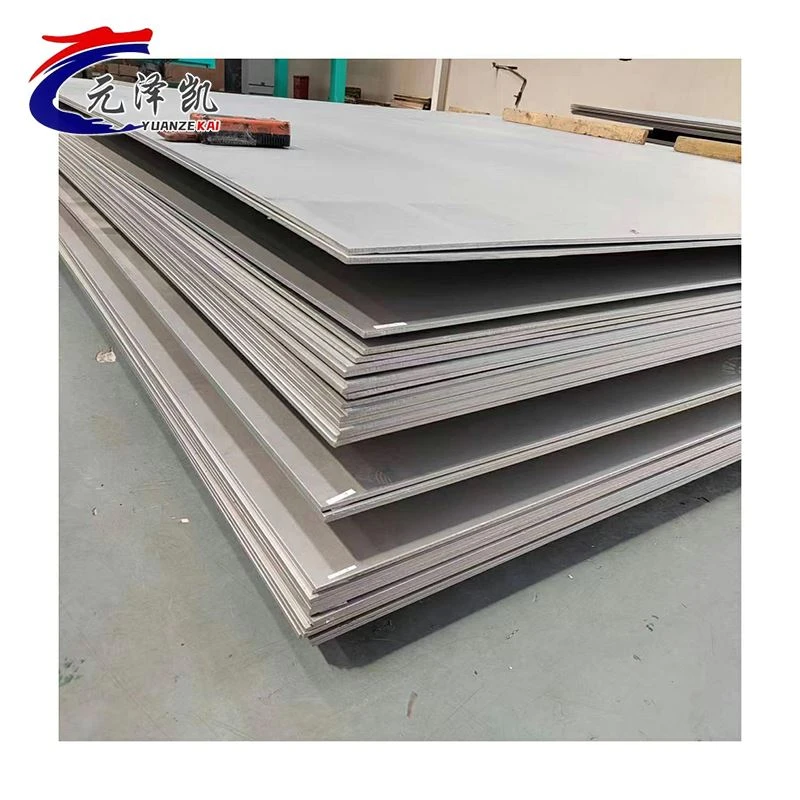

For example, in aerospace applications, the low weight of titanium is a huge advantage. Even though it might not dampen vibrations as well as some other materials, the weight savings can lead to better fuel efficiency and overall performance. And in some cases, you can use additional damping mechanisms in combination with titanium plates to get the best of both worlds.
Let's take a closer look at some of the different types of titanium plates we offer. We've got the Super elastic Shape Memory NiTi Sheets. These are really cool because they have this super elastic property. They can deform a lot and then go back to their original shape. This can be useful in applications where you need a material to withstand large amounts of stress and still maintain its integrity.
Another option is the Gr5 Titanium Alloy block. Gr5 is one of the most widely used titanium alloys. It has a good balance of strength, corrosion resistance, and weldability. While its damping capacity might not be through the roof, its other properties make it a top choice for many industries, including aerospace, automotive, and medical.
And then there's the Gr2 Titanium Plate. Gr2 is a commercially pure titanium. It's known for its excellent corrosion resistance, especially in environments where other metals would quickly rust or corrode. It's also relatively easy to work with, which makes it a popular choice for a variety of applications.
So, how can we improve the damping capacity of titanium plates? One way is through alloying. By adding certain elements to the titanium, we can change its microstructure and improve its ability to absorb and dissipate energy. Another approach is to use surface treatments. For example, applying a special coating to the titanium plate can increase its damping capacity.
In some cases, you can also design the structure of the titanium plate in a way that enhances its damping properties. For example, using a honeycomb or sandwich structure can increase the surface area available for energy dissipation, which can lead to better damping.
Now, you might be wondering where titanium plates with different damping capacities are used. In the automotive industry, titanium plates can be used in engine components, suspension systems, and exhaust systems. In these applications, reducing vibrations and noise is important for a smooth and quiet ride.
In the medical field, titanium plates are used in orthopedic implants. While damping capacity might not be the first thing that comes to mind, it can still play a role. For example, a plate with better damping properties might be more comfortable for the patient and could potentially reduce the risk of complications.
In the construction industry, titanium plates can be used in building facades, bridges, and other structures. Here, damping capacity can help reduce the effects of wind and seismic vibrations, making the structures more stable and safe.
If you're in the market for titanium plates, it's important to consider your specific needs. Think about the application, the level of vibrations and stress the plate will be exposed to, and the other properties you need, like strength and corrosion resistance. That way, you can choose the right type of titanium plate for your project.
We're here to help you make the best decision. Whether you need a plate with high damping capacity or one that excels in other areas, we've got a wide range of options to choose from. If you have any questions or want to discuss your project in more detail, don't hesitate to reach out. We're always happy to have a chat and find the perfect titanium plate solution for you.
In conclusion, while titanium plates might not have the highest damping capacity compared to some other materials, their unique properties make them a great choice for many applications. And with the right approach, you can improve their damping performance to meet your specific needs. So, if you're looking for high-quality titanium plates, give us a shout. We're ready to assist you with your procurement and make sure you get the best product for your money.
References
- Callister, W. D., & Rethwisch, D. G. (2011). Materials Science and Engineering: An Introduction. Wiley.
- ASM Handbook Committee. (1994). ASM Handbook, Volume 2: Properties and Selection: Nonferrous Alloys and Special-Purpose Materials. ASM International.
Send Inquiry