





What is the flow capacity of titanium elbows?
Jan 06, 2026
Leave a message
Hey there! As a supplier of titanium elbows, I often get asked about the flow capacity of these nifty components. So, I thought I'd take a deep dive into this topic and break it down for you.
First off, let's understand what we mean by "flow capacity." In simple terms, it's the amount of fluid (like water, oil, or gas) that can pass through a titanium elbow within a given period. This is crucial in many industries, such as chemical processing, aerospace, and desalination plants, where efficient fluid transfer is a must.
Factors Affecting the Flow Capacity of Titanium Elbows
A bunch of factors come into play when determining the flow capacity of titanium elbows. One of the most significant ones is the diameter of the elbow. Just like a wider hose can carry more water than a narrow one, a titanium elbow with a larger diameter generally has a higher flow capacity. If you've got a system that needs to move a large volume of fluid quickly, you're gonna want to go for a bigger - sized elbow.
The angle of the elbow also matters. You've probably noticed that we offer 90 Degree Titanium Elbow. These 90 - degree bends are quite common, but they can cause more resistance to the flow compared to elbows with a shallower angle. When fluid changes direction sharply, it creates turbulence, which slows down the flow. So, in situations where minimizing flow resistance is critical, you might consider a more gradual - angled titanium elbow.
The wall thickness of the elbow is another key factor. Thicker walls can sometimes enhance the structural integrity of the elbow, but they can also reduce the internal diameter and thus affect the flow capacity. You've got to find the right balance between strength and flow efficiency.
The surface roughness inside the elbow can also impact flow. A smoother interior allows fluid to flow more freely, while a rough surface can cause friction and disrupt the flow. We make sure our titanium elbows are machined to have a smooth internal finish to optimize flow capacity.
Calculating the Flow Capacity
Now, figuring out the exact flow capacity isn't always a walk in the park. There are some mathematical formulas and equations that engineers use. One of the commonly used methods is the Darcy - Weisbach equation, which takes into account factors like pipe length, diameter, fluid velocity, and friction factor. But don't worry, you don't have to be a math genius to get an idea of the flow capacity for your application.
Manufacturers usually provide flow capacity charts based on different sizes and configurations of titanium elbows. These charts give you a ballpark figure of how much fluid the elbow can handle under specific conditions. If you need a more accurate calculation for a particular project, it's a good idea to consult an engineer.
Benefits of Using Titanium Elbows for Flow Applications
Titanium is an amazing material when it comes to fluid flow applications. First of all, it's highly corrosion - resistant. Whether you're dealing with corrosive chemicals, saltwater, or other harsh substances, titanium elbows won't rust or corrode easily. This means a longer lifespan for your system and less maintenance in the long run.
It's also incredibly strong for its weight. Compared to other metals, titanium can handle high pressures without being overly thick or heavy. That's a huge plus in industries where space and weight are at a premium, like aerospace.
Another advantage of titanium is its biocompatibility. In medical and pharmaceutical applications, where the purity of the fluid is crucial, titanium elbows are a great choice because they don't contaminate the fluid.
Our Product Range and Compatibility
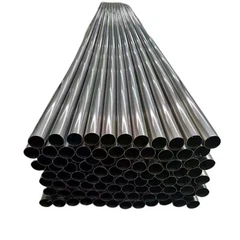
As a supplier, we offer a wide range of Titanium Elbow. We've got different sizes, angles, and grades of titanium to suit various applications. Our products are designed to be compatible with other titanium components, like Gr 7 Titanium Pipes. This means you can build a complete, seamless fluid transfer system using our products.
We also understand that every project is unique, so we're happy to work with you to customize titanium elbows according to your specific requirements. Whether you need a special size, a particular finish, or a custom - made angle, we've got the expertise and the facilities to make it happen.
Making the Right Choice for Your Project
When you're choosing a titanium elbow for your project, you need to consider the flow requirements, the operating conditions (like temperature, pressure, and the type of fluid), and the overall system design. It's a good idea to have a clear understanding of your needs before approaching a supplier.
If you're still not sure which titanium elbow is right for you, don't hesitate to reach out to us. Our team of experts is always here to help you make the best choice based on your project's specific needs.


Conclusion
So, the flow capacity of titanium elbows is influenced by several factors, including diameter, angle, wall thickness, and surface roughness. Understanding these factors can help you choose the right titanium elbow for your fluid flow application. Our company offers a wide range of high - quality titanium elbows that are designed to meet various flow requirements.
If you're interested in learning more about our titanium elbows or have any questions about flow capacity, feel free to get in touch with us. We're here to assist you in finding the perfect solution for your project. Let's work together to make your fluid transfer system more efficient and reliable!
References
- Perry, R. H., & Green, D. W. (1997). Perry's Chemical Engineers' Handbook. McGraw - Hill Professional.
- Miller, D. S. (1990). Internal Flow Systems. BHRA Fluid Engineering.
Send Inquiry