

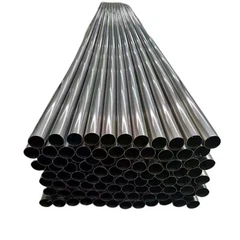





What is the Poisson's ratio of titanium elbows?
Jan 06, 2026
Leave a message
Hey there! As a supplier of titanium elbows, I often get asked about all sorts of technical details. One question that pops up quite a bit is, "What is the Poisson's ratio of titanium elbows?" Let's dig into this topic and break it down in a way that's easy to understand.
First off, let's talk about what Poisson's ratio actually is. In simple terms, Poisson's ratio is a measure of how a material behaves when it's stretched or compressed. When you pull on a material, it not only gets longer in the direction you're pulling (the axial direction), but it also gets thinner in the perpendicular directions. Poisson's ratio is the ratio of the transverse strain (the change in the perpendicular direction) to the axial strain (the change in the direction of the applied force).
Mathematically, if we denote the axial strain as ε₁ and the transverse strain as ε₂, the Poisson's ratio (ν) is given by the formula ν = -ε₂/ε₁. The negative sign is there because when a material is stretched (positive axial strain), it contracts in the transverse direction (negative transverse strain).
Now, let's focus on titanium elbows. Titanium is a pretty amazing material. It's strong, lightweight, and has excellent corrosion resistance. These properties make it a popular choice for a wide range of applications, from aerospace to medical devices. And titanium elbows are used in piping systems where you need to change the direction of the flow.
The Poisson's ratio of titanium typically falls in the range of 0.32 to 0.34. This is a characteristic property of the material itself, and it doesn't change much whether you're dealing with a titanium elbow, a Titanium Square Tube, or any other titanium component. The reason for this relatively consistent value is that Poisson's ratio is mainly determined by the atomic structure and bonding of the material.
Titanium has a hexagonal close - packed (HCP) crystal structure at room temperature. The way the atoms are arranged in this structure affects how the material responds to stress. When a stress is applied, the atoms move and re - arrange themselves, and this movement results in the characteristic deformation behavior described by the Poisson's ratio.
For a 90 Degree Titanium Elbow, understanding the Poisson's ratio is crucial for several reasons. In engineering design, it helps in predicting how the elbow will deform under different loads. For example, if you're designing a pipeline system that will carry high - pressure fluids, you need to know how the elbow will change shape when the pressure is applied. The Poisson's ratio allows engineers to calculate the transverse contraction or expansion of the elbow, which is important for ensuring a proper fit and preventing leaks.
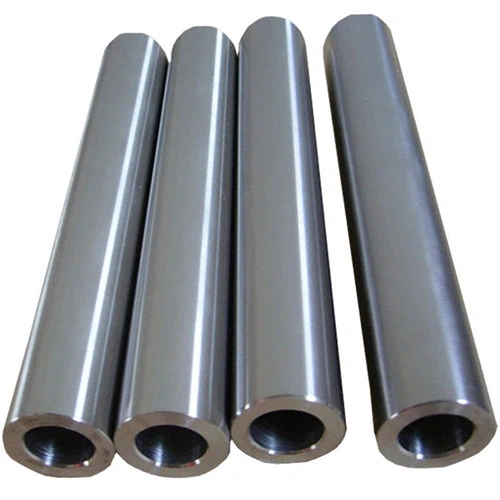
Let's take a closer look at how Poisson's ratio affects the manufacturing process of titanium elbows. When we're forming a titanium elbow, we're essentially applying a combination of bending and stretching forces to the Gr2 Titanium Tube. The Poisson's ratio comes into play because as we bend the tube, it not only changes its curvature but also experiences a change in its cross - sectional shape. The transverse deformation due to the Poisson's effect needs to be accounted for to ensure that the final elbow meets the required specifications.
If the Poisson's ratio is not properly considered during the manufacturing process, we might end up with an elbow that has an incorrect cross - sectional shape. This could lead to problems such as reduced flow capacity, increased pressure drop, or even structural failure under certain conditions. So, having a good understanding of the Poisson's ratio is essential for producing high - quality titanium elbows.
Another aspect where the Poisson's ratio of titanium elbows matters is in the installation and maintenance of piping systems. When installing a titanium elbow, it's important to know how it will interact with other components in the system. The transverse deformation due to the Poisson's effect can cause changes in the alignment of the elbow with adjacent pipes or fittings. This can lead to additional stress on the joints, which may increase the risk of leaks or damage over time.

During maintenance, if there's any need to replace or repair a titanium elbow, understanding the Poisson's ratio helps in ensuring that the new elbow is installed correctly. It allows technicians to anticipate the deformation that will occur when the elbow is subjected to normal operating conditions, and make the necessary adjustments to ensure a proper fit.
In addition to its practical applications in engineering and manufacturing, the Poisson's ratio of titanium elbows also has implications for research and development. Scientists and engineers are constantly looking for ways to improve the properties of titanium and its alloys. By studying the Poisson's ratio and how it relates to other material properties, they can gain insights into the fundamental behavior of the material. This knowledge can be used to develop new manufacturing processes or design new alloys with improved performance.
For example, if we can find a way to modify the atomic structure of titanium to change its Poisson's ratio, we might be able to create a titanium elbow that is more resistant to deformation under high - stress conditions. This could open up new possibilities for using titanium elbows in more demanding applications, such as deep - sea oil exploration or space exploration.
So, there you have it! The Poisson's ratio of titanium elbows is an important property that has far - reaching implications in various aspects of engineering, manufacturing, and research. If you're in the market for high - quality titanium elbows, we're here to help. We have a wide range of products to meet your specific needs, and our team of experts can provide you with all the technical support you require. Whether you need a 90 Degree Titanium Elbow for a small - scale project or a large quantity of Titanium Square Tube for a major industrial application, we're ready to assist.
If you've got any questions about our products, the Poisson's ratio, or anything else related to titanium elbows, don't hesitate to reach out. We're always happy to have a chat and help you find the best solutions for your projects. Let's work together to make your next project a success!
References:
- Callister, W. D., & Rethwisch, D. G. (2010). Materials Science and Engineering: An Introduction. Wiley.
- Ashby, M. F., & Jones, D. R. H. (2005). Engineering Materials 1: An Introduction to Properties, Applications and Design. Butterworth - Heinemann.
Send Inquiry