





What is the specific heat capacity of thin titanium wire?
Jun 06, 2025
Leave a message
What is the specific heat capacity of thin titanium wire?
As a supplier of thin titanium wire, I often encounter various technical inquiries from customers. One question that has come up more frequently lately is about the specific heat capacity of thin titanium wire. In this blog post, I'll delve into this topic, explaining what specific heat capacity is, how it applies to thin titanium wire, and why it matters in different applications.
Understanding Specific Heat Capacity
Specific heat capacity is a fundamental physical property of a substance. It is defined as the amount of heat energy required to raise the temperature of one unit mass of a substance by one degree Celsius (or one Kelvin). The SI unit for specific heat capacity is joules per kilogram per Kelvin (J/(kg·K)).
The concept of specific heat capacity is crucial because it helps us understand how substances respond to the addition or removal of heat. Substances with a high specific heat capacity require more heat energy to change their temperature compared to those with a low specific heat capacity. For example, water has a relatively high specific heat capacity, which is why it takes a long time to heat up or cool down. This property makes water an excellent coolant in many industrial and biological systems.
Specific Heat Capacity of Titanium
Titanium is a unique metal known for its high strength, low density, and excellent corrosion resistance. The specific heat capacity of pure titanium at room temperature (around 25°C or 298 K) is approximately 520 J/(kg·K). However, this value can vary depending on factors such as the purity of the titanium, its crystalline structure, and the temperature range.
When it comes to thin titanium wire, the specific heat capacity is essentially the same as that of bulk titanium, as long as the wire is made of pure titanium. The thinness of the wire does not significantly affect its specific heat capacity because this property is an intrinsic characteristic of the material itself. However, the surface - to - volume ratio of thin titanium wire is much higher than that of bulk titanium. This means that thin titanium wire can heat up or cool down more quickly in a heat - transfer process because heat can be transferred more efficiently through the larger surface area.
Applications and the Importance of Specific Heat Capacity
The specific heat capacity of thin titanium wire plays a crucial role in various applications:
-
Electronics and Electrical Engineering
In electronics, thin titanium wire is often used in components such as resistors and sensors. The specific heat capacity affects how these components respond to changes in temperature. For example, in a resistor made of thin titanium wire, heat generated by the flow of electric current can cause a change in its resistance. Understanding the specific heat capacity helps engineers design circuits that can withstand temperature variations without significant performance degradation. -
Aerospace Industry
In the aerospace industry, thin titanium wire is used in a variety of applications, including aircraft wiring and structural components. The ability of thin titanium wire to quickly dissipate heat due to its relatively high surface - to - volume ratio and known specific heat capacity is essential. For instance, in an aircraft's electrical system, thin titanium wire can help prevent overheating, which could lead to system failures. -
Medical Devices
Thin titanium wire is widely used in medical devices such as orthodontic wires and surgical sutures. In these applications, the specific heat capacity is important for ensuring the safety and effectiveness of the devices. For example, during sterilization processes, the specific heat capacity of the thin titanium wire determines how much heat is required to reach the necessary sterilization temperature without causing damage to the wire or any attached components.
Our Thin Titanium Wire Products
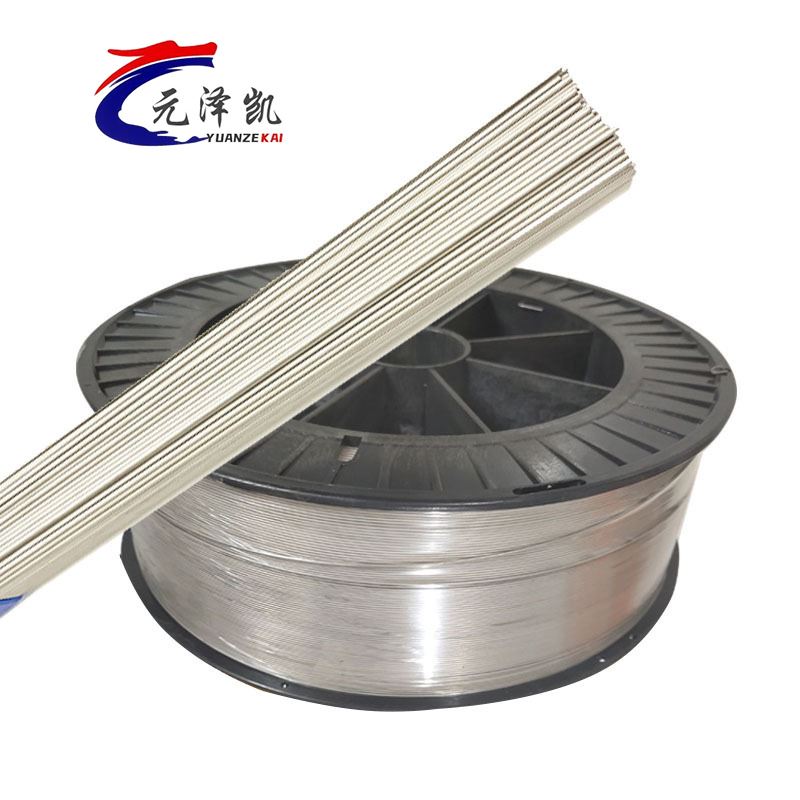
At our company, we offer a wide range of thin titanium wire products, including ErTi Titanium Welding Wire, GR3 Titanium Wire, and GR5 Titanium Alloy Wire 0.5MM. These products are made with high - quality titanium materials, ensuring consistent specific heat capacity values and excellent performance in various applications.
The ErTi Titanium Welding Wire is designed for high - quality welding applications, where precise heat control is essential. The specific heat capacity of this wire helps in achieving optimal welding results by ensuring that the wire melts and fuses properly without overheating the surrounding materials.
The GR3 Titanium Wire is known for its high purity and excellent mechanical properties. Its specific heat capacity is well - defined, making it suitable for applications where accurate temperature control is required, such as in some high - precision electronic devices.
The GR5 Titanium Alloy Wire 0.5MM is a popular choice in many industries due to its combination of strength and ductility. The alloying elements in GR5 can slightly affect the specific heat capacity, but it still retains the overall characteristics of titanium, making it a reliable material for applications involving heat - transfer processes.

Contact for Purchase and Discussion
If you are interested in our thin titanium wire products or have further questions about the specific heat capacity of thin titanium wire, we welcome you to contact us for a purchase inquiry or a technical discussion. Our team of experts is ready to provide you with detailed information and help you choose the most suitable product for your specific needs. Whether you are working on a small - scale research project or a large - scale industrial application, we can offer the right thin titanium wire solution for you.
References
- Callister, W. D., & Rethwisch, D. G. (2017). Materials Science and Engineering: An Introduction. Wiley.
- ASM Handbook Committee. (1990). ASM Handbook Volume 2: Properties and Selection: Nonferrous Alloys and Special - Purpose Materials. ASM International.
Send Inquiry