





What is the specific heat capacity of titanium wire?
Jan 19, 2026
Leave a message
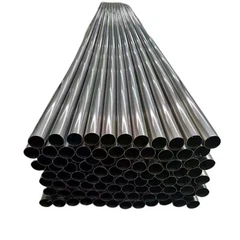
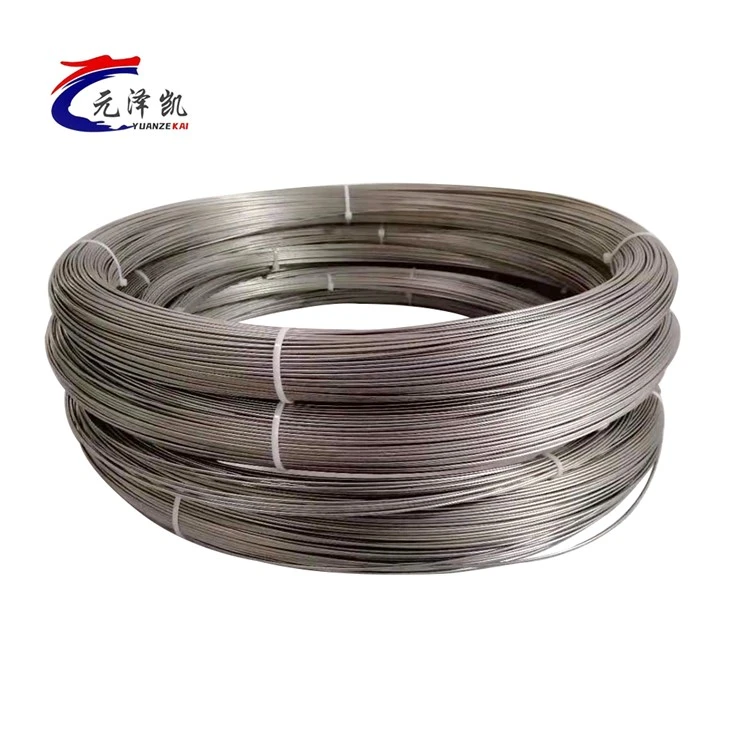
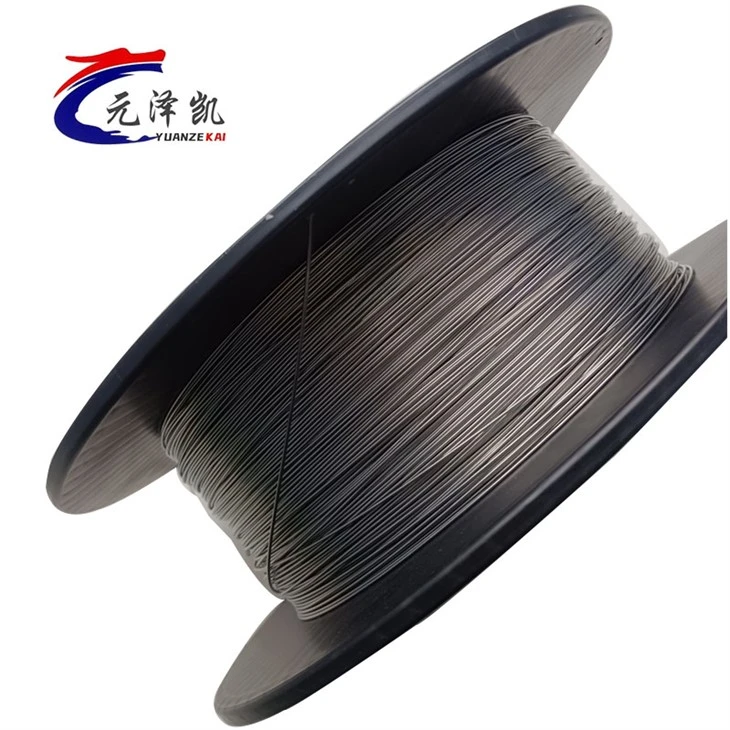
Titanium wire is a versatile and highly sought - after material in various industries, known for its excellent strength - to - weight ratio, corrosion resistance, and biocompatibility. One of the key physical properties that often comes into play in engineering and scientific applications is the specific heat capacity. In this blog, we'll explore what the specific heat capacity of titanium wire is, why it matters, and how it relates to the different types of titanium wires we offer as a supplier.
Understanding Specific Heat Capacity
Specific heat capacity, denoted as (c), is defined as the amount of heat energy required to raise the temperature of a unit mass of a substance by one degree Celsius (or one Kelvin). Mathematically, it is expressed in the formula (Q = mc\Delta T), where (Q) is the heat energy added or removed, (m) is the mass of the substance, (c) is the specific heat capacity, and (\Delta T) is the change in temperature.
The specific heat capacity is an important property because it influences how a material responds to heat. Materials with a low specific heat capacity heat up and cool down quickly, while those with a high specific heat capacity require more energy to change their temperature and thus heat up and cool down more slowly.
Specific Heat Capacity of Titanium Wire
The specific heat capacity of pure titanium is approximately (0.523\ J/(g\cdot K)) at room temperature (around (25^{\circ}C) or (298\ K)). However, when it comes to titanium wire, the specific heat capacity can vary depending on several factors.
One of the main factors is the alloy composition. Titanium is often alloyed with other elements such as aluminum, vanadium, nickel, etc., to enhance its properties. For example, the GR3 Titanium Wire GR3 Titanium Wire is a grade 3 titanium alloy. The presence of alloying elements can change the atomic structure and bonding within the material, which in turn affects the specific heat capacity.
Another factor is the manufacturing process. Processes like cold - drawing, annealing, and heat - treatment can alter the microstructure of the titanium wire. A fine - grained microstructure may have different heat - transfer characteristics compared to a coarse - grained one, leading to variations in the specific heat capacity.
Importance of Specific Heat Capacity in Applications
The specific heat capacity of titanium wire plays a crucial role in many applications.
Aerospace Industry
In the aerospace industry, titanium wires are used in various components such as fasteners, springs, and electrical wiring. During flight, these components are exposed to extreme temperature changes. The specific heat capacity of the titanium wire affects how it responds to these temperature variations. A wire with an appropriate specific heat capacity can better withstand rapid temperature changes without undergoing excessive thermal stress, which could lead to material failure.
Medical Industry
In the medical field, titanium wires are used for orthopedic implants, dental applications, and surgical instruments. For example, in orthopedic surgery, the wire may be used to fix bones. When the body temperature changes or during sterilization processes, the specific heat capacity of the wire determines how quickly it reaches the desired temperature and how it distributes the heat. A wire with a suitable specific heat capacity ensures that the surrounding tissues are not damaged due to excessive heat transfer.
Electronics Industry
In electronics, titanium wires can be used as conductors or in heat - dissipation applications. The specific heat capacity affects how the wire manages heat generated during the operation of electronic devices. If the wire has a low specific heat capacity, it can quickly transfer heat away from the heat - generating components, helping to maintain the stability and performance of the electronics.
Specific Heat Capacity and Our Titanium Wire Products
As a titanium wire supplier, we offer a wide range of titanium wires, each with its own unique properties.
The Nickel Titanium Shape Memory Alloy Wire Nickel Titanium Shape Memory Alloy Wire is a special type of titanium wire. The shape - memory effect in this alloy is closely related to its thermal properties, including the specific heat capacity. When heated or cooled, the alloy undergoes a phase transformation, and the specific heat capacity influences the energy required for this transformation.
Our 1.2mm Nitinol Wire 1.2mm Nitinol Wire is another popular product. Nitinol is a nickel - titanium alloy known for its superelasticity and shape - memory properties. The specific heat capacity of this wire is important for applications such as stents in the medical field, where precise control of the shape - change process is required through temperature manipulation.
Measuring the Specific Heat Capacity of Titanium Wire
To accurately measure the specific heat capacity of titanium wire, several methods can be used. One common method is the differential scanning calorimetry (DSC). In DSC, a small sample of the titanium wire is heated at a controlled rate, and the heat flow into or out of the sample is measured relative to a reference material. By analyzing the heat - flow curve, the specific heat capacity can be determined.
Another method is the adiabatic calorimetry. In this method, the sample is placed in an adiabatic container, and heat is added to the sample. Since the container is adiabatic (no heat exchange with the surroundings), the temperature change of the sample can be accurately measured, and the specific heat capacity can be calculated using the heat - transfer formula.
Conclusion and Call to Action
Understanding the specific heat capacity of titanium wire is essential for making informed decisions in various industries. Whether you're an aerospace engineer, a medical researcher, or an electronics manufacturer, the specific heat capacity of the titanium wire you choose can significantly impact the performance and reliability of your products.
As a leading titanium wire supplier, we are committed to providing high - quality titanium wires with well - characterized properties, including specific heat capacity. Our team of experts can assist you in selecting the right titanium wire for your specific application. If you're interested in learning more about our products or have specific requirements, we invite you to contact us for a detailed discussion. We look forward to partnering with you to meet your titanium wire needs.
References
- "Thermophysical Properties of Titanium Alloys" by International Journal of Thermophysics
- "Materials Science and Engineering: An Introduction" by William D. Callister, Jr. and David G. Rethwisch
- "Titanium: A Technical Guide" by John R. Davis
Send Inquiry