

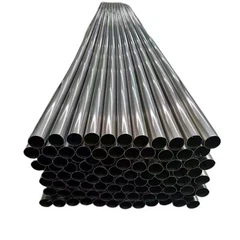


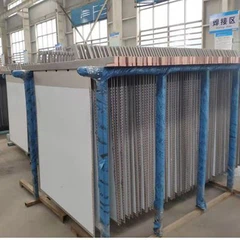


Guide to cleaning and maintenance methods of titanium coils!
May 28, 2025
Leave a message
1. Daily inspection and monitoring
1. Appearance inspection Check the coil surface for scratches, dents or cracks every week to avoid the accumulation of corrosive media. Check whether the welding points and flange connections are loose or leaking.
2. Performance monitoring Monitor the heat exchange efficiency, compare the inlet and outlet fluid temperatures and flow parameters, and check for scaling or foreign matter coverage.
2. Cleaning operation specifications
1. Physical cleaning Wipe the dust with a soft cloth every half a month to avoid scratching the surface with hard tools. Use a soft brush or cotton cloth dipped in warm water to clean, and use a hair dryer to remove internal dust.
2. Chemical cleaning Choose a neutral detergent or a weak acid solution to avoid strong acid and alkali corrosion. Stubborn stains can be soaked in baking soda + white vinegar for 30 minutes and then scrubbed, or use acetone for deep cleaning. Chlorine-containing cleaning agents and steel wool are prohibited to prevent damage to the oxide layer.
3. Precautions and taboos Environmental protection: Avoid contact with chloride ions and acidic media to prevent chemical corrosion. Tool selection: It is forbidden to use brushes or metal tools with excessive hardness to clean the interface and inner wall. Cleaning frequency: Thorough cleaning is required for daily use, once a month, and the frequency is increased in heavy use environments.
IV. Storage and maintenance
1. Storage environment: Store in a dry and ventilated place, away from corrosive substances, and dustproof cover is required for outdoor stacking. Precision parts are sealed separately to reduce oxidation wear.
2. Protective measures: Regularly check the aging of seals and replace damaged parts in time. Ensure that the pipeline is horizontal and stable during installation to reduce the risk of leakage caused by vibration.
V. Professional maintenance recommendations: When internal scaling or sensitive parts are contaminated, use trichloroethylene or alcohol to soak and clean the pressure-inducing holes to avoid direct contact with sensitive diaphragms. Professionals should regularly remove dust, lubricate mechanical parts, and calibrate instrument parameters to ensure accuracy.
Send Inquiry