

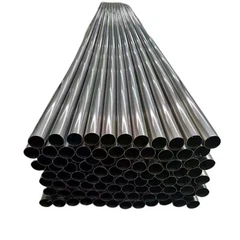


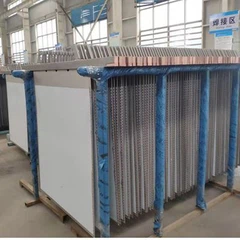


Titanium welded pipes are generally processed in the following four ways
Nov 05, 2024
Leave a message
Four processing methods of titanium welded pipes Titanium welded pipes are generally processed in the following four ways:
1. Pressed and welded titanium pipes: Compared to multi-seam "shrimp" style, this type of titanium pipe has fewer welds, but the pressing process is more complicated, requiring a large number of molds, consuming more materials and procedures. The welds can affect corrosion resistance, and the appearance is not ideal.
2. Multi-welded (commonly known as "shrimp waist") titanium pipes: The processing technology is complex, usually involving cutting the pipe into multiple segments with beveled edges, then welding them together, or unfolding the plate into multiple sections and then rolling and welding it. This method results in a lot of waste, large amounts of welds. The welds can greatly reduce corrosion resistance, making it prone to leakage, and the appearance is not good. The inner surface is folded, increasing the resistance to pipeline transmission and increasing the backside erosion, thus reducing the lifespan.
3. Stamped titanium welded pipes: This type of titanium pipe looks similar to extruded titanium pipes, but the processing technology involves stamping the pipe blank in a die on a press. During the forming process, the backside of the titanium pipe is stretched, causing the backside to thin, and the inner wall is compressed, causing thickening, resulting in uneven wall thickness or wrinkling. During use, the backside of the titanium pipe is subjected to erosion, and since the backside is thin, it is prone to early damage, significantly reducing the overall lifespan of the pipeline.
4. Cast titanium pipes: Although they are seamless titanium pipes, the wall thickness (at least 5mm) does not match the wall thickness of the pipeline (2mm~4mm), thus increasing the transmission resistance. The surface finish is poor, and more importantly, there are many pores and other defects caused by casting inside, which seriously affect the corrosion resistance and lifespan.
During the forming process, the blank expands. Stress analysis shows that the stress at different parts is different, but under biaxial compression, i.e., axial compression, radial compression, and circumferential tension, the stress remains in a tensile state.
Send Inquiry