





Working Principle of Insoluble Titanium Anode for Electroplating
Apr 28, 2025
Leave a message
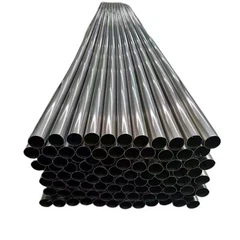
The insoluble anode for electroplating consists of a titanium substrate (mesh, plate, strip, tube, etc.) coated with a precious metal oxide layer that has high electrochemical catalytic performance. The coating contains highly stable valve metal oxides. The new insoluble titanium anode exhibits high electrochemical catalytic activity, and its oxygen evolution overpotential is about 0.5 V lower than that of a lead alloy insoluble anode. It offers significant energy savings, high stability, no pollution to the plating solution, light weight, and easy replacement.

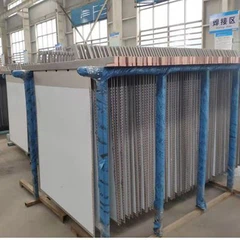
The insoluble titanium anode for electroplating includes a fixed part, a precipitation part, and a surrounding part. The surrounding part effectively increases the anode area, thereby enhancing the load capacity of the anode and preventing a rapid rise in the concentration of the plating solution. This ensures that the material provided is effectively deposited on the surface opposite the workpiece, increasing the effective deposition of the material, and effectively improving the electroplating capacity. Additionally, the material provided does not adhere, which facilitates its replenishment, thereby improving the overall usage performance.
The oxygen evolution overpotential of the insoluble titanium anode for electroplating is also lower than that of the insoluble anode for platinum plating. It is widely used as an anode or auxiliary anode in various electroplating processes and can replace conventional lead-based alloy anodes. Under the same conditions, it can reduce the cell voltage and save energy. The titanium anode for electroplating exhibits good chemical and electrochemical stability during the electroplating process and has a long service life.
This anode is widely used in non-ferrous metal electroplating industries such as nickel plating, gold plating, chromium plating, zinc plating, and copper plating.
The insoluble titanium anode for electroplating is composed of multiple layers of special mixed precious metal oxides sintered onto a titanium matrix. It is resistant to high current density impact and strong acid corrosion. It can operate stably and for long periods at a current density of 5000 A/m². The anode can be manufactured in a variety of shapes to fully meet installation requirements; it can be used for zinc plating, copper plating, nickel plating, chromium plating, high corrosion-resistant zinc alloy electroplating, imitation gold plating, nickel-zinc alloy, nickel-tin alloy, electronic electroplating, tin plating, gold plating, and methylsulfonic acid tin-lead alloy plating, among others.
Send Inquiry