

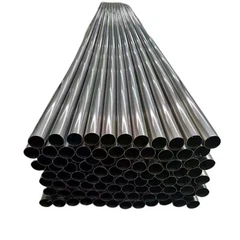




6al-4v Hexagonal Titanium Rod
Brand Name:yuanzekai
Shape:hexagonal
Processing Service:rolling, Welding, Cutting, Punching
Material:Gr1,Gr2,Gr4,Gr5,Gr12
Standard:ASTM B 348
Certificate:ISO 9001:2008
Density:4.51 G/cm3
Size:Customizable Size
MOQ:20 KG
6al-4v hexagonal titanium rod Description
6al-4v hexagonal titanium rod, the main purpose is to make nuts, not only convenient, high output, low cost. In addition to gr5, gr2 hexagonal rod is also used to make pure titanium nuts, and other high strength requirements of the rod.
Key technologies of gr5 hexagonal titanium rods
|
Material |
pure titanium, titanium alloy |
|
Grade |
Gr1,Gr2,Gr3,Gr4,Gr5,Gr7,Gr9,Gr11,Gr12,Gr16,Gr17,Gr23,Gr26,Gr27,Gr29 |
| Diameter range | 6mm to 250mm, common sizes 8mm,10mm,12mm,14mm |
| Length range |
500 mm- 6000 mm, the common length is 3000mm |
|
Standard |
ASTM B348, ASTM F136,ASME SB348, AMS 4928, ASTM F67, ASTM B381 |
|
Finish |
black, polishing, grinding, sandblasting, machine processing |
|
Delivery status |
hot working state (R), cold working state (Y), annealed state (M) |
|
Lead time |
Standard specifications: 7-15 working days Special customization: 1 month |
Surface of 6al-4v hexagonal titanium rod
Titanium GR5 hexagonal rod is an important industrial raw material, and its surface treatment directly affects both the product's appearance and the ease of further processing. Currently, two common surface treatment types for hexagonal titanium rods are available on the market: cold-rolled black glossy surface and pickled surface.
Surface key technologies

black glossy surface
The black glossy surface refers to a surface condition in which the titanium rod, after special treatment, appears black and shiny. This is typically achieved through polishing-either mechanical or chemical-resulting in a mirror-like finish that gives the rod its glossy black appearance.
pickled surface
The pickled surface is achieved through a chemical pickling process that removes the oxide layer and surface impurities. This treatment makes the surface smoother and more uniform, thereby improving both the product's appearance and its corrosion resistance.

Rolling process of 6al-4v hexagonal titanium rod
The rolling process of titanium hexagonal bars must be carefully designed to account for the unique characteristics of titanium, such as its high melting point, high hardness, and high deformation resistance. The following outlines the key process steps and critical considerations:
Rolling mill selection: A dedicated titanium alloy rolling mill (such as a two-roll, three-roll, or multi-roll mill) should be used. The rolls must be made of high-temperature-resistant and wear-resistant materials (e.g., high-chromium cast iron or alloy-forged steel) and equipped with an effective lubrication system-commonly graphite emulsion or specialized lubricants-to reduce friction and prevent sticking.
Rolling passes:
Rough rolling: Apply a large reduction per pass (approximately 10%–20%) to shape the cylindrical billet into a near-hexagonal form. After each pass, inspect the surface for cracks or folds. Perform intermediate annealing if necessary to eliminate work hardening.
Intermediate and finishing rolling: Gradually decrease the reduction rate, with the final pass typically at 5%–10%. Use specially designed pass shapes-hexagonal dies require precise control of fillet radii and opposite-side tolerances-to ensure dimensional accuracy (e.g., opposite-side tolerance of ±0.05 mm) and a smooth surface finish (Ra ≤ 1.6 μm).
Rolling speed: Titanium alloys are sensitive to deformation speed, which can cause thermal effects and localized overheating. Rolling speed is generally controlled between 0.5–2 m/s, with temperature regulated using a roller cooling water system.
6al-4v hexagonal titanium rod Inspection and acceptance
Nondestructive testing: Internal defects are detected using ultrasonic testing (UT), while surface cracks are inspected visually or through fluorescent penetrant testing (PT).
Performance testing: Includes tensile testing (to determine tensile strength and elongation), hardness testing (HB or HV), and, for titanium alloys, additional microstructure analysis (such as α+β phase ratio).
Dimensional inspection: Use vernier calipers, optical projectors, and other precision tools to measure flat-to-flat distances, diagonals, and straightness (e.g., ≤1 mm per meter) to ensure compliance with ASTM, GB/T, and other applicable standards.
Hot Tags: 6al-4v hexagonal titanium rod, China 6al-4v hexagonal titanium rod manufacturers, suppliers, factory, astm b338 gr2 titanium tube, titanium coil, gr7 titanium sheet, molybdenum material, titanium foil, titanium equipment
You Might Also Like


Send Inquiry