





Can titanium tubes be used in marine applications?
Oct 21, 2025
Leave a message
As a dedicated supplier of titanium tubes, I've witnessed firsthand the growing interest in utilizing these remarkable materials in marine settings. The marine environment is one of the most challenging for any material, with factors such as saltwater corrosion, high pressures, and extreme temperatures constantly at play. In this blog post, I'll explore the viability of using titanium tubes in marine applications, delving into their properties, advantages, and specific use - cases.
Properties of Titanium Tubes
Titanium is a metal known for its exceptional properties, and these translate well into the performance of titanium tubes. Firstly, titanium has an incredibly high strength - to - weight ratio. This means that titanium tubes can withstand significant mechanical stress while being relatively lightweight compared to tubes made from other metals like steel. In marine applications, where weight is often a critical factor, especially in vessels and offshore structures, this property is highly advantageous. It allows for the construction of lighter yet strong structures, which can lead to better fuel efficiency and increased payload capacity.
Another key property of titanium is its outstanding corrosion resistance. Titanium forms a thin, adherent oxide layer on its surface when exposed to oxygen. This oxide layer acts as a protective barrier, preventing further corrosion even in highly corrosive environments such as saltwater. Unlike many other metals that will rust and deteriorate rapidly in the presence of salt, titanium tubes can maintain their integrity over long periods in marine conditions. This corrosion resistance also extends to other aggressive chemicals that may be present in the marine environment, such as sulfides and chlorides.
Titanium also has good fatigue resistance. In the marine environment, structures are constantly subjected to cyclic loading due to waves, tides, and vessel movements. Titanium tubes can withstand these repeated stresses without developing cracks or failing prematurely. This makes them suitable for applications where long - term durability under dynamic loading is required.
Advantages of Using Titanium Tubes in Marine Applications
Corrosion Resistance
The most significant advantage of using titanium tubes in marine applications is their superior corrosion resistance. Saltwater is highly corrosive, and traditional metals like steel require extensive coatings and maintenance to prevent rusting. In contrast, titanium tubes can be used in direct contact with saltwater without the need for additional protective coatings. This not only reduces the initial cost of installation but also eliminates the need for regular maintenance and re - coating, saving time and money in the long run.
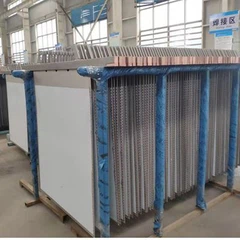
For example, in seawater desalination plants, titanium tubes are commonly used in heat exchangers. The heat exchangers are in constant contact with saltwater, and the corrosion - resistant properties of titanium ensure a long service life. This reduces the frequency of equipment replacement and downtime, leading to more efficient operation of the desalination plant.
Lightweight
As mentioned earlier, the high strength - to - weight ratio of titanium tubes makes them an ideal choice for marine applications. In shipbuilding, reducing the weight of the vessel can improve fuel efficiency and increase speed. Titanium tubes can be used in the construction of the ship's piping systems, structural components, and even in the hull in some cases. The reduced weight also allows for more flexible design options, as less support structure is needed to carry the weight of the components.
High - Temperature Performance
Titanium tubes can maintain their mechanical properties at relatively high temperatures. In marine applications where there are heat - generating processes, such as in engine rooms or power generation systems on ships, titanium tubes can be used to transfer heat efficiently without losing their strength. This is in contrast to some other materials that may become brittle or lose their structural integrity at elevated temperatures.
Specific Marine Applications of Titanium Tubes
Shipbuilding
In shipbuilding, titanium tubes are used in a variety of applications. They are commonly used in the ship's piping systems for carrying seawater, fuel, and other fluids. The corrosion resistance of titanium ensures that the pipes will not corrode from the inside, preventing leaks and maintaining the integrity of the fluid - carrying systems. Additionally, titanium tubes can be used in the construction of heat exchangers for the ship's cooling systems, where they transfer heat between the engine coolant and seawater.
Offshore Oil and Gas Platforms
Offshore oil and gas platforms are exposed to harsh marine conditions, including saltwater, high winds, and extreme temperatures. Titanium tubes are used in these platforms for various purposes. They can be used in the platform's water injection systems, where seawater is injected into oil wells to maintain pressure. The corrosion resistance of titanium ensures that the pipes will not corrode from the injected seawater, preventing blockages and maintaining the efficiency of the water injection process.
Marine Renewable Energy
With the growing interest in marine renewable energy sources such as tidal and wave energy, titanium tubes are finding new applications. In tidal energy converters, titanium tubes can be used in the hydraulic systems that convert the kinetic energy of the tides into electrical energy. The corrosion resistance and high - strength properties of titanium ensure that the components can withstand the harsh marine environment and the cyclic loading associated with the movement of the tides.
Our Titanium Tube Products for Marine Applications
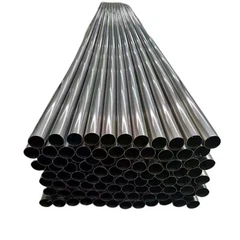
We offer a wide range of titanium tubes suitable for marine applications. Our Titanium Grade 2 Welded Tube is a popular choice. Grade 2 titanium is known for its excellent corrosion resistance and good formability. The welded tubes are produced using advanced welding techniques to ensure a strong and leak - free joint.
Our ASTM B338 Gr2 Titanium Tube meets the strict standards of ASTM B338, which is specifically designed for titanium and titanium alloy seamless and welded tubes for general corrosion - resistant service. These tubes are ideal for use in marine environments where corrosion resistance is a top priority.
We also supply Titanium Round Tube. The round shape provides uniform stress distribution, making it suitable for applications where the tube will be subjected to internal or external pressure. The round tubes are available in various sizes and wall thicknesses to meet different customer requirements.
Conclusion and Call to Action
In conclusion, titanium tubes are highly suitable for marine applications due to their exceptional properties such as corrosion resistance, high strength - to - weight ratio, and good fatigue resistance. They offer numerous advantages over traditional materials, including reduced maintenance costs, longer service life, and improved performance.
If you are involved in marine applications such as shipbuilding, offshore oil and gas, or marine renewable energy, and are looking for high - quality titanium tubes, we are here to help. Our team of experts can provide you with detailed technical information, assist you in selecting the right product for your specific application, and offer competitive pricing. Contact us today to start a discussion about your titanium tube requirements and explore how our products can enhance the performance and durability of your marine projects.


References
- ASM Handbook, Volume 2: Properties and Selection: Nonferrous Alloys and Special - Purpose Materials.
- Corrosion Resistance of Titanium Alloys in Seawater, Journal of Marine Science and Technology.
- Shipbuilding Materials and Their Applications, Naval Institute Press.
Send Inquiry