





Unveiling the uses of titanium electrode plates
Mar 07, 2025
Leave a message
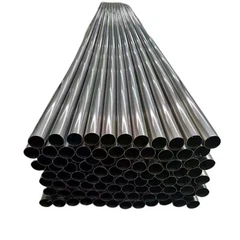
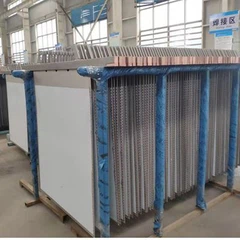
In modern chemical workshops, new energy devices and precision electronic production lines, a metal sheet less than 1 mm thick is revolutionizing the industry with its unique performance - this is the titanium anode plate, which is hailed as the "king of special metal materials" by the industry. This core component with both corrosion resistance and efficient conductivity not only supports the sustainable development of the chlor-alkali industry, but also plays a key role in cutting-edge fields such as the hydrogen energy revolution and seawater desalination.

1. Material properties: Beyond conventional physical and chemical properties
The titanium anode plate adopts a Ti/TiO₂ composite structure design and exhibits excellent stability in the electrolyte:
Corrosion resistance: verified by polarization test, the corrosion rate is <0.1mg/cm² after continuous operation for 1000 hours in 10% H₂SO₄ solution
Current density: long-term stable operation under working conditions up to 3000A/m², saving 15%-20% energy compared with traditional graphite anodes
Mechanical strength: tensile strength>450MPa, can withstand 30bar working pressure without deformation
Thermal stability: melting point is as high as 1668℃, and structural integrity is maintained in a 200℃ electrolyte environment
These characteristics are derived from the unique passivation layer formation mechanism of titanium-based materials. The TiO₂ nanofilm generated on its surface can continuously self-repair in dynamic balance, which is difficult to match with ordinary metal materials.
2. Panorama of industry applications: from basic industry to high-end manufacturing
1. Chemical manufacturing: the core driving force of electrolysis process
Chlor-alkali industry: 85% of chlor-alkali plants in the world use titanium anode electrolyzers, and the annual output of chlorine gas per cell can reach 100,000 tons.
Calcium carbide PVC: The new titanium anode reduces the energy consumption of electrolysis to 2800kWh/t PVC, which is 30% energy-saving compared with traditional processes.
Organic synthesis: In the production of fine chemicals such as ethylene glycol and caprolactam, the selectivity is increased to more than 98%.
2. New energy system: infrastructure of green hydrogen economy
Electrolyzer system: In the proton exchange membrane (PEM) electrolyzer, the titanium anode is used as a catalyst carrier to achieve a hydrogen evolution efficiency of 90%.
Flow battery: In the vanadium flow battery energy storage system, the service life of the titanium anode is more than 10 years, and the number of cycles exceeds 20,000 times.
Metal-air battery: In the zinc-air battery, the titanium-based bifunctional anode can increase the energy density to 300Wh/kg.
3. Environmental Engineering: Technological breakthroughs in pollution control
Advanced oxidation process: In Fenton-like reactions, titanium anodes can maintain the generation of hydroxyl radicals at a current density of 120mA/cm².
Flue gas desulfurization and denitrification: In the SCR denitrification system, the titanium-based catalyst carrier makes the NOx conversion rate reach more than 95%, and the temperature window is widened to 200-400℃.
Bioelectrochemical system: In the MBR membrane reactor, the titanium anode is used as the inner electrode, the COD removal rate is increased to 90%, and the energy consumption is reduced by 40%.
4. High-end manufacturing: essential materials for precision machining
Microelectronics electroplating: In the wafer cleaning process, the titanium anode can achieve 0.1μm-level coating uniformity control.
Aerospace: In the satellite solar sail deployment mechanism, the reliability of the electromagnetic release device driven by the titanium anode reaches 10^6 cycles.
Medical implants: After the surface of the artificial joint is modified by the titanium anode, the biocompatibility is improved by 3 orders of magnitude.

3. Typical application cases: empirical research on technology implementation
Case 1: Deep treatment of wastewater from petrochemical enterprises
A refinery uses a titanium anode catalytic oxidation system:
Processing scale: 2000m³/h industrial wastewater.
Key parameters: current density 150mA/cm², reaction time 60min.
Treatment effect: COD dropped from 5000mg/L to below 100mg/L, and chromaticity was completely removed.
Economic benefits: Annual savings of 2.8 million yuan in chemical reagent costs, and 100% water compliance rate.
Case 2: Innovative practice of seawater desalination engineering
A seawater desalination project in the Middle East is equipped with a titanium anode anti-corrosion system:
System scale: 100,000 tons of fresh water per day
Technical highlights: titanium anode + sacrificial anode combined protection, Cl⁻ concentration <50ppb
Operation data: Energy consumption is reduced by 22% compared with traditional copper-based systems, and the maintenance cycle is extended to 5 years
Environmental benefits: Annual reduction of heavy metal emissions by 12 tons, in line with ISO 14001 standards
4. Technological frontiers and development trends
With the breakthrough of the third-generation semiconductor materials, titanium anode plates are evolving in the following directions:
Nanocomposite modification: By loading Pt/Pd nanoparticles on TiO₂, the photocatalytic efficiency is increased to 85%.
Flexible substrate development: Flexible titanium anode prepared by metal organic frameworks (MOFs), with a bending radius of <2mm.
Intelligent monitoring: Intelligent anodes with integrated FBG optical fiber sensors can monitor changes in electrochemical states in real time.
Green manufacturing process: Plasma spraying technology reduces the energy consumption of titanium anode preparation by 40%, and the waste recovery rate reaches 99%.
According to Grand View Research data, the global titanium anode market will expand at a compound annual growth rate of 8.7%, and the market size is expected to exceed US$4.5 billion in 2030. Driven by the "dual carbon" goal, its application in emerging fields such as hydrogen energy storage and carbon capture will account for more than 60%.
Conclusion
From the basic electrolysis of chlor-alkali workshops to the oxygen circulation system of space stations, titanium anode plates continue to promote the progress of industrial civilization with their unique material properties. While we enjoy the convenience brought by clean drinking water and high-performance batteries, these "silent industrial heroes" are silently supporting this technological progress. In the future, with the continuous breakthroughs in materials science, titanium anode plates will surely shine in more fields and continue to write its industrial legend.
Send Inquiry