

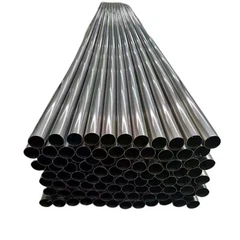


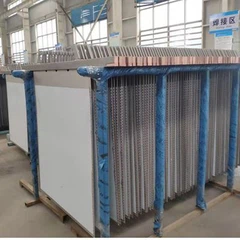


Titanium Fittings
Brand Name:yuanzekai
Material:Titanium
Outer Diameter:customized
Length:customized
Application:Industrial
Technique:Welded
Grade:Titanium
Wall Thickness:customized
Inside Diameter:customized
Processing Service:Bending, Welding, Cutting, Punching
Warranty:3 year
Product name:Titanium Tee Pipe Fitting
MOQ:50 Piece
Customized support:OEM
Supply Ability:10000 Set/Sets per Month
Packaging Details:Export Standard Wooden case, or can be customized
Application:Industrial
Products introduction
Titanium Tee Manufacturing Process
A titanium tee produced by the stamping process is formed in one step from a seamless tube billet, primarily through extrusion forming. The mechanical properties of these stamped parts are superior to those of welded tee components.
There are three main methods for stamping and forming titanium tees: filler extrusion forming, hydraulic expansion, and hot press forming. The specific processes are as follows:
1. Filler Extrusion Forming
The filler extrusion forming process involves extruding a straight tube blank filled with a medium. The tube blank is placed inside a mold cavity and enclosed. Then, punches with the same diameter as the tube are simultaneously pushed in from both ends at equal speeds. This pressure forces the tube blank to expand radially through an opening in the mold, with the filler providing internal support.
A balanced punch is installed in the mold's radial opening to prevent the branch pipe from rupturing under high pressure. This punch applies sufficient counterpressure to control the expansion and maintain the integrity of the branch pipe.
The titanium tee pipe produced by filler extrusion forming has a uniform wall thickness in all directions, minimal coarse deformation, and an extruded section height of 2 to 3 times the pipe diameter. The filler and metal tube move synchronously within the mold, ensuring that the inner walls remain free of mechanical damage.
One key aspect of this process is selecting the appropriate swelling medium. Common fillers include paraffin, butter, clay, nylon, silicone rubber, and polyurethane rubber.
For high-precision inner wall requirements, nylon, polyurethane rubber, or silicone rubber is preferred.
For less critical or non-demanding applications, paraffin wax is commonly used due to its recyclability and low cost.
2. Hydraulic Expansion
The hydraulic expansion method forms the titanium tee by axially compressing the metal material while expanding the branch pipe.
Process Overview:
A hydraulic press is used to place a tube blank (matching the tee's diameter) into a mold cavity.
The mold is clamped shut, and high-pressure liquid is injected into the tube blank.
Two horizontal hydraulic press cylinders apply compression, reducing the tube blank's volume.
As the tube blank is compressed, the internal liquid pressure increases, expanding the branch pipe within the mold.
To prevent rupture, a balanced punch force is applied to support the branch pipe during expansion.
Hydraulic expansion is particularly suitable for materials with low cold-work hardening tendencies, such as carbon steel, alloy steel, stainless steel, copper, aluminum, and titanium.
3. Hot Press Forming
Hot press forming involves heating the tube blank before pressing it into a tee shape. This method requires lower equipment tonnage than cold-forming techniques.
Process Overview:
A tube blank larger than the tee diameter is flattened to match the required tee dimensions.
A hole is cut at the branch pipe location, and the blank is then heated.
During radial compression, metal flows toward the branch pipe opening and is stretched by the mold to form the final shape.
The process combines radial compression of the tube blank with the tensile formation of the branch pipe.
Unlike hydraulic expansion, where the branch pipe material is derived from axial compression, hot press forming relies on radial motion to compensate for material displacement, making it known as the radial compensation process.
This method is particularly suitable for low-carbon steel, alloy steel, and stainless steel. It is often used for large-diameter tees with thick walls, where hot pressing is more effective than cold forming.
specification
|
Product name |
Titanium Tee Pipe Fitting |
||
|
Standard |
ASME B16.9; GB12459; DIN2615; GOST17375; JIS B2311 |
||
|
Application |
Industrial |
||
|
Technology |
Seamless; Welded |
||
|
MOQ |
1 Piece |
||
|
Customized support |
OEM |
||
|
Supply Ability |
10000 Set/Sets per Month |
||
|
Packaging Details |
Export Standard Wooden case, or can be customized |
||
applications
A butt-weld pipe fitting is designed to be welded on-site at its end(s) to connect pipes, allowing for changes in direction, pipe diameter, branching, or termination.
Once welded, this fitting becomes an integral part of a fluid transportation system-used for oil, gas, steam, chemicals, and other substances-ensuring safe and efficient transport over both short and long distances.
Other types of fittings include threaded and socket-welded fittings.
Products Display


our advantage


certificate

Hot Tags: Titanium Fittings, China Titanium Fittings manufacturers, suppliers, factory, titanium rod ends, cnc machined titanium parts, titanium equipment, titanium coil, titanium material, titanium hex bolt
You Might Also Like


Send Inquiry